Newfoundland & Labrador's Incredible UNESCO Sites
Vikings, Ancient Fossils, Basque Whaling & Fjord Boat Tours
Quick Summary
Imagine crossing the Atlantic in open wooden boats—exactly what Vikings did in 1000 AD when they departed Greenland, landing 1,360 miles later on what is today Canada's most far-east province. That's what makes UNESCO World Heritage Sites so thrilling: global hot spots of culture, history, and the natural world that give us real connections to the past. Of Canada's 18 UNESCO sites, Newfoundland and Labrador has four—and you can see all of them in one four-day scenic road trip.
Quick Facts
- UNESCO Sites in NL: 4 of Canada's 18 UNESCO World Heritage Sites
- Suggested Trip: 4-day scenic road trip to visit all four sites
- Age Range: 575 million years (fossils) to 500 years (Basque whaling)
- Key Themes: Ancient fossils, Viking settlement, Basque whaling, geological wonders
1. Mistaken Point Ecological Reserve
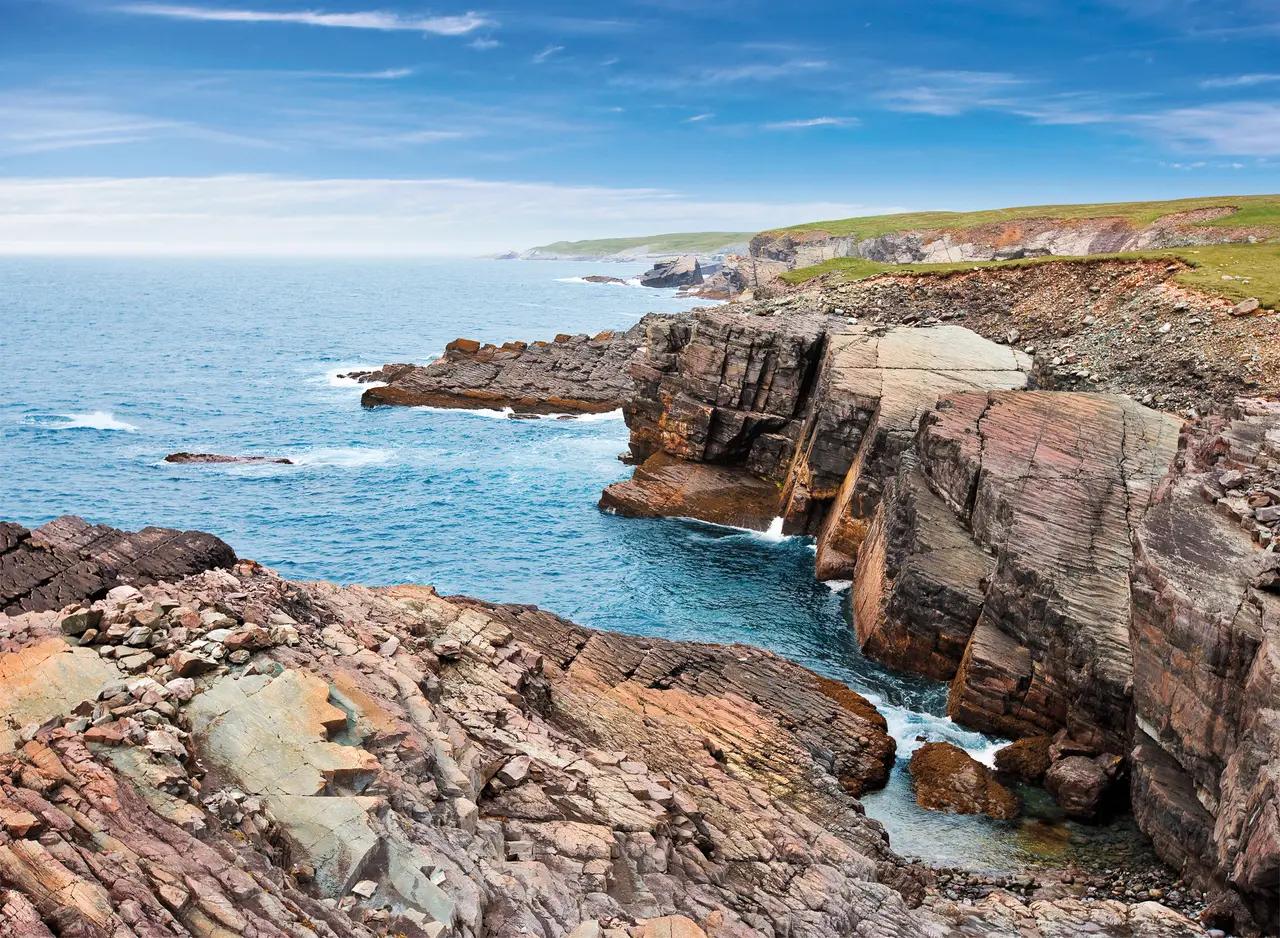
Mistaken Point Ecological Reserve. A coastline that’s not just pretty, but one of the world’s key fossil records. Credit - Newfoundland and Labrador Tourism/Barrett and MacKay
Location: Southeastern tip, Avalon Peninsula | UNESCO Designated: 2016 | Age: 560-575 million years
The planet's most ancient creatures are evidenced here—one of the world's most important fossil sites. The remarkable Ediacaran biota fossils date back 560 to 575 million years: the sea floor's oldest examples of large, complex, multi-cellular organisms. Named because sailors on foggy days would confuse it with Cape Race Harbour and collide with the craggy cliffs. A geology grad student first realized the fossils' huge scientific significance in 1967; it's been an ecological reserve since 1987.
- Visit: Interpretive center + daily guided tour departing 1 PM (mid-May to mid-October)—the only way to see fossils embedded in mud- and sandstone. Reserve well in advance.
2. L'Anse aux Meadows National Historic Site
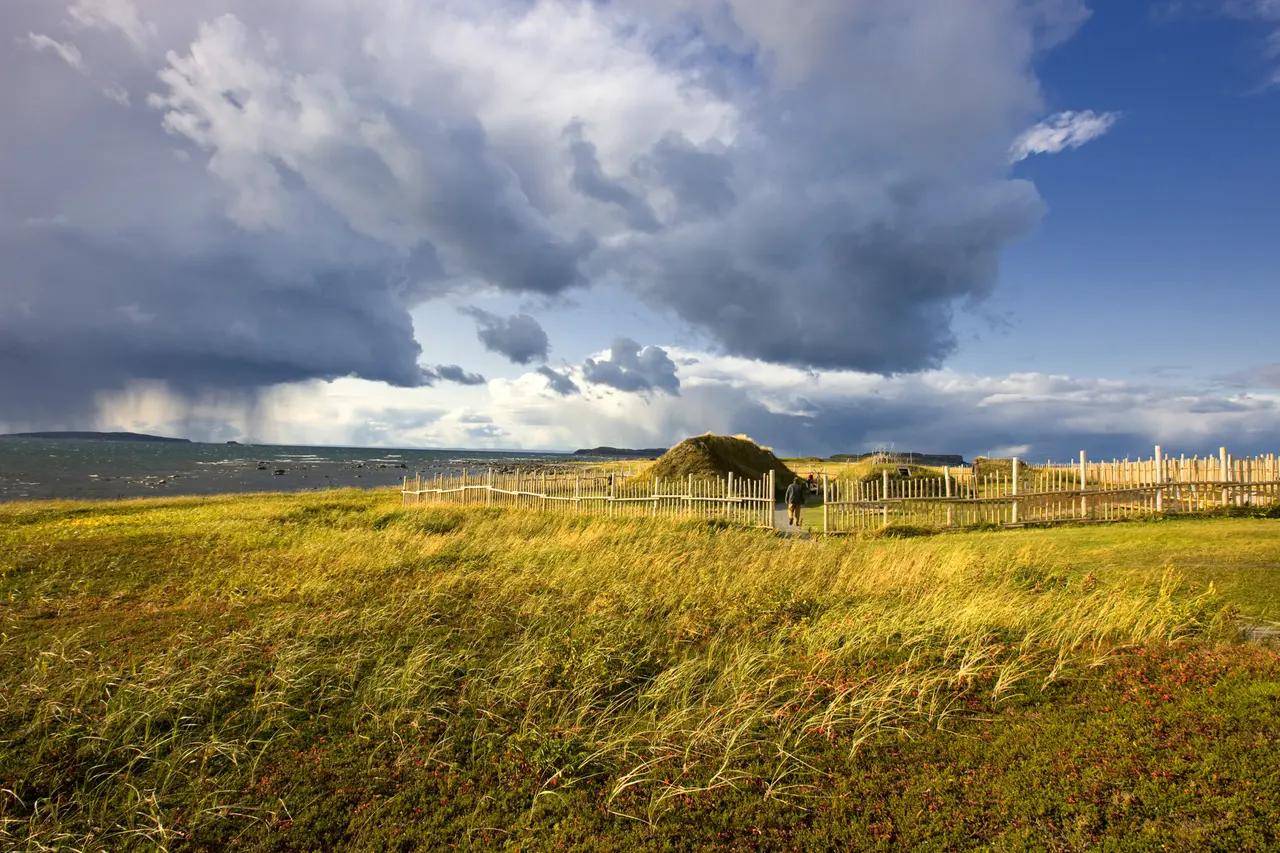
They arrived 500 years before Columbus. L'Anse aux Meadows is the only confirmed Viking settlement in North America; walk the same ground where Leif Eriksson's crew once stood. Credit: Newfoundland and Labrador Tourism
Location: Newfoundland's northernmost coast, along the Viking Trail | UNESCO Status: First European settlement outside Greenland in the Americas
The only known evidence of Norse presence in the Americas. A small Viking expedition arrived in the 11th century, called it Vinland, stayed a few years, and clashed with the native community. An archaeologist couple uncovered the Norsemen's timber-and-sod hut encampment in the 1960s, finding a blacksmith operation, bone needles, bronze jewelry, and plant remains from warmer climates.
- Experience: Historically accurate reconstructed huts, interpreters in period dress, dramatic reenactments, learn to weave/work metal/fashion leather pouches Norse-style, artifacts in visitor center
- Nearby: Norstead, recreated Viking trade port featuring traditional games and Snorri, the original knarr (ship)
3. Red Bay Basque Whaling Station
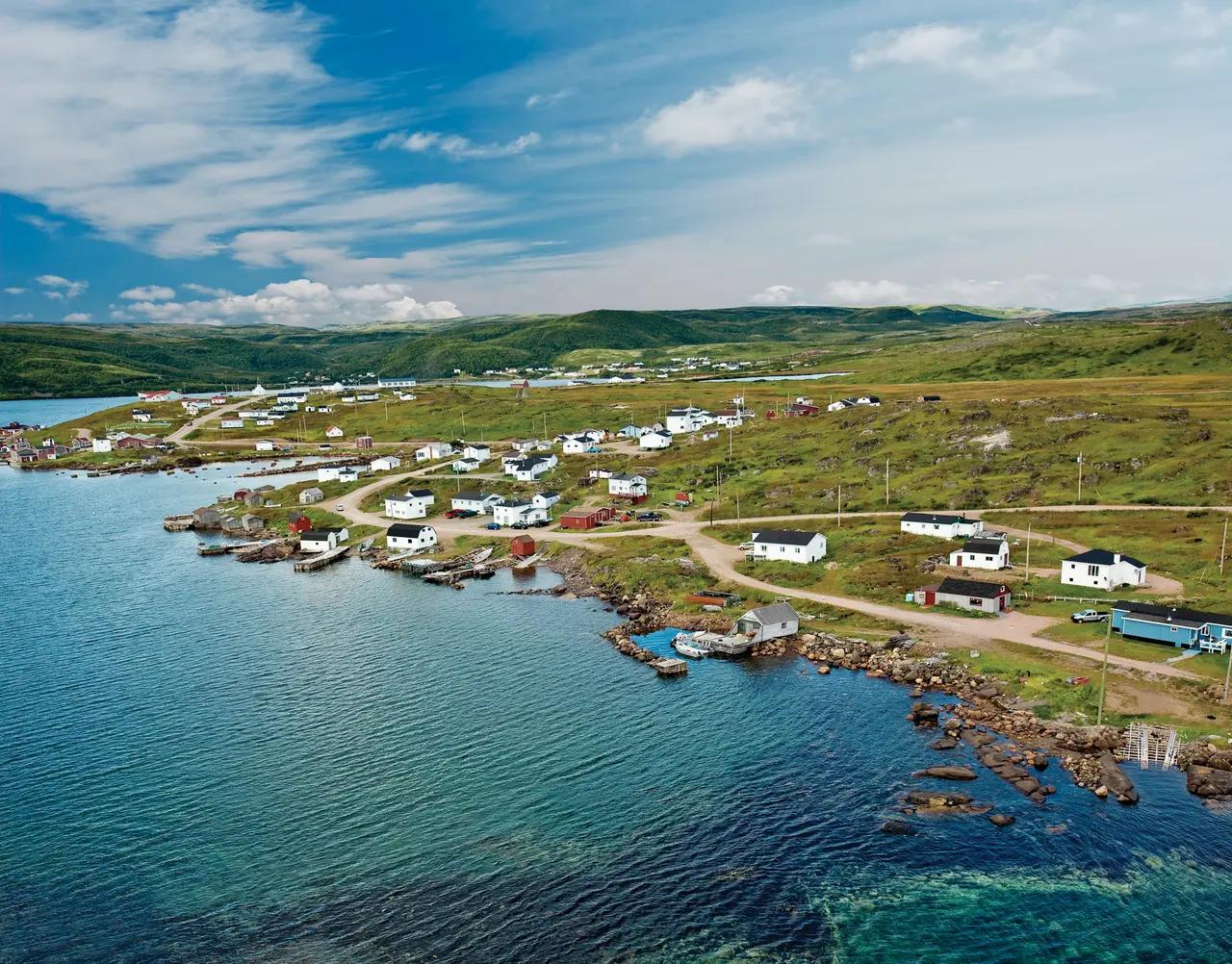
Where the hunt for whales built an empire. Red Bay's 16th-century Basque whaling station shaped the North Atlantic economy and the ships still rest on the ocean floor beneath your feet. Credit: Newfoundland and Labrador Tourism/Barrett and MacKay
Location: Red Bay, Labrador, Strait of Belle Isle | Era: 1530s-1600 (70 years of operation)
This Labrador fishing village was a thriving whaling hub back in 1530—the globe's first large-scale, pre-industrial oil production operation in the European tradition. Long forgotten until 1977, when an English woman worked with the Royal Canadian Geographic Society to unearth the station that commemorates thousands of Basque mariners who hunted bowhead and right whales for prized, oil-rich blubber.
- See: Cooperages and fat rendering ovens on Saddle Island (quick boat ride), 500-year-old red clay roof tiles, cemetery with 145 graves, old wharves, whale bone remains
- Artifacts: Oil barrels, navigational instruments, enormous whale skeletons contrasting harpoons and small open boats
- Access: Ferry from Newfoundland to Blanc Sablon, Québec, then 1-hour drive to Labrador
4. Gros Morne National Park
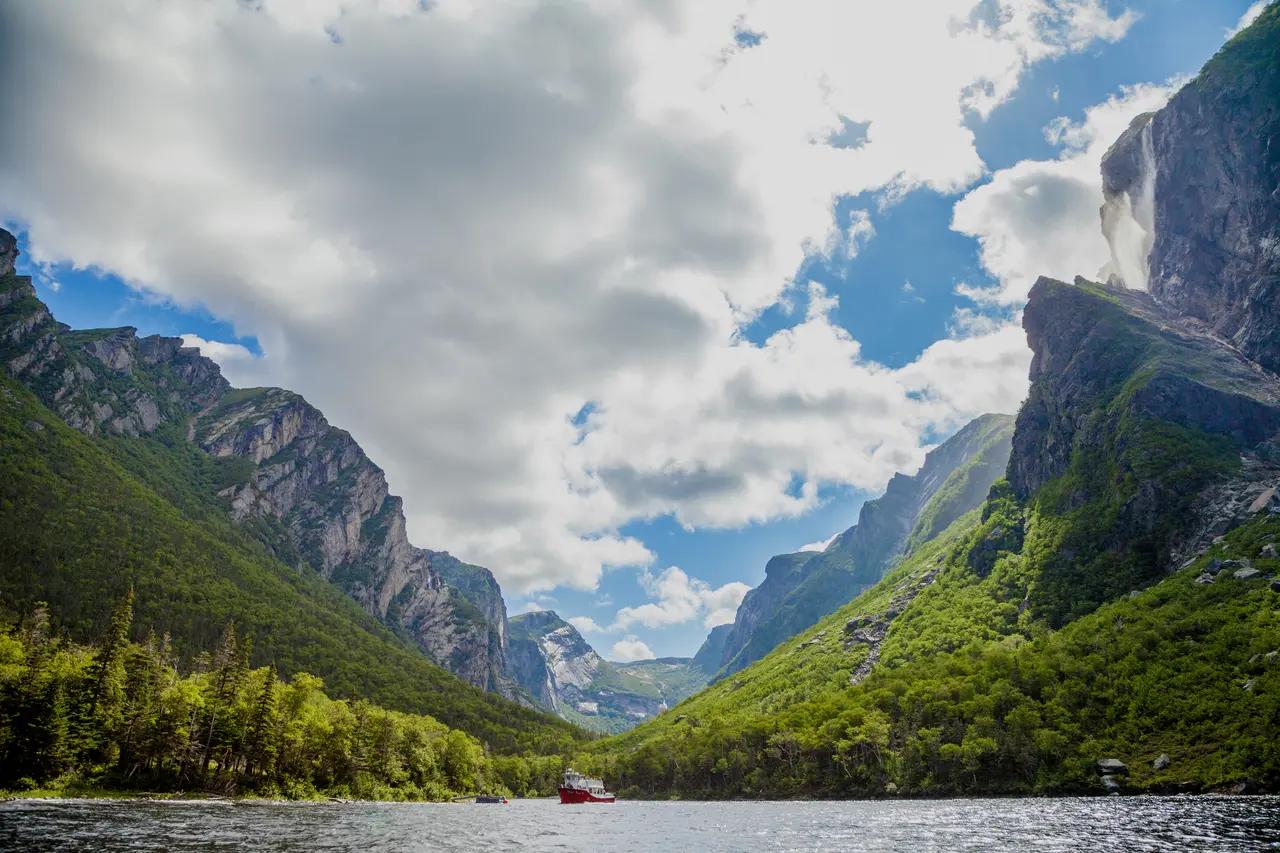
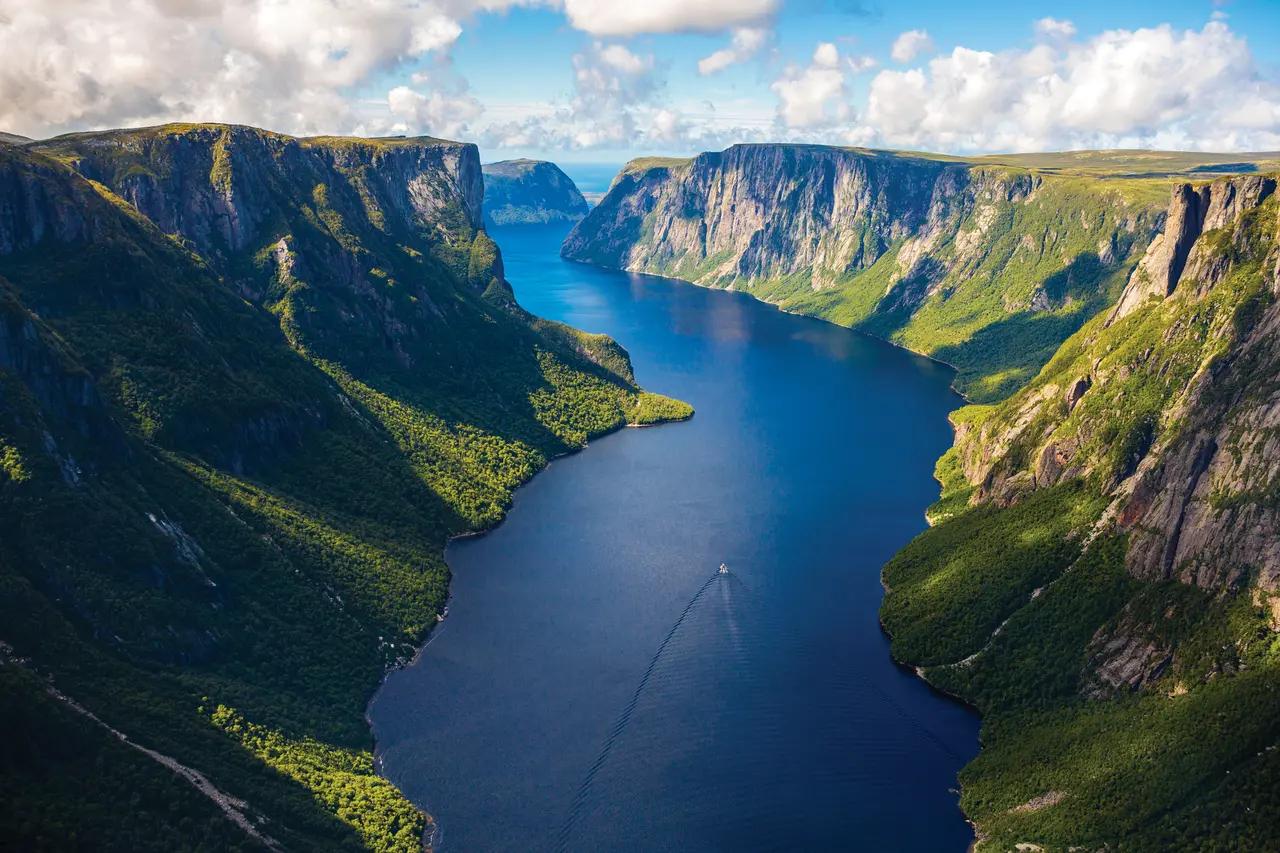
Gros Morne's dramatic cliffs and ancient fjords are a living textbook of plate tectonics and exactly why it earned its UNESCO World Heritage status. Credit - Newfoundland and Labrador Tourism
Location: West coast of Newfoundland | Size: Nearly 700 square miles | Theme: Plate tectonics and continental drift
To see Gros Morne is to witness the powerful geological forces of sea colliding with continents to carve and shape the landscape eons ago. Exposed ancient ocean crust, volcanic rock, glacier-cleaved rocks and valleys, steep freshwater fjords and cliffs, plateaus and barren headlands, waterfalls and fossils, crystal lakes, bogs, and spectacular ocean vistas.
- Must-Do: Western Brook Pond boat tour—a 2,000-foot-high glacier-cut fjord with waterfalls and sandy beach
- Tablelands: Made of igneous peridotite, toxic to most plants and usually found only in Earth's mantle—Mars-like landscape
- Hikes: 2.5-mile Tablelands hike or 5.6-mile Green Gardens trail to rare coastal pillow lava formations
- Wildlife: Watch for moose and caribou
- Culture: Theater festival and writers gathering at Woody Point
Delve into more culture at the Newfoundland and Labrador Tourism website.