The Shot of a Lifetime: How to Photograph the Northern Lights in Churchill
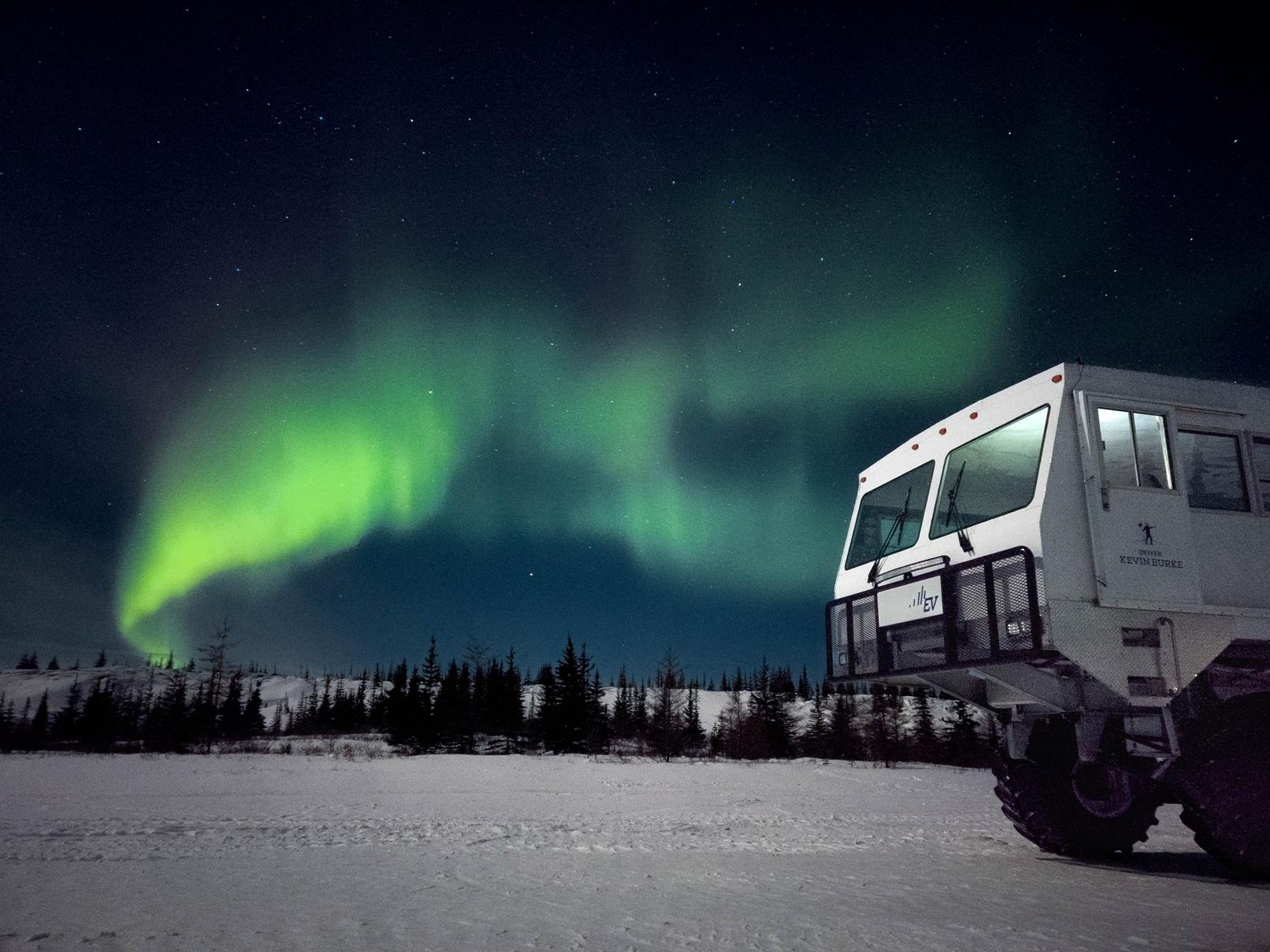
Every photographer knows a great photo requires an element of luck. Light, scenery, composition: it all has to come together just as your finger finds the shutter button. Often, the most you can do is put yourself in the right place, at the right time, and with the right equipment, and hope for the best.
When it comes to shooting the northern lights, though, there is a lot you can do to maximize your odds of coming away with an iconic shot of otherworldly colors unspooling across the night sky.
Churchill, Manitoba, sits directly beneath the auroral oval, the ring around the magnetic pole where aurora activity is most frequent and most intense. That location, combined with dry winter weather, minimal light pollution, and nearly unobstructed views of the horizon, creates near-perfect conditions for photographing the northern lights, which appear in the sky more than 300 nights every year.
This guide covers how to photograph the northern lights in the Churchill area. It tells you which camera settings to use, the best places to shoot, and offers some cold-weather photography tricks that local guides teach on their tours.
Quick Facts: How to Shoot the Northern Lights in Churchill, Manitoba
Camera mode: Manual
Aperture: Widest your lens allows; f/1.4–f/2.8 is ideal.
ISO: 800–3200, depending on aurora strength. Take test exposures and adjust as needed.
Shutter speed: Typically 5–15 seconds, depending on how fast the aurora is moving.
Focus: Manual, locked at infinity before sundown.
Top viewing spots: Thanadelthur Lounge · Churchill Northern Studies Centre · Aurora Domes · Cape Merry · Tundra Lodge deck (fall)
Peak season: February and March, with a second viewing window in late August and September.
Peak hours: 11 pm–3 am.
Guided option: Frontiers North Adventures' Photo Adventure: Northern Lights in Churchill, led by a Photo Specialist guide.
What Are the Best Camera Settings for Photographing the Northern Lights?
If you want to get a great photo of the northern lights, you need to use manual mode. Then open your aperture as wide as it will go, set the ISO between 800 and 3200, and begin with a five-second exposure, recognizing you may need to go a lot longer. Shorten the exposure when the aurora moves quickly, and then lengthen it when the display is faint or slow.
Shoot in Manual Mode
Your camera's automatic modes just aren’t designed to shoot multicolored lights flowing in a night sky. Auto settings will either blow out the aurora or, even worse, leave you with a black frame. Switch to full manual so you can control the aperture, ISO, and shutter speed independently. Shoot in RAW so you have the most latitude to fine-tune color and exposure afterward.
Open Your Aperture As Wide As You Can
Aurora photography is all about gathering light. Set your lens to its widest aperture, ideally between f/1.4 and f/2.8. Additionally, a wide-angle lens (14–24mm on a full-frame camera) lets you take in more of the sky, which matters in Churchill, where the northern lights can fill the horizon.
Your ISO Should Be Between 800 and 3200
Start at ISO 1600 and take a test exposure. If the aurora is faint, you may need to push toward 3200. If it's shining brightly, on the other hand, with the Kp index (the 0–9 scale scientists use to measure geomagnetic activity) at 4 or higher, drop down toward 800 for a cleaner image. Keep taking test shots throughout the night because the aurora's brightness can vary dramatically minute to minute.
Use a 5–15 Second Shutter Speed
Expect to adjust your shutter speed often. When the aurora hangs in slow curtains, a longer exposure of 10–15 seconds will pull in color undetectable to your eyes. But when it starts to dance, shorten your exposure to 5 seconds or less. A tripod is essential equipment, so don’t leave home without it.
Aurora Activities
Faint, slow-moving glow
Shutter speed: 10–15 seconds
ISO: 1600–3200
Moderate, visible bands
Shutter speed: 5–10 seconds
ISO: 1600
Bright, fast-dancing display
Shutter speed: 1–5 seconds
ISO: 800–1600
Lock Your Focus Before Dark
Too many photographers return from a cold night shooting the northern lights with nothing to show for it but a memory card full of blurry images. Autofocus struggles in the dark, so set your focus during daylight. One useful trick: aim at a distant object on the horizon and let the camera focus on it. Once the object appears sharp, switch the lens to manual focus without moving the focus ring, then secure the ring with a piece of tape.
Where Are the Best Spots in Churchill to Photograph the Northern Lights?
You will find a collection of dedicated northern lights viewing sites all across Churchill. Each one offers its own atmosphere, amenities, and foreground scenery to complete your composition. Here are five of the spots where guides bring their guests every year.
Thanadelthur Lounge
Frontiers North's exclusive viewing location sits across the frozen Churchill River, and is reached by “tundra buggy.” The lounge has skylights and a rooftop observation deck, so you can shoot from the deck or roam the surrounding terrain, then thaw out inside. Typically, the hosts on Frontiers North’s photography tours are skilled aurora photographers themselves.
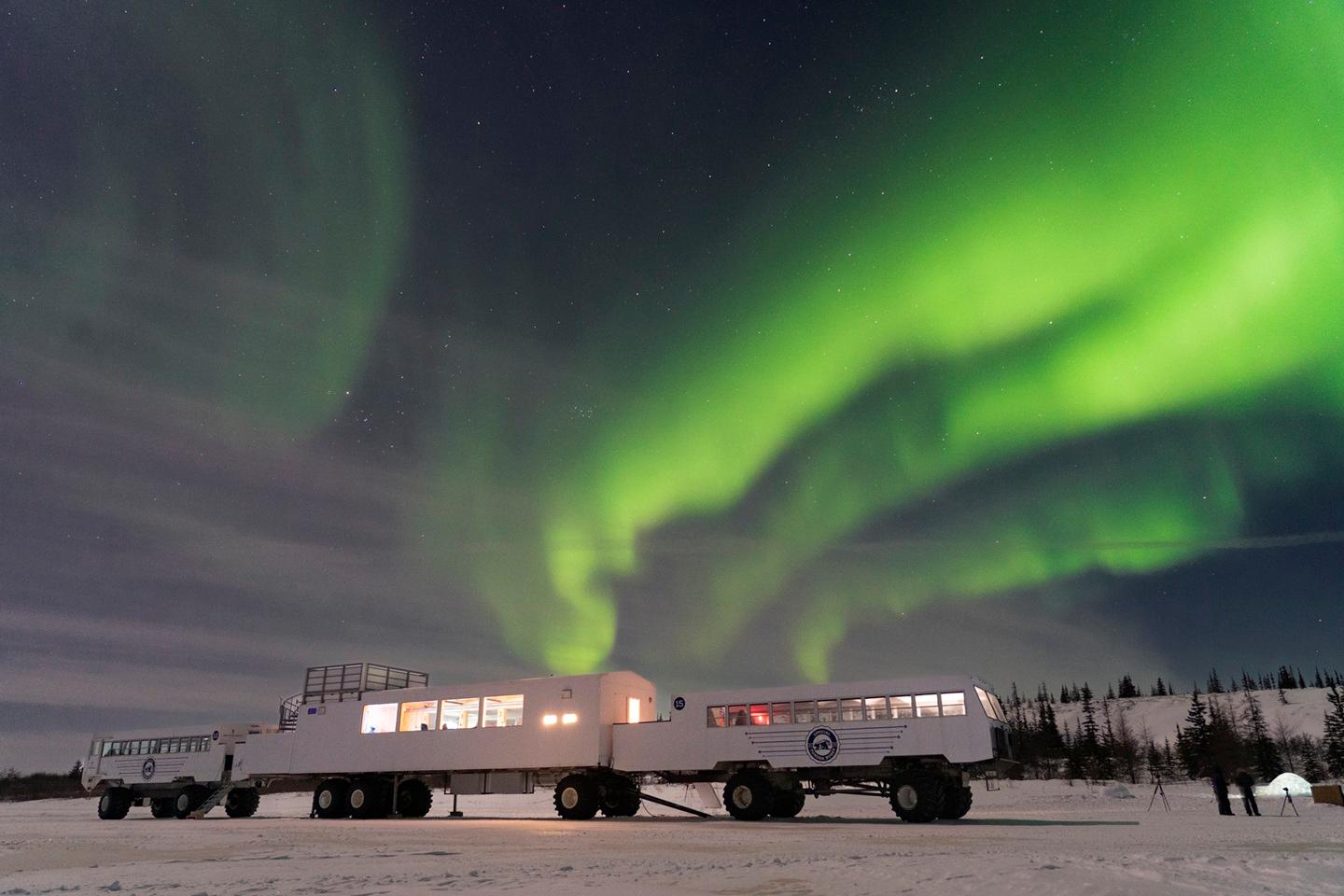
Photo credit: Travel Manitoba
The Churchill Northern Studies Centre
Located about 30 minutes (23 km) from town inside the Churchill Wildlife Management Area, this working research station has been a hub of aurora science since 1976. When the aurora appears, the Centre switches off its exterior lights, and you can shoot from the outdoor observation deck or step outside for an unobstructed horizon view. The Winter Skies Learning Vacation combines nighttime shooting sessions with lessons taught by aurora researchers.
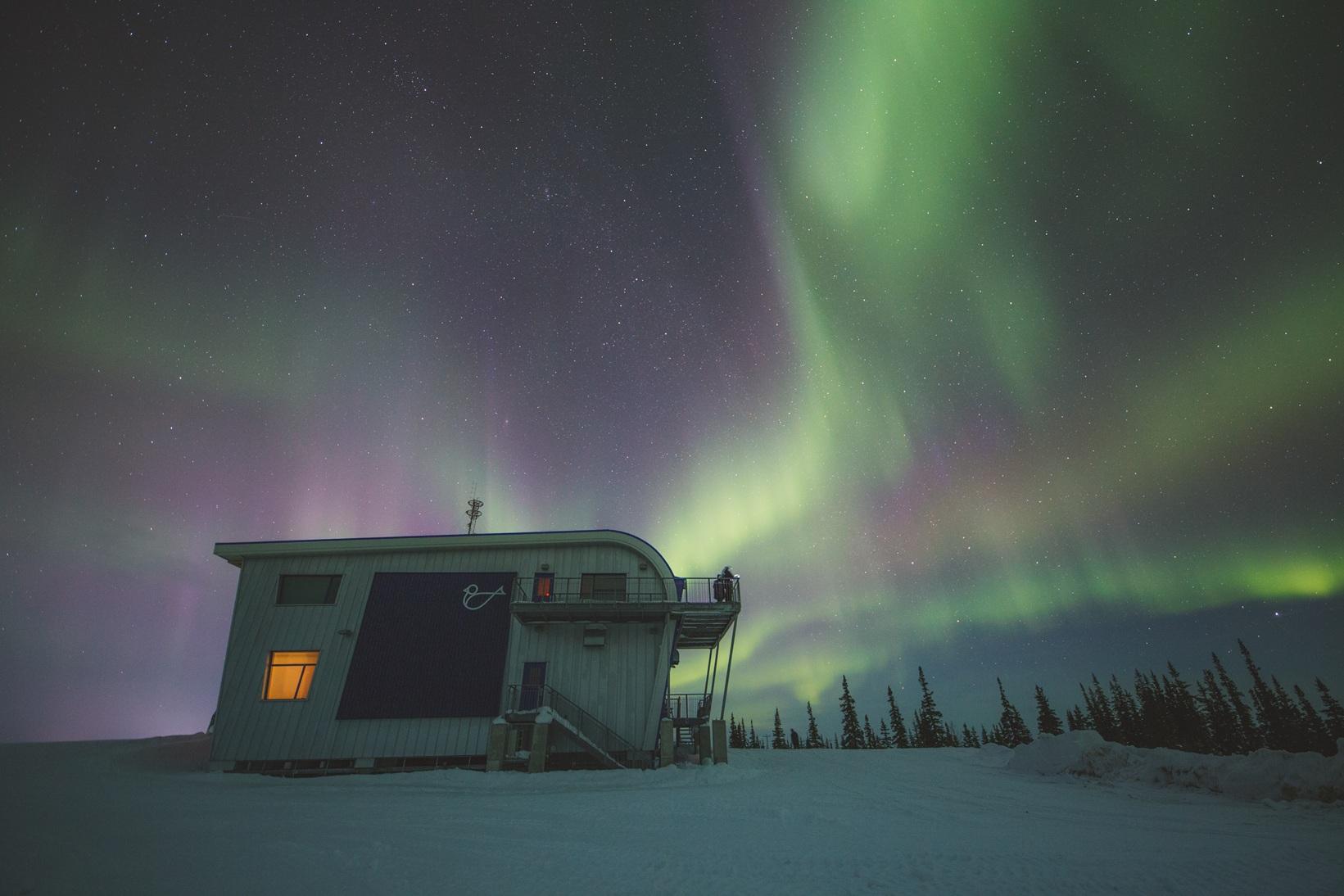
Photo credit: Travel Manitoba
The Aurora Domes
These heated Plexiglas domes sit about 10 minutes outside town. The domes themselves are purpose-built for aurora viewing, and the surrounding tundra offers photographers clean, dark sightlines in every direction–and with a warm retreat just a few steps away. It's an ideal setup if you're traveling with someone who would rather stay warm inside while you set up your tripod.
Cape Merry
If you want a foreground with historical resonance, try Cape Merry. Cape Merry's 18th-century stone battery stands at the mouth of the Churchill River, with the Hudson Bay stretching behind it. This National Historic Site offers one of Churchill's most iconic photo compositions, with the aurora shining over centuries-old fortifications.
The Tundra Buggy Lodge Deck (Fall Bonus)
Frontiers North's Tundra Buggy Lodge is a chain of converted train cars parked on the tundra. In polar bear season, October and November, you might just get a chance to capture a frame few other places on Earth can offer: the northern lights in the sky while a polar marches across the wintry landscape beneath.
Photo credit: Travel Manitoba
How Do I Photograph the Aurora at -30°C?
Churchill's dry cold often means clear skies, but make no mistake: these temperatures are hard on camera gear. So be prepared. Cold kills batteries fast, so carry two or three spares in an inside pocket, close to your body heat. Wear thin liner gloves under heavy mitts so you can work dials without exposing bare skin. And don’t forget your hand warmers.
Condensation is the other enemy. Going from -30°C into a heated lounge fogs a cold lens instantly, and that moisture can freeze when you head back out. Before going inside, seal your camera in its bag and let it warm up gradually. Tucking your camera inside your coat for the transition can work, too. One more local tip: be careful not to breathe on your viewfinder (or lens) while shooting. Your breath will freeze onto the glass.
What Is the Best Time to Photograph the Northern Lights in Churchill?
The northern lights are typically most active between 11 pm and 3 am. Peak viewing occurs in February and March. A new moon, of course, means dark skies and brighter northern lights, but you’ll want to keep track of what the Sun is doing, too. According to NASA's Solar Dynamics Observatory, which monitors the sun around the clock, the solar eruptions that trigger strong auroras can be tracked days in advance. Free forecasting tools like NOAA's Space Weather Prediction Center and the citizen-science platform Aurorasaurus translate that solar activity into an aurora forecast.
What Will a Photo Guide Teach You?
There is more to photographing the northern lights than camera settings. A local guide offers the wisdom developed over countless nights photographing the aurora: reading the aurora forecast and the Kp index, recognizing when a faint glow is about to grow into something more, and adjusting settings in real time as the lights change. Frontiers North’s multi-night Photo Adventure puts a Photo Specialist Guide at your side, beginning with a hands-on workshop and continuing through nightly shoots in settings ranging from Thanadelthur Lounge to a secluded yurt in the boreal forest.
It's designed for every level, whether you're carrying an interchangeable-lens camera or a smartphone.
Remember: in Churchill, when the northern lights are out, anyone can get the shot of a lifetime.
Frequently Asked Questions
What are the best camera settings for the northern lights in Churchill?
While the specific answer depends on what the lights are doing on any given night, as a general rule, shoot in manual mode with your aperture wide open (f/1.4–f/2.8), ISO between 800 and 3200, and a shutter speed of 5–15 seconds, adjusting for the aurora's brightness and speed. Focus manually at infinity, use a tripod, and take test exposures throughout the night.
Can I photograph the northern lights with a smartphone?
Yes. Recent smartphones with night mode can capture the aurora in Churchill, especially on strong nights. Mount your phone on a tripod and use night mode or a manual camera app with a 3–10 second exposure. Guided photo tours welcome smartphone shooters.
When is the best time to photograph the northern lights in Churchill?
Peak season is February and March, the time of year when nights are longest and typically clearest. The aurora is most active between 11 pm and 3 am. A second viewing window runs from late August through September. Churchill, Manitoba, logs over 300 nights of aurora activity per year, more than anywhere else in Canada.
Do I need a tripod to photograph the aurora?
Yes. Aurora photography requires exposures of several seconds, too long to handhold. A sturdy tripod, plus a two-second timer or remote shutter release, will help keep your frames sharp.