The Best Time to See the Aurora in Yellowknife: A Month-by-Month Guide
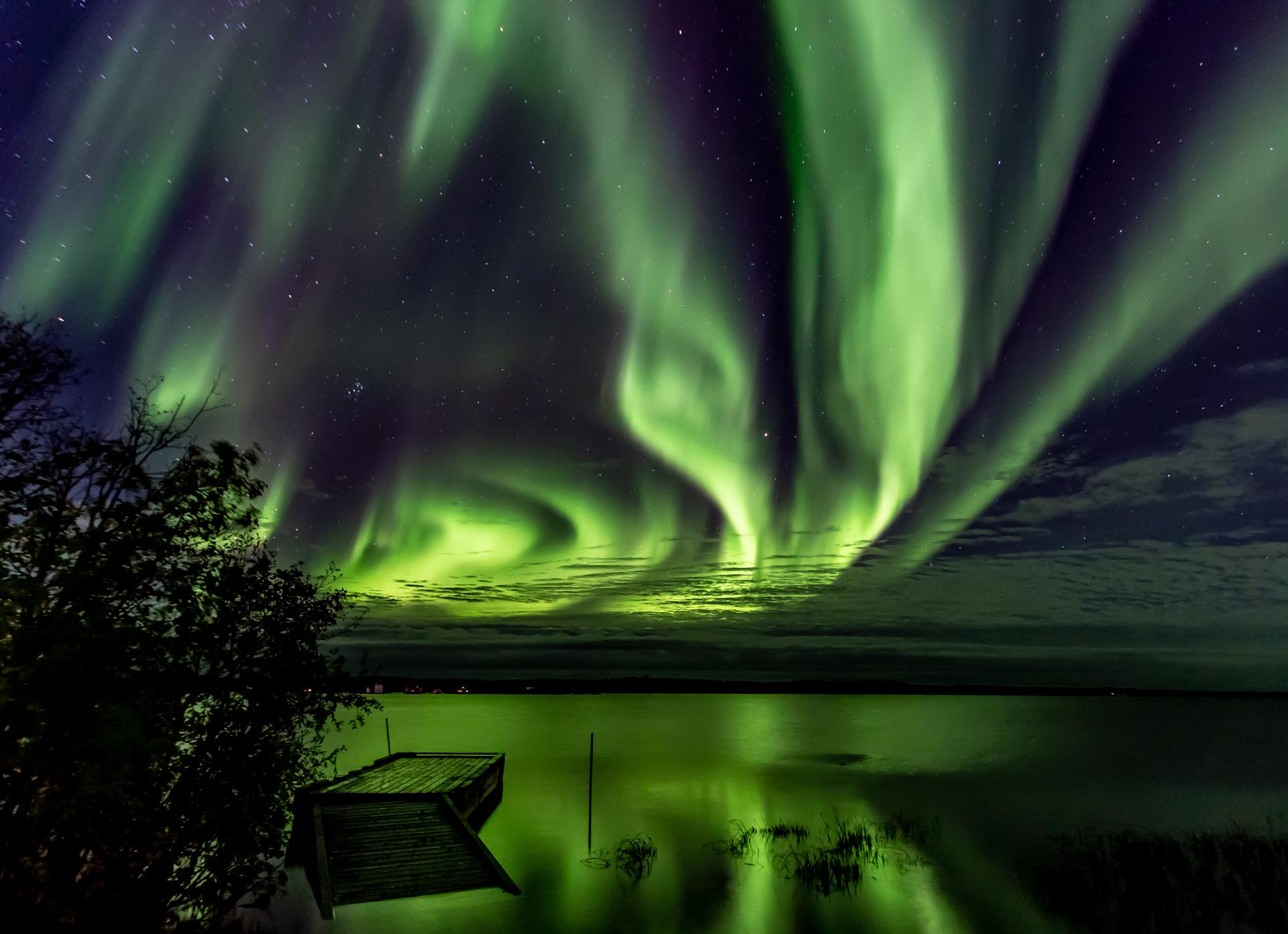
Yellowknife is an aurora-viewers dream! Sitting at 62.45°N latitude, the city is directly beneath the auroral oval – the band around Earth’s poles where charged particles enter the atmosphere and produce the Aurora. That location far from an ocean coast, combined with a dry winter climate gives Yellowknife an average of 240 nights of Aurora every year.
While the brightness of the Northwest Territories’ legendary midnight sun renders the Aurora invisible in the summer months, once the dark begins to return in mid-August so does the Aurora viewing, stretching through fall to the end of winter in mid-April. But within those eight months, there is an incredible fall Aurora season, a cloud-cover gap to plan around, and a breathtaking winter Aurora season. This guide walks through the season month by month so you can plan your trip and give yourself the best chance of a night sky that stays with you long after you leave.
Fast Facts
Fall Aurora viewing season: Mid-August through late September
Winter Aurora viewing season: Mid-November through early April
Viewing nights per year: Up to 240 nights
Best months for first-timers: Late February and March
Cloud-cover gap: Early October to mid-November
Recommended trip length: Four to five nights
Why Does Yellowknife See the Northern Lights for So Long?
A few factors work together to make Yellowknife one of the best places in the world to see the Aurora. The first is position. Yellowknife sits directly below the auroral oval. The oval expands and contracts with solar activity, but at Yellowknife’s latitude, the city is consistently within the oval’s active band. Because of this, even when the KP index (a measure of geomagnetic activity published by NOAA's Space Weather Prediction Centre) is low, the Aurora is often still visible above Yellowknife. And when the geomagnetic activity is higher, that’s when the sky erupts with colour that stretches to the horizon.
The second factor is climate. The Northwest Territories has very low humidity levels. Clear, dry air means fewer clouds and greater sky transparency, which is what Aurora visibility depends on most. Together, position and climate produce an average of 240-nights of Aurora, making it one of the most consistent Aurora viewing spots in the world.
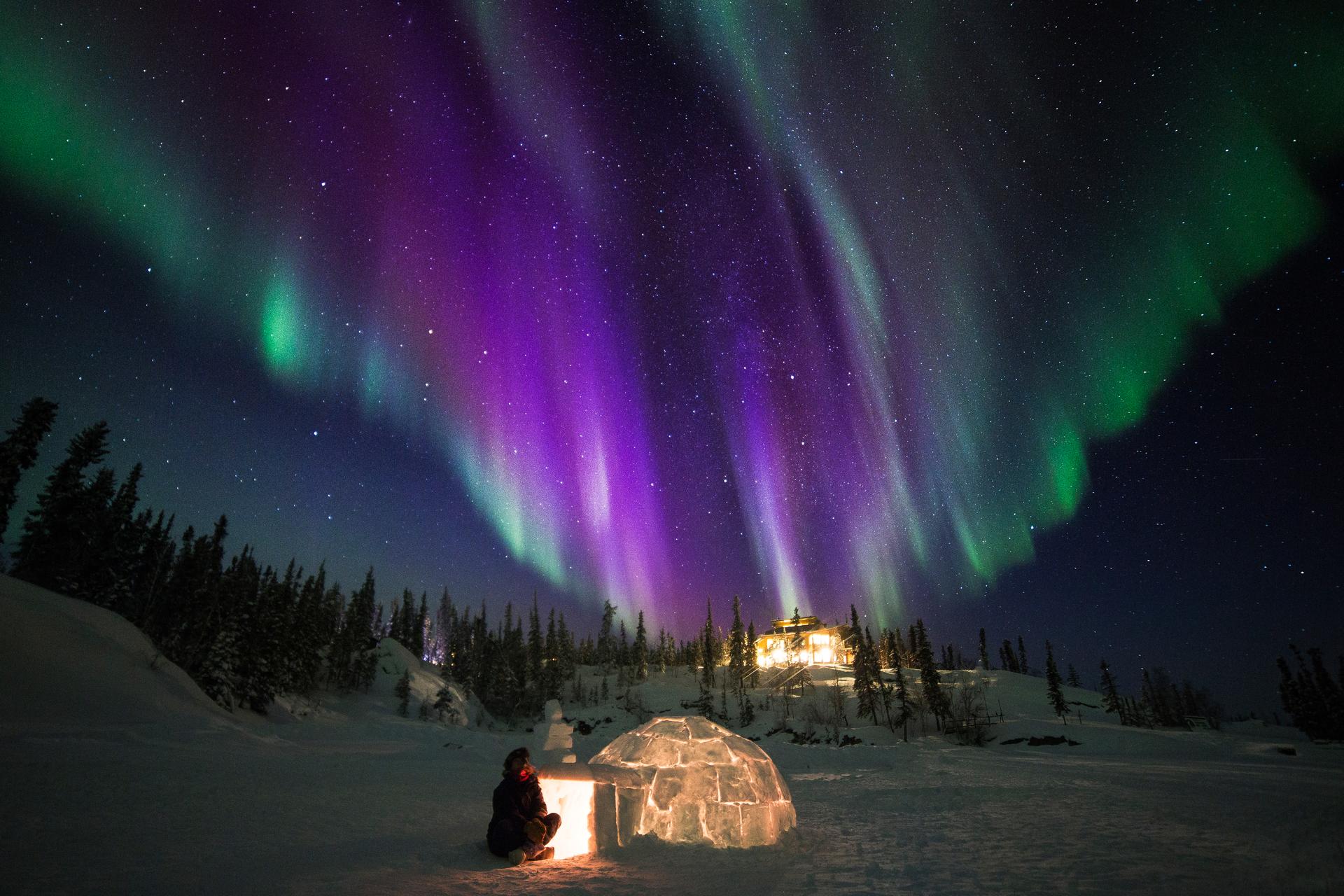
Photo Credit: Martina Gebrovska/Blachford Lake Lodge/NWTT
August and September: The Fall Aurora Season
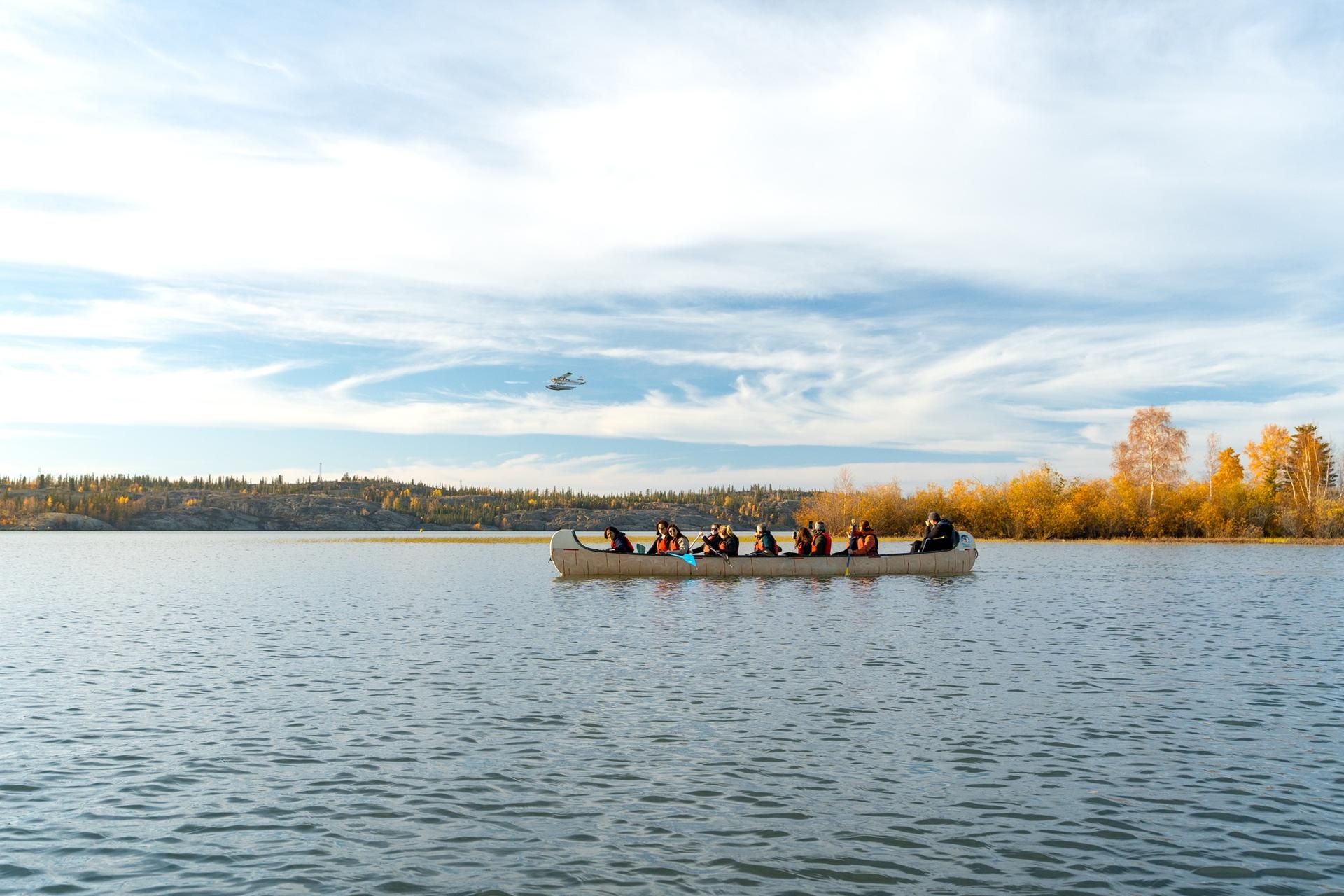
The midnight sun starts to fade in Yellowknife in late July, and by mid-August, the sky is dark enough to see the Aurora. The fall Aurora season lasts until the end of September.
Two things set this season apart from winter Aurora: the landscape and the temperature. Great Slave Lake is still unfrozen in August and September, and on calm nights the Aurora Borealis reflects across open water, a scene very different from the frozen winter wonderland that most travellers associate with Yellowknife. The forest holds its colour into early September and temperatures are considerably more moderate: daytime highs often reach 10–15°C.
The fall Aurora season is for travellers who want Northern Lights viewing combined with paddling, fishing, or hiking in the NWT, or who prefer a more mild temperature viewing experience.
October and Early November: The Clouds Roll In
This is the one period worth actively avoiding if Northern Lights viewing is your primary goal.
As temperatures drop in October, heavy cloud systems move through the region. The overcast arrives as the cold stabilizes and can persist for weeks. Some Aurora operators in Yellowknife reduce or pause their programming during this period, as cloud cover makes reliable viewing impractical.
This is when the region gets a majority of it’s snowfall and the city transforms into a winter wonderland. The Northern Lights are there above the clouds, but the reliability offered in the fall and winter Aurora seasons isn’t available. Shifting your trip by four to six weeks in either direction opens up considerably better conditions.
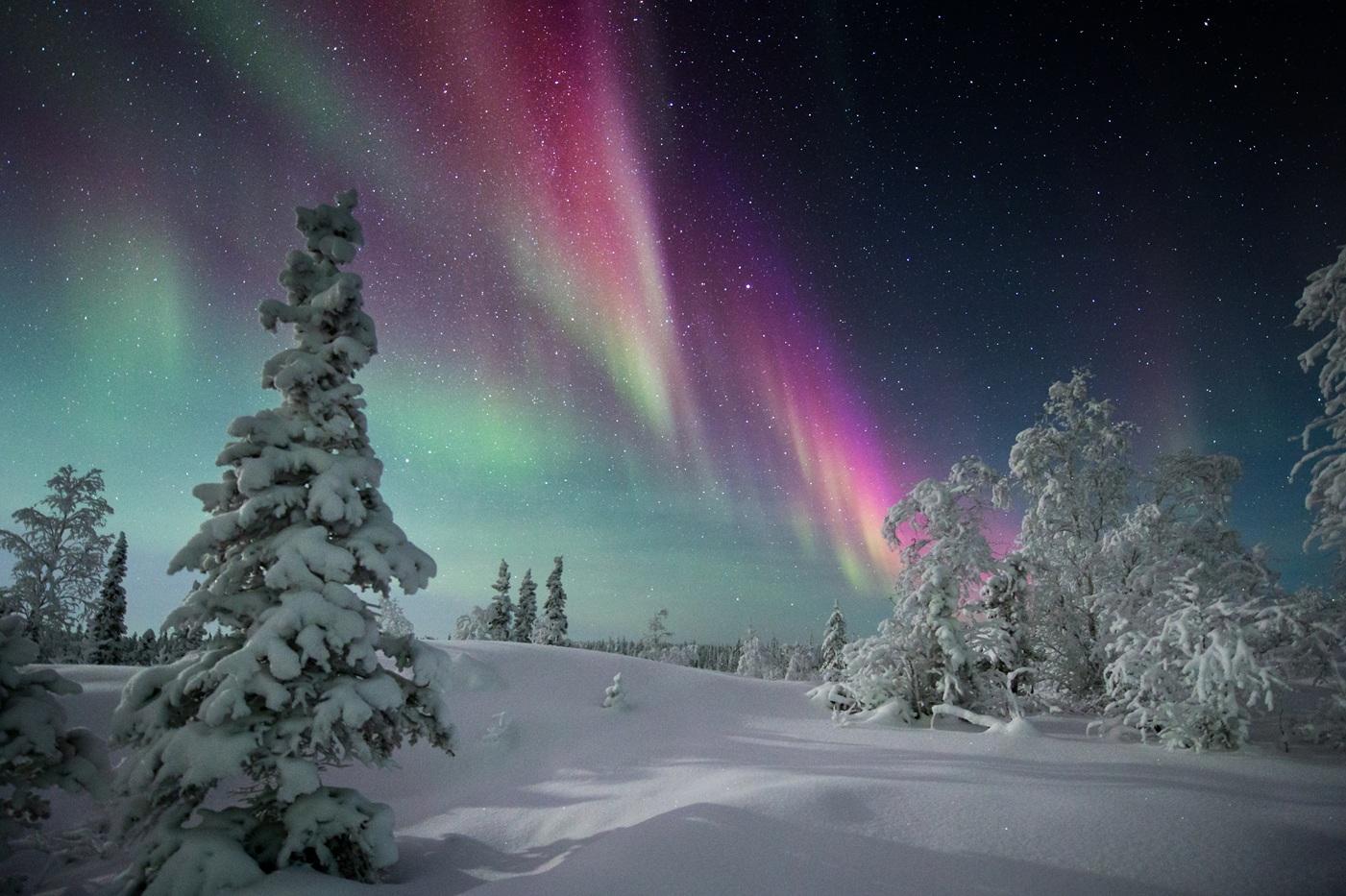
Photo credit: Adam Hill
February and March: A Prime Aurora Window
February until the end of March has some of the best winter Aurora viewing conditions of the season.
NOAA data consistently shows elevated geomagnetic activity around the spring equinox, when Earth's orientation creates a more direct channel for solar wind particles to reach the polar regions. That elevated activity, combined with long dark nights and the reliable cold-clear skies of mid-winter, makes this a prime window for first-time travellers and returning visitors alike. Temperatures are also slightly more mild than the January lows.
The ice road between Yellowknife and Dettah is typically open during this period. Dettah is one of the two Yellowknives Dene First Nation communities adjacent to Yellowknife. Indigenous-led operators, including North Star Adventures and B. Dene Adventures, offer Aurora viewing paired with Dene cultural programming.
A four to five night stay in late February or March give you many Aurora-viewing opportunities and gives you a very high chance of seeing a full Northern Lights display.
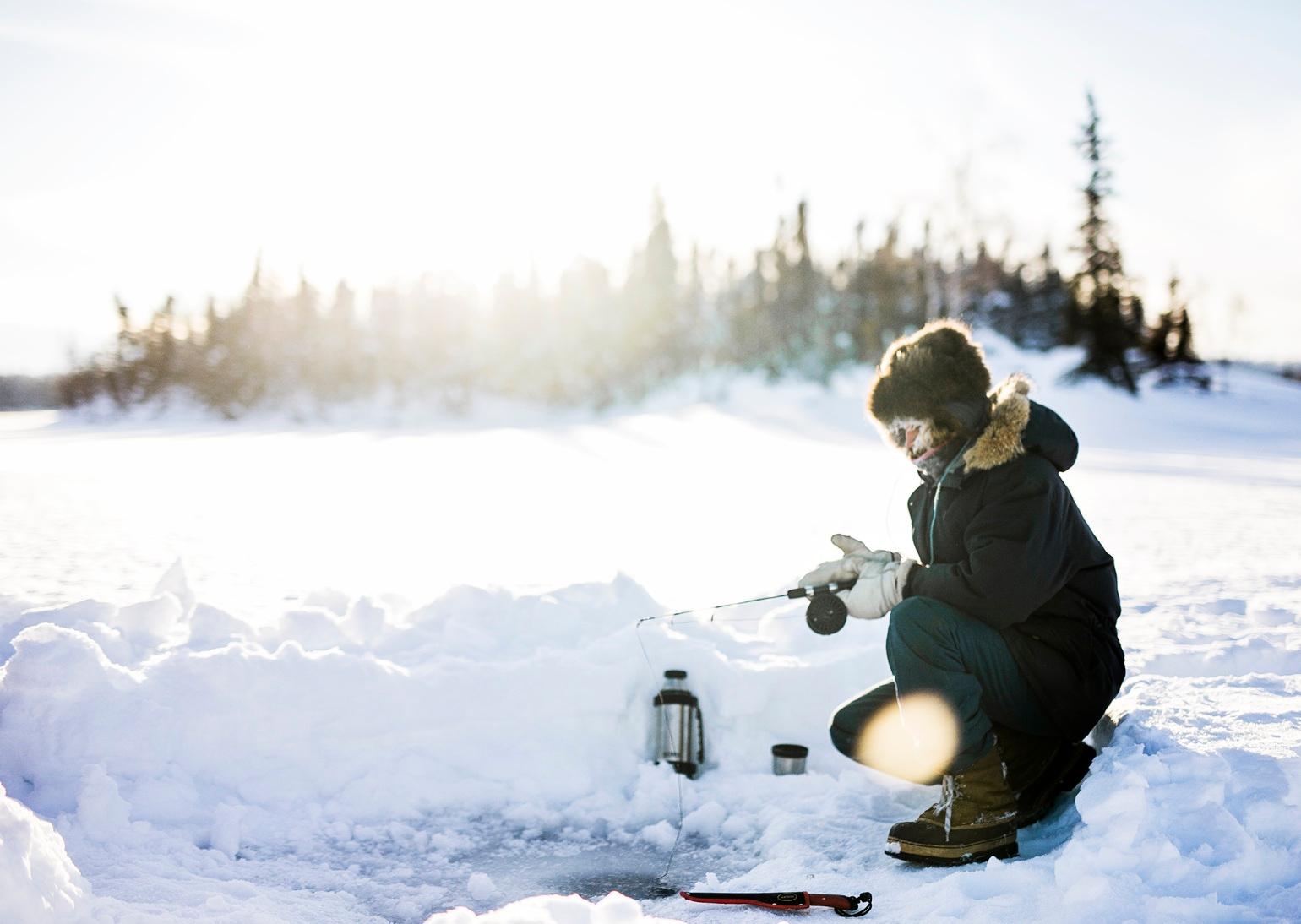
Photo credit: Martina Gebrovska/Blachford Lake Lodge/NWTT
April: The Season Closes
Through most of April the Aurora remains visible, but the viewing window shortens considerably as daylight extends. By mid-April, nights are short enough that strong geomagnetic activity is typically needed to make viewing practical before midnight.
April has its own appeal. The weather is warmer and the days are longer, but the ice is still thick enough to be driven on safely. So this is the perfect time to grab the auger, drop a line through the ice and jig for monstrous Northern Pike, feisty Arctic Grayling, succulent Whitefish and truly enormous Lake Trout. Ice fishing operators equip comfortable and spacious ice fishing huts with dedicated seating, a toasty wood-burning stove and all the ice fishing equipment you’ll need to make the most of your experience in modern comfort.
By late April, many operators have concluded their Aurora season programming. The next viewing season begins in mid-August.
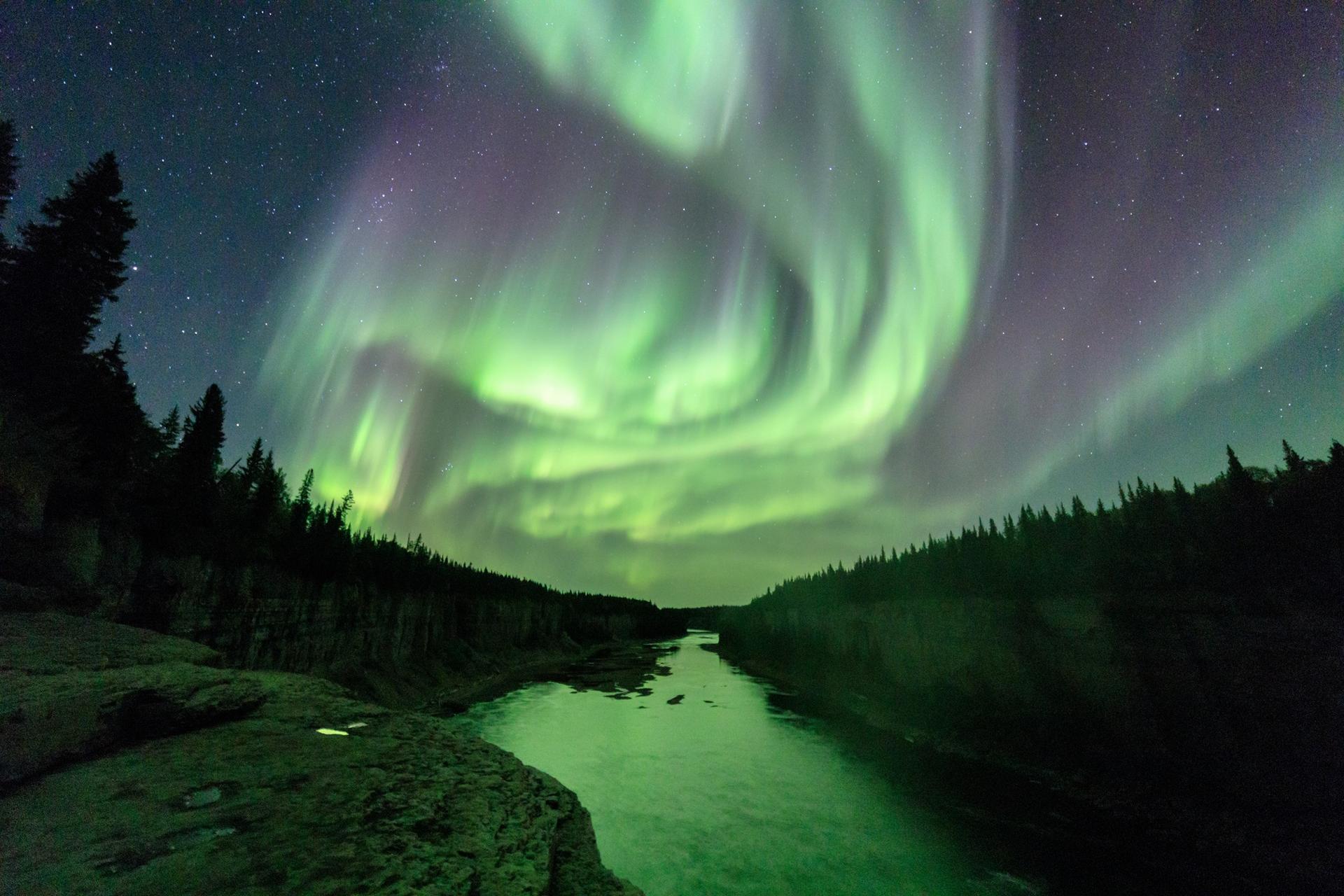
Photo credit: Aaron Tambour/NWTT
Panning Your Visit
Plan for at least a four night stay. This gives you a buffer if the weather doesn’t cooperate one night.
Choose the type of Aurora-viewing experience suits you, whether it’s viewing from a teepee or cozy cabin outside the city, hunting the Aurora down along the Ingraham Trail, learning about its cultural significance from an Indigenous guide, or taking it in from a fly-in wilderness lodge. Booking with a different tour operator each night will give you variety of experience.
Book early for August through September and February through March. Demand is highest during this period and popular tours fill well in advance.
Frequently Asked Questions
What is the best month to see the Northern lights in Yellowknife?
This depends on what kind of Aurora-viewing experience you want and what activities you want to do when you’re not Aurora-viewing. The fall Aurora season (mid-August to late September) is for travellers who want Northern Lights viewing combined with paddling, fishing, or hiking in the NWT, or who prefer a more mild temperature viewing experience. If the quintessential Canadian winter experience is what you’re after, the winter Aurora season (mid-November to early April) is for you. Regardless of which season you choose, the Aurora in Yellowknife will deliver a spectacular display.
How long is the Aurora season in Yellowknife?
In Yellowknife, you can expect up to 240 nights of Aurora, making it one of the best places in the world for Aurora viewing. The viewing season runs from mid-August to early April, with the prime viewing seasons of mid-August to late September and mid-November through early April.
Is there a time of year to avoid?
Early October to mid-November brings heavy cloud cover as the cold stabilizes, and many operators reduce or pause their Aurora programming during this period. Planning outside this window gives you considerably better viewing conditions.