How to Maximize Your Aurora-Viewing Odds in Whitehorse, Yukon
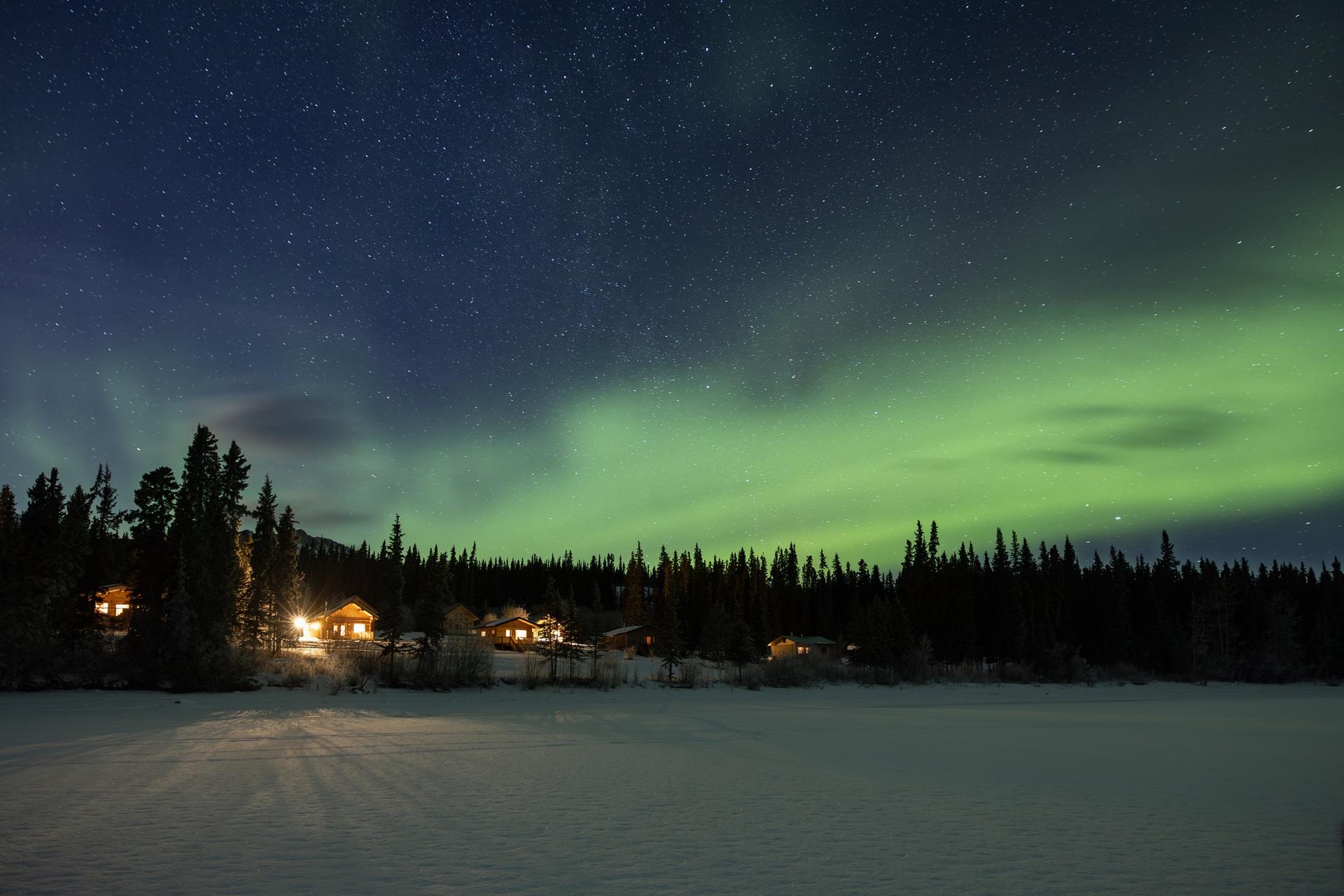
Whitehorse is one of the best places on Earth to see the northern lights. Its location, dark skies, and strong aurora activity give visitors excellent viewing opportunities.
It comes down to where the city sits on the map, where the sun is in its activity cycle, and how well you time your visit. Get all three working for you, and your chances of witnessing the aurora borealis improve dramatically.
This guide explains how aurora viewing works in Whitehorse, Yukon. It also covers the best forecast tools, viewing months, and guided tours that can help you plan a stronger northern lights trip.
Can You See the Northern Lights in Whitehorse, Yukon?
Yes. Whitehorse is a strong destination for northern lights viewing because it sits near the auroral oval. From late August to early April, visitors can often see the aurora when skies are dark, clear, and active.
A KP index of 3 or higher often gives Whitehorse good viewing potential. You can improve your odds by checking forecasts, avoiding light pollution, and staying outside during peak viewing hours.
Fast Facts: Aurora Viewing in Whitehorse, Yukon
Factors and what to know:
Whitehorse latitude: 60.7°N - on the auroral oval's southern edge
KP index needed: KP 3+ pushes the auroral oval directly over Whitehorse
Best aurora season: Late August to early April
Solar Cycle 25: Peaked October 2024 per NASA/NOAA; 2026 is in the post-peak storm window; the next cycle builds back up around 2035
Guided viewing options: Many local operators offer guided aurora tours and dark-sky viewing experiences in and around Whitehorse
Trusted forecast tools: NASA Solar Dynamics Observatory · NOAA Space Weather Prediction Center · Aurorasaurus
What Is the Auroral Oval?
The auroral oval is a glowing ring of aurora around Earth’s magnetic pole. It does not sit over the geographic North Pole. Instead, it follows Earth’s magnetic field.
Whitehorse sits close to the oval’s active southern edge. This location gives the city a major viewing advantage.
When solar activity increases, the auroral oval expands south. That movement can place Whitehorse directly under the northern lights.
This is why Whitehorse does not need extreme solar storms for strong aurora displays. Even moderate activity can create visible lights when the sky is dark and clear.
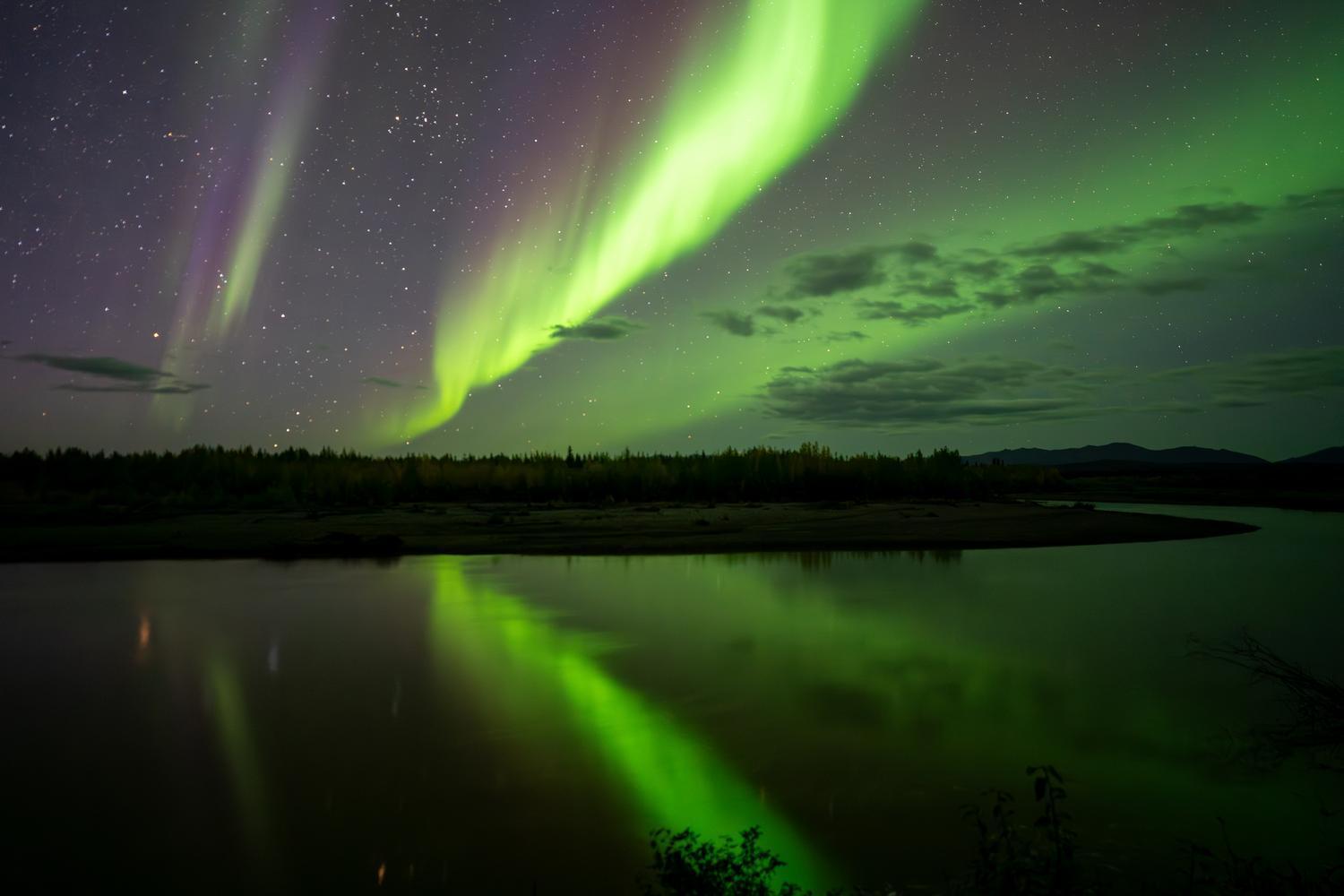
Photo credit: Travel Yukon
What KP Index Do You Need in Whitehorse?
The KP index is a number from 0 to 9 that measures global geomagnetic activity. For aurora viewing in Whitehorse, a KP of 3 or higher is typically enough to push the auroral oval overhead.
NOAA's Space Weather Prediction Center notes that in the right dark-sky location, "you can see very nice auroral displays even with low geomagnetic activity (KP 3 or 4)." At KP 3–5, expect bright, moving formations across the sky. At KP 6–7, the display intensifies and spreads. You rarely need to wait for an extreme storm — that's the advantage of starting from a high-latitude city like Whitehorse.
Experienced local guides, who lead nightly aurora tours from dedicated dark-sky sites north of the city, note that once the KP reaches 3 and the sky is clear, guests at their viewing locations can typically expect a visible display — a practical benchmark backed by hundreds of nights under the Yukon sky, and consistent with what NOAA's science describes.
How to Read a NOAA Aurora Forecast
NOAA's Space Weather Prediction Center is one of the most useful aurora forecast tools. NOAA’s aurora dashboard shows visibility forecasts for tonight and tomorrow. It also estimates aurora activity for the next 30 minutes.
Before your trip, focus on three key numbers.
- KP index: The KP index gives you the main activity level. NOAA shows KP values in three-hour blocks. For Whitehorse, watch for periods rated KP 3 or higher. Those windows offer stronger aurora potential.
- Solar wind speed: Solar wind is a stream of charged particles from the sun. Faster solar wind can help energize the auroral oval. Stronger solar wind does not guarantee visible aurora. But it can improve your chances when other conditions align.
- Bz component: Bz shows the direction of the solar wind’s magnetic field. When Bz turns south, aurora activity often improves. This detail can feel technical. For most travellers, the simple rule is this: negative Bz is usually better for aurora viewing.
Best Time of Night to See the Northern Lights
The best aurora viewing window often falls near local midnight. In Whitehorse, plan to watch between 10 p.m. and 2 a.m. Aurora activity can happen earlier or later. But this window gives many visitors their best chance.
Give yourself time outside. Your eyes need about 20 minutes to adjust to the dark. A quick glance from a bright area can cause you to miss faint aurora.
How Solar Cycle 25 Affects Aurora Odds in 2026
The sun follows an activity cycle that lasts about 11 years. During solar maximum, the sun becomes more active.
NASA and NOAA announced in October 2024 that the sun had reached the solar maximum period of Solar Cycle 25. During this stage, solar activity and space weather events become more frequent.
That matters for aurora travellers. More solar activity can create stronger geomagnetic conditions. Those conditions can increase northern lights visibility.
The peak does not end suddenly. Activity can remain strong during the years after solar maximum. This makes 2026 a promising time for northern lights viewing in Whitehorse.
Best Months to See the Northern Lights in Whitehorse
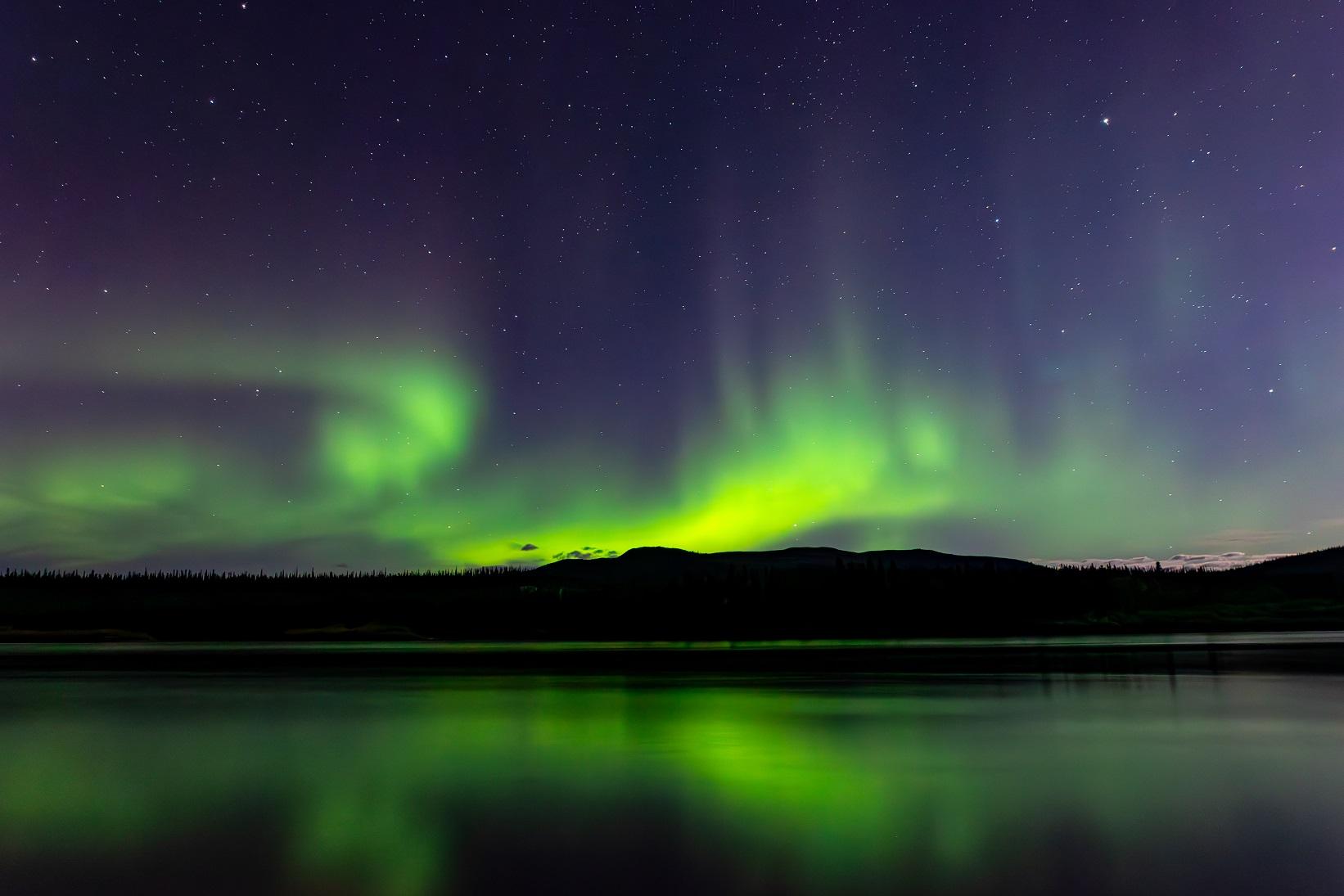
Aurora season in Whitehorse usually runs from late August to early April. The best month depends on your travel style.
August and September
Late August marks the return of darker nights. September brings cooler weather, stronger darkness, and fall colours. This is a great time for travellers who want milder temperatures.
October and November
October and November offer longer nights and crisp conditions. These months can be excellent for aurora viewing. You also get a strong mix of early winter scenery and darker skies.
December and January
December and January bring the longest nights of the year. Longer darkness gives you more time to watch the sky. These months can be cold, so warm clothing matters.
February, March, and April
Late winter and early spring offer a strong balance. Days grow longer, but nights stay dark enough for aurora viewing. March and April can also benefit from equinox-season activity.
How Guided Tours Improve Your Aurora Odds in Whitehorse
You do not need a guided tour to see the northern lights in Whitehorse. But a tour can improve the experience and reduce planning stress. Local guides understand Yukon weather, road conditions, and viewing locations. They also help guests stay comfortable outside for longer.
Here is how guided tours help.
- Escape light pollution: City lights make faint aurora harder to see. Guided tours often travel to darker locations outside Whitehorse. Darker skies help you see more detail, colour, and movement.
- Stay comfortable longer: Heated shelters, hot drinks, and other amenities make it easier to stay out during the prime viewing hours, when aurora activity is often strongest.
- Benefit from local expertise: Guides track forecasts, clouds, and sky conditions. They know where to go when conditions shift. This local insight can help you avoid poor viewing spots.
- Be in the right place at the right time: Local knowledge helps avoid cloud cover and identify the best viewing locations based on current conditions.
- Skip the planning: Guided experiences handle the logistics, so you can focus on enjoying the night rather than researching locations, forecasts, and road conditions.
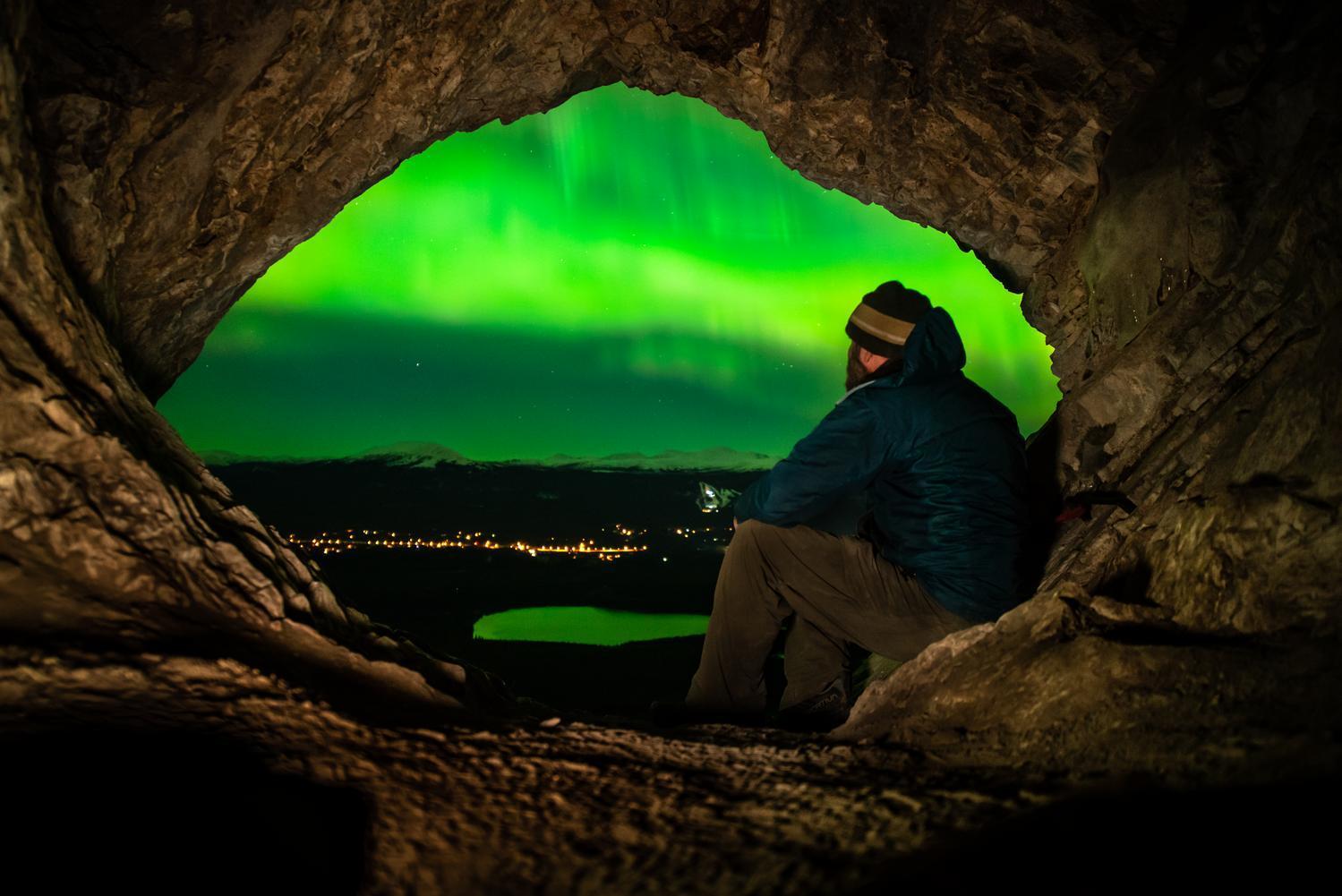
Photo credit: Travel Yukon
Frequently Asked Questions
What KP index do I need to see the northern lights in Whitehorse?
A KP index of 3 or higher is typically enough. Whitehorse sits at 60.7°N on the southern edge of the auroral oval, so even moderate geomagnetic activity can produce impressive displays. A dark viewing location away from city lights can make a noticeable difference.
What is the best month to see the northern lights in Whitehorse?
There is no single best month to see the northern lights in Whitehorse. Aurora season generally runs from late August through early April, and each part of the season offers its own advantages.
What is the auroral oval and how does it affect Whitehorse?
The auroral oval is a ring-shaped zone around Earth's magnetic pole where aurora activity occurs most often. Whitehorse sits near the oval's southern boundary, placing it in an ideal position for northern lights viewing. When solar activity increases, the oval expands south, often bringing the aurora directly overhead.
Is 2026 a good year for aurora viewing in Whitehorse?
Yes. Solar Cycle 25 reached its maximum period in October 2024, and 2026 falls within the active post-peak phase. Strong geomagnetic activity can still occur during this period, creating favourable conditions for aurora viewing.
How do I check the aurora forecast before travelling to Yukon?
Use NOAA's Space Weather Prediction Center to monitor the three-day KP forecast, solar wind conditions, and short-term aurora outlooks. On the night of your viewing attempt, check Aurorasaurus for real-time reports and alerts from other aurora watchers. Together, these tools help you make informed decisions about when to head outside.
Do I need a guided tour to see the northern lights in Whitehorse?
No, but a guided tour can improve both your viewing experience and your chances of success. Local operators take guests to dark-sky locations away from city lights, monitor weather and aurora forecasts, and provide amenities such as heated shelters and hot drinks. Their local knowledge can help you spend more time under clear skies and less time searching for the right location.
Whether you're a first-time visitor or a seasoned aurora chaser, Whitehorse offers a range of northern lights experiences for everyone. Explore aurora viewing tours, and local operators on Travel Yukon to find the experience that's right for your trip.