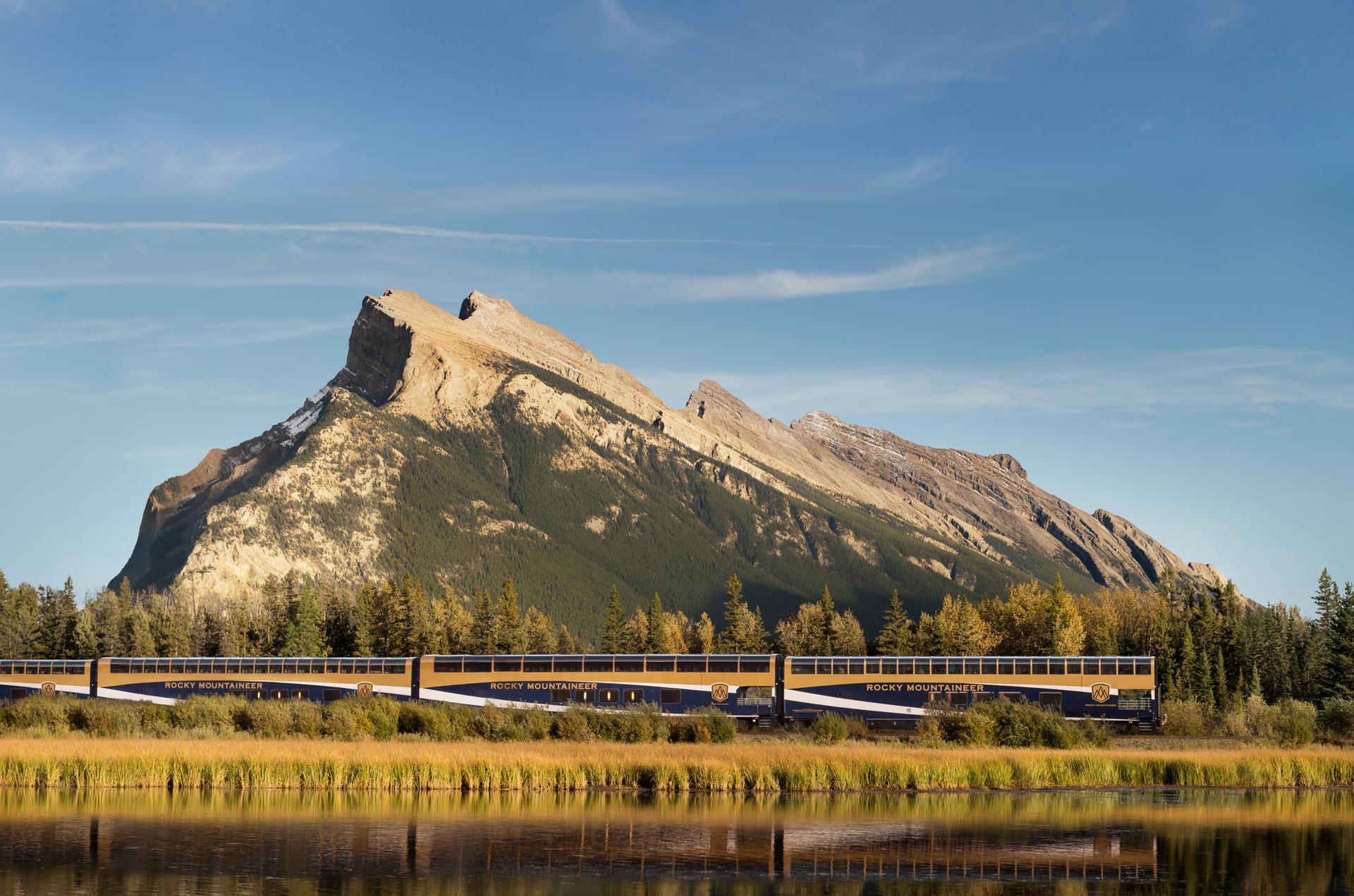
Slow travel is more than a way to get from one destination to another. It's a choice to be present and let a destination unfold at its own pace rather than rushing through a checklist of sights. Slow travel is about reconnecting with yourself through the rhythm of the journey itself. In a world that rewards speed, it's almost an act of resistance.
Slow travel by train is one of the most immersive ways to experience Canada’s vast landscapes. You can sit comfortably in your seat and watch forests, rivers, coastlines and mountains shift outside the window, one region at a time. The journey becomes part of the experience, not just how you get there.
Rail routes stretch across the country, linking major cities, coastal regions and remote northern communities. From historic locomotives to modern luxury trains, from cross-country journeys to shorter regional loops, these routes offer a more eco-friendly way to explore Canada at a slower pace.
A beautifully curated reference book published by Gallimard Voyages in October 2025, En train au Canada: 26 routes sur les rails, highlights 26 journeys across the country. Travel journalists Marie-Julie Gagnon, Catherine Girouard, Maud Simon and Andréanne Joly explore how rail travel invites visitors to experience Canada through its landscapes, cultures and communities.
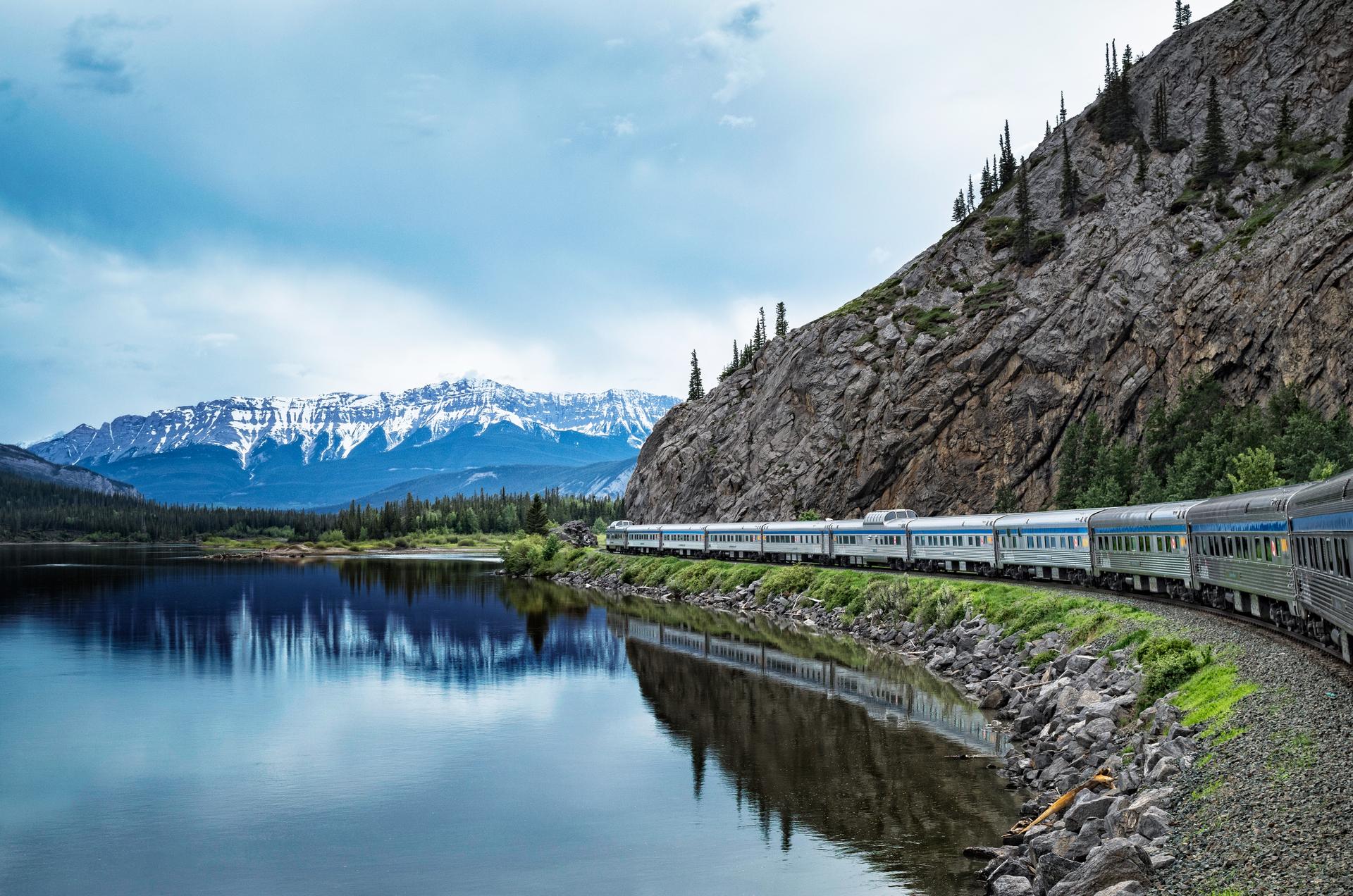
VIA Rail's Canadian route winds through past glacial lakes, ancient rock faces, and the snow-capped peaks of the Canadian Rockies in Alberta and British Columbia.
- Origin/destination: Toronto – Vancouver
- Duration: 4 nights/4 days
- Distance: 4,406 km
- Province(s)/Territory: Ontario, Manitoba, Saskatchewan, Alberta, British Columbia
- Operator: VIA Rail Canada
- Best season: Summer, when the Canadian Rockies are fully accessible and the prairie wildflowers are in bloom. For a different experience winter offers the Rockies covered in snow minus the summer crowds.
- Standout detail: One of the longest passenger train journeys in North America.
Operating since 1955 and operated by VIA Rail, this iconic slow travel journey crosses five provinces between Toronto and Vancouver. The route passes through northern Ontario forests, Prairie grasslands and the Canadian Rockies before reaching the Pacific coast.
Fall asleep somewhere in the forests of northern Ontario and wake up to the open Prairie horizon. By day three, the Rockies appear, first as a distant line, then as something that fills the entire window. Sleeper cabins range from compact berths for solo travellers to full cabins for up to four people, each with views of the changing landscape just outside.
In Toronto before departure, the St. Lawrence Market is one of the world’s great food halls and a good way to spend a morning. At the Vancouver end, kayaking through the sea caves of Indian Arm fjord at dusk is one of the most memorable ways to arrive on the Pacific coast. Deep Cove Kayak runs guided evening tours through the fjord just east of the city.
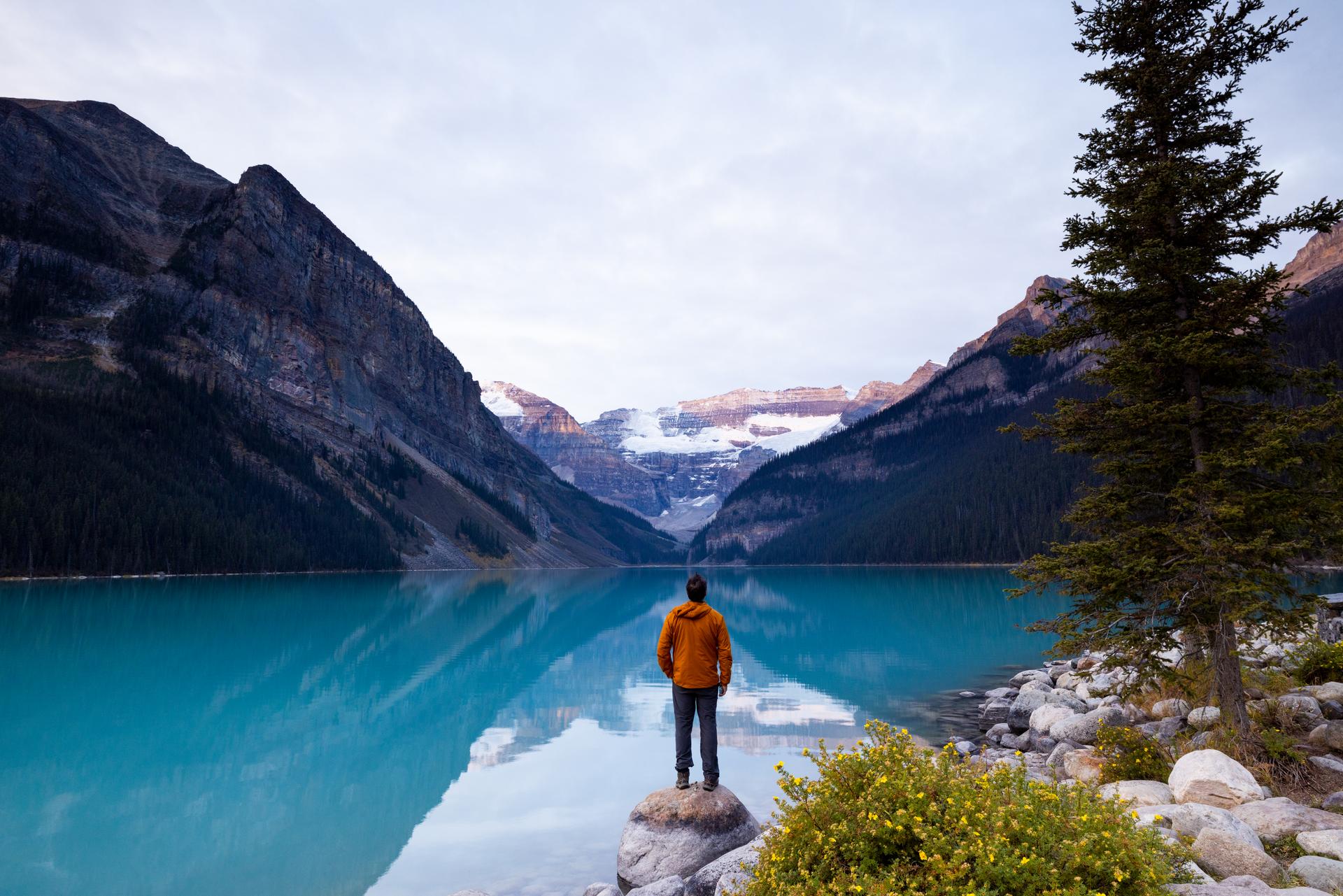
Lake Louise in Banff National Park is one of Canada's most iconic natural landmarks and the stunning endpoint of Rocky Mountaineer's First Passage to the West route from Vancouver through the Canadian Rockies.
- Origin/destination: Vancouver – Banff/Lake Louise
- Duration: 2 days (with overnight hotel stop)
- Distance: Approx. 960 km
- Province(s)/Territory: British Columbia, Alberta
- Operator: Rocky Mountaineer
- Best season: Summer (mid-July to early August), when wildflowers blanket the mountain valleys and Banff's alpine scenery is at its peak.
- Standout detail: One of Canada’s most well-known luxury rail journeys through the Rockies.
Rocky Mountaineer trains run only during daylight hours so you’ll never miss the scenery. This luxury slow travel experience combines panoramic glass-domed carriages, onboard dining, and historic rail routes through mountain valleys and rivers.
In Vancouver before boarding, spend the morning stand-up paddleboarding in False Creek with the city skyline behind you. At the Banff and Lake Louise end, the Plain of Six Glaciers trail above Lake Louise is best hiked at golden hour. On your journey you will find a teahouse that has been running since 1959, where ingredients are either flown in or arrive via backpack.
Journey Through the Clouds
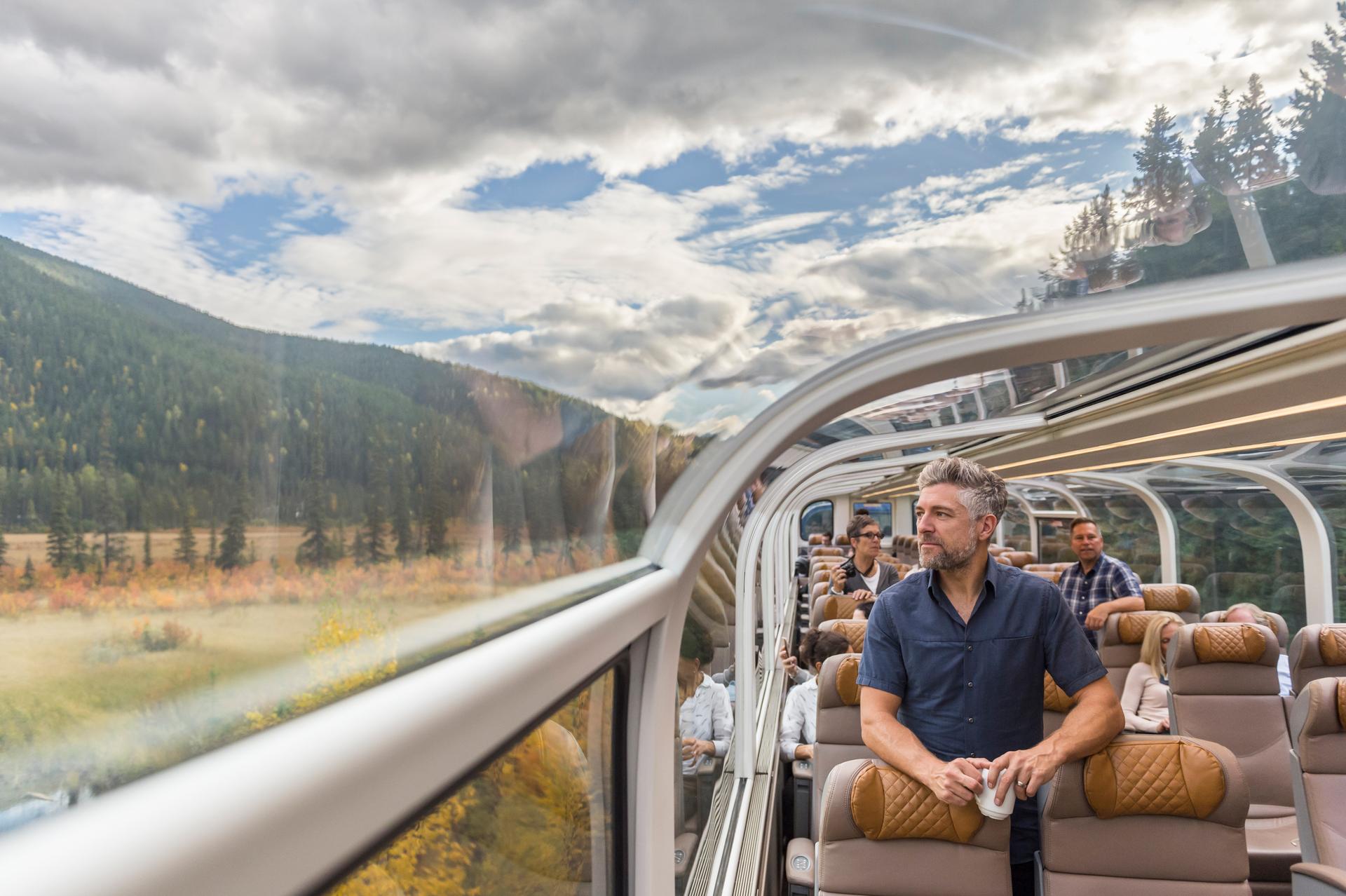
Rocky Mountaineer's Gold Leaf Service offers one of Canada's most iconic travel experiences, a glass-dome rail journey through the heart of the Canadian Rockies, with panoramic views of British Columbia and Alberta's most dramatic landscapes.
- Origin/destination: Vancouver – Jasper
- Duration: 2 days (with overnight hotel stop)
- Distance: Approx. 900km
- Province(s)/Territory: British Columbia, Alberta
- Operator: Rocky Mountaineer
- Best season: Summer, when Mount Robson is most likely to emerge from the clouds for clear, dramatic views.
- Standout detail: A luxury route showcasing Mount Robson, the highest peak in the Canadian Rockies.
Operated by Rocky Mountaineer, this slow travel journey connects the Pacific coast with the Canadian Rockies, following the Fraser River through dramatic canyons and forested valleys. The route highlights diverse landscapes before reaching Jasper, offering a distinct perspective on western Canada’s mountain scenery. Summer offers the best chance of clear views of Mount Robson. The peak is notoriously cloud-covered, so a clear sighting is considered a reward.
Before boarding in Vancouver, the Stanley Park seawall is best cycled at sunrise. The route around the park takes about an hour and ends close to the city’s train terminal. In Jasper at journey’s end, the Miette Hot Springs are the hottest natural hot springs in the Canadian Rockies and a natural place to decompress after two days in the mountains.
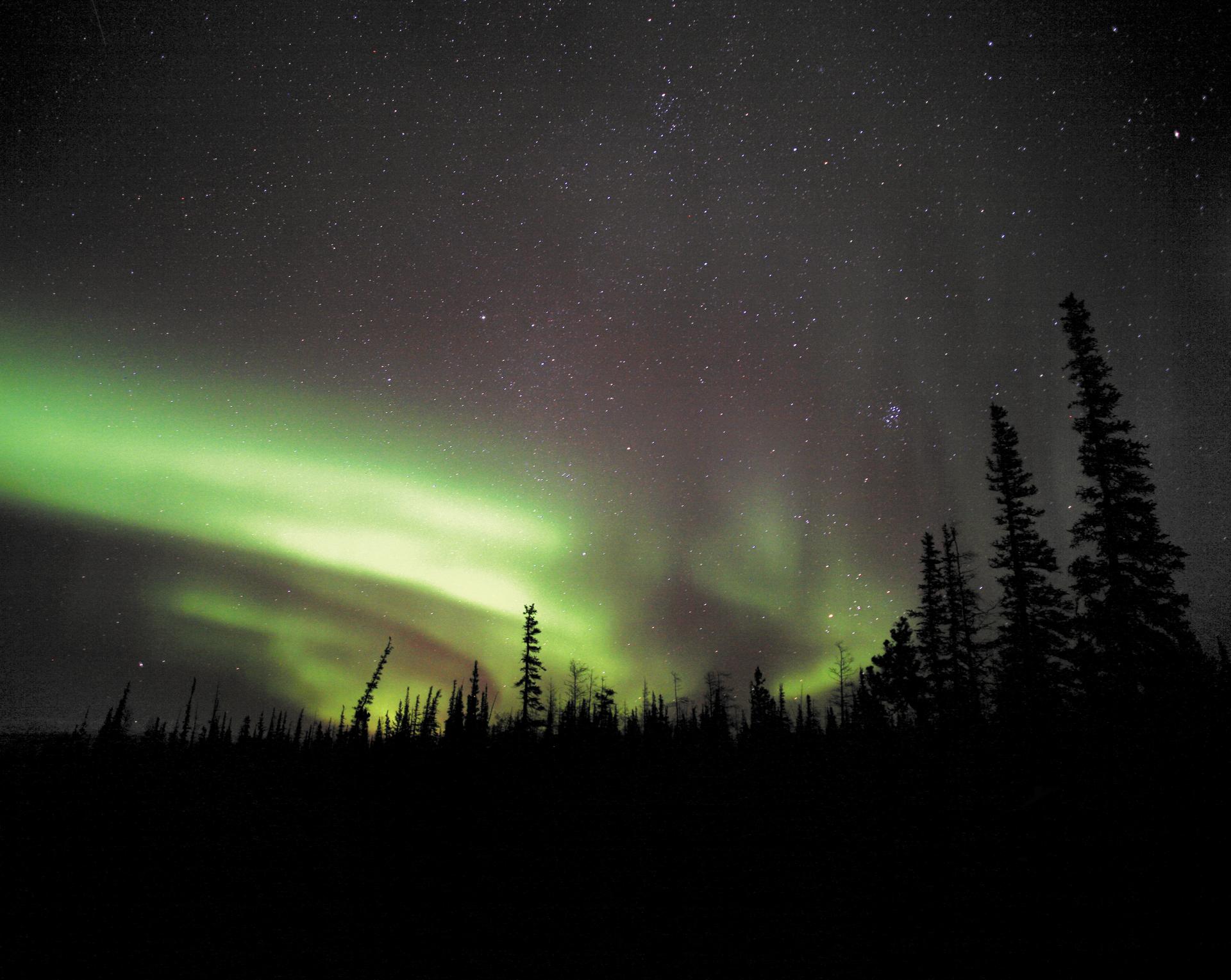
No road reaches Churchill. But the train does, and on a clear northern night, the sky puts on a show like nowhere else in Canada. The aurora borealis above Manitoba's boreal forest is one of those sights that stays with you long after the journey ends.
- Origin/destination: Winnipeg – Churchill
- Duration: Approx. 45 hours
- Distance: Approx. 1,700 km
- Province(s)/Territory: Manitoba
- Operator: VIA Rail Canada
- Best season: Autumn for Churchill’s polar bear migration; winter for northern lights over the sub-Arctic sky.
- Standout detail: One of the only passenger rail routes reaching Canada’s sub-Arctic tundra.
Operated by VIA Rail, this slow travel journey connects Winnipeg to Churchill on Hudson Bay. The route travels through forests, wetlands and northern landscapes, offering access to one of Canada’s most remote communities.
Churchill is widely known for wildlife viewing, including polar bears and beluga whales. Belugas arrive in the Churchill River estuary in July and August; polar bears gather along the shore from October into November, just before Hudson Bay freezes. The train itself passes through a landscape with almost no human infrastructure, one of the most complete digital detox journeys available by rail in North America.
In Winnipeg before departure, The Forks, where the Red and Assiniboine rivers meet at the heart of the city, is the natural starting point. In Churchill, the beluga experience goes beyond whale watching: AquaGliding is a summer-only experience where you can float at water level in the Churchill River estuary alongside the whales, offered through Lazy Bear Expeditions.
- Origin/destination: Sept-Îles – Schefferville
- Duration: 12 to 14 hours
- Distance: 213 km
- Province(s)/Territory: Québec
- Operator: Tshiuetin Rail Transportation
- Best season: Summer, when the remote lakes and rivers of northern Québec are ice-free and the boreal forest is lush.
- Standout detail: Owned and operated by Innu and Naskapi First Nations.
The Tshiuetin Railway is a remote slow travel route linking Québec’s North Shore with the northern mining town of Schefferville. Operated independently by Innu and Naskapi First Nations, the journey crosses lakes, forests and rivers in one of the least accessible regions of the province.
There is no road to Schefferville. For much of the route, there is no cell signal either—which for travellers seeking genuine disconnection, is the whole point. This is one of the few train journeys in Canada where the ride itself is the destination. Summer is the ideal season, when the boreal lakes are ice-free and the forest is at its most alive.
From Sept-Îles at the start of the route, a boat tour to the Sept-Îles Archipelago offers views of the Innu community of Uashat. At the end of the line in Schefferville, local Innu and Naskapi guides lead remote lake fishing trips, a fitting extension of a journey defined by Indigenous ownership and deep northern wilderness.
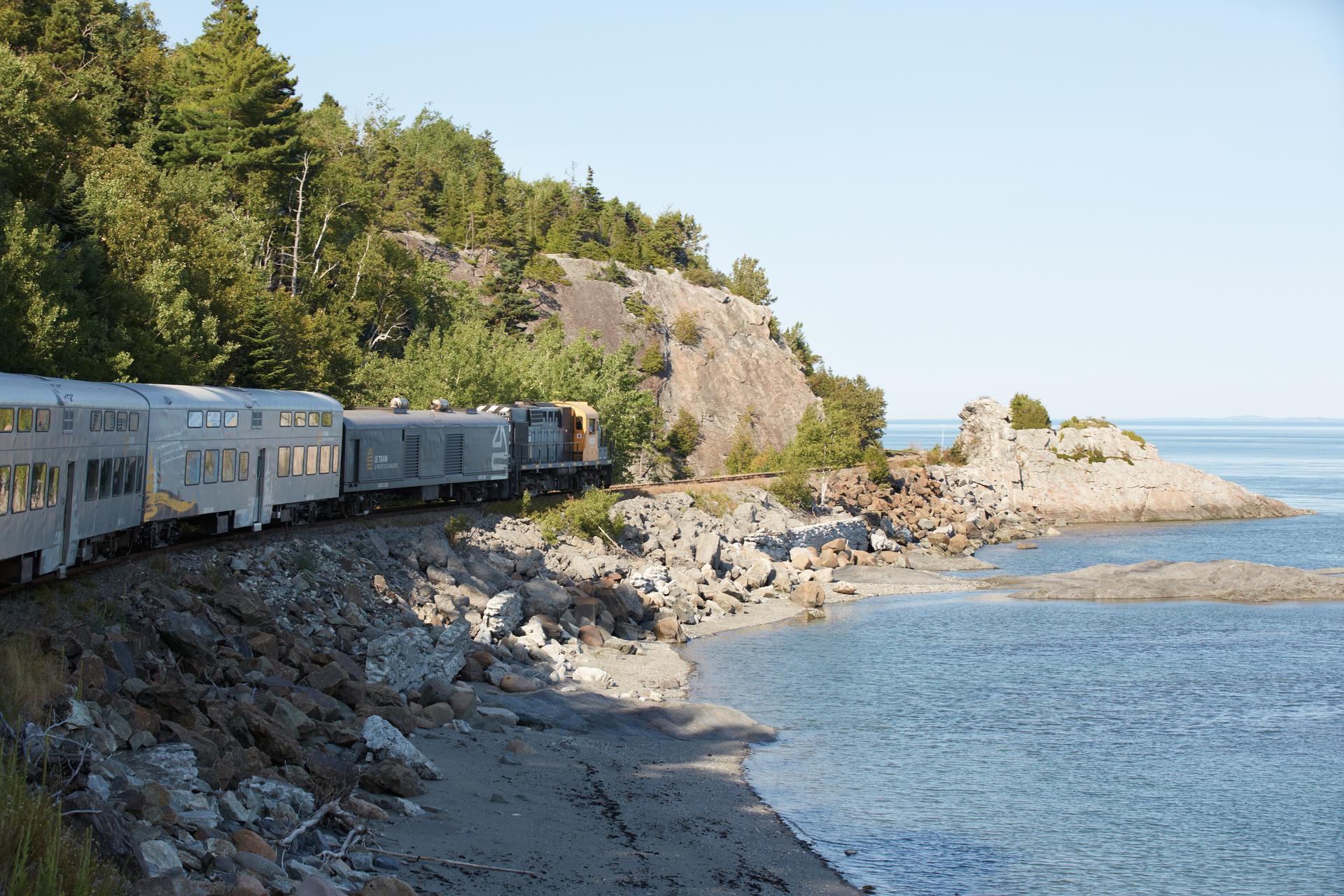
Rock face on one side, the St. Lawrence River on the other, The Train de Charlevoix winds 125 km along the north shore from Québec City to La Malbaie, one of eastern Canada's most scenic slow travel experiences.
- Origin/destination: Québec City – La Malbaie
- Duration: Approx. 4.5 hours
- Distance: 125 km
- Province(s)/Territory: Québec
- Operator: Train de Charlevoix
- Best season: Summer, when the St. Lawrence River is at its most active with whale watching season in full swing.
- Standout detail: The line follows the St. Lawrence River for much of its route.
Operated by Train de Charlevoix, this slow travel experience follows the north shore of the St. Lawrence River. The journey is known for uninterrupted river views, passing villages, farmland and forested hills throughout the Charlevoix region.
Summer brings the river to life, when whale watching season peaks along the St. Lawrence. The route also sits at the edge of the Charlevoix Biosphere Reserve. The historic village of Baie-Saint-Paul, visible from the train, is a charming small town that offers countless photo opportunities.. The peak window for autumn colour runs from late September through early October, when the maples and birches of Charlevoix turn all at once above the river.
Québec City, the departure point, is the only walled city north of Mexico in North America and worth exploring before boarding. At the La Malbaie end, the Sentier des Falaises trail leads to historic summer manors overlooking the St. Lawrence. If you have an extra day, whale watching departures run from nearby Baie-Saint-Catherine, about 90 minutes from the train station on the edge of the Charlevoix Biosphere Reserve.
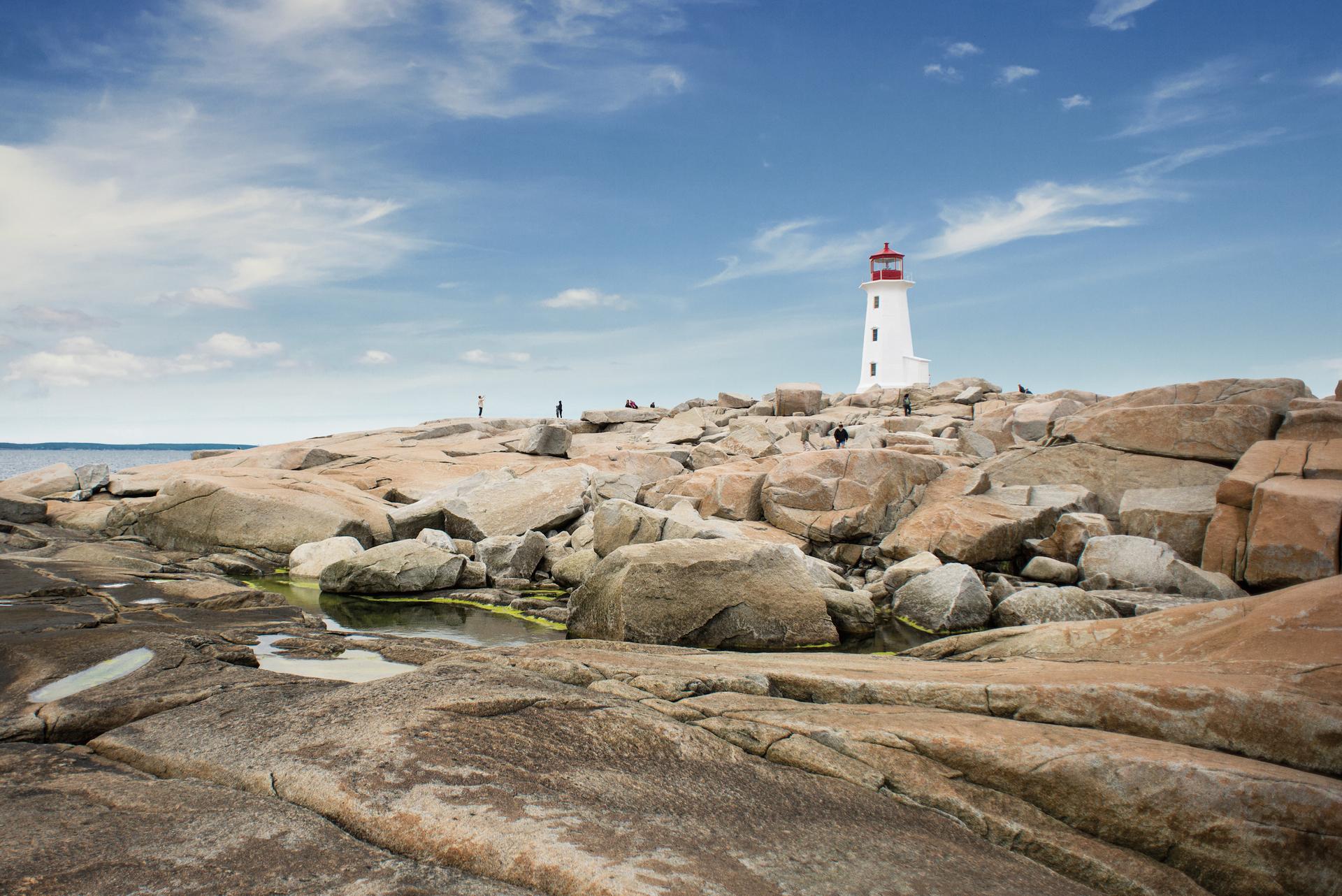
VIA Rail's The Ocean connects Montréal and Halifax through Québec and Canada's Atlantic provinces, arriving on Nova Scotia's iconic coastline. Peggy's Cove is one of Canada's most visited landmarks. It is just a short drive from Halifax, making it a natural first stop off the train.
- Origin/destination: Montréal – Halifax
- Duration: 1 night/1 day
- Distance: 1,352 km
- Province(s)/Territory: Québec, New Brunswick, Nova Scotia
- Operator: VIA Rail Canada
- Best season: Autumn, when the forests of Québec and the Atlantic provinces turn vivid shades of red and gold.
- Standout detail: Operating since 1904, it is one of the oldest continuously running passenger trains in North America.
Operated by VIA Rail, The Ocean is a classic slow travel rail journey connecting Montréal and Halifax through Québec and the Atlantic provinces. The route passes rural communities, forests and coastal landscapes before reaching Nova Scotia’s Atlantic coast.
The train runs year-round, but autumn departures offer some of the most dramatic scenery on the route. In the Atlantic provinces, the journey connects to lobster country: Halifax and the surrounding Nova Scotia coast are among the best places in Canada to eat seafood straight off the boat.
In Montréal before boarding, the Underground City is one of the largest subterranean pedestrian networks in the world and worth a wander. If you have an extra day, get up early in the morning to check out the Halifax Seaport Farmers' Market (open weekends), then walk the Citadel to catch the traditional cannon fire at noon.
- Origin/destination: Jasper – Prince Rupert
- Duration: Approx. 1.5 days
- Distance: 1,160 km
- Province(s)/Territory: Alberta, British Columbia
- Operator: VIA Rail Canada
- Best season: Autumn, when salmon runs peak along the Skeena River and wildlife sightings are at their highest.
- Standout detail: A journey linking the Rockies with the Pacific coast.
Operated by VIA Rail, this slow travel route follows the Fraser River through northern British Columbia, passing Mount Robson before reaching the Pacific port city of Prince Rupert.
In Jasper before boarding, the Columbia Icefield—the largest body of ice in the Canadian Rockies—is about an hour south by car. The Columbia Icefield Skywalk and Athabasca Glacier are both accessible without a guide. In Prince Rupert at journey’s end, the Museum of Northern BC and the totem poles of the nearby Tsimshian communities make for a fittingly coastal endpoint to a journey that began in the mountains.
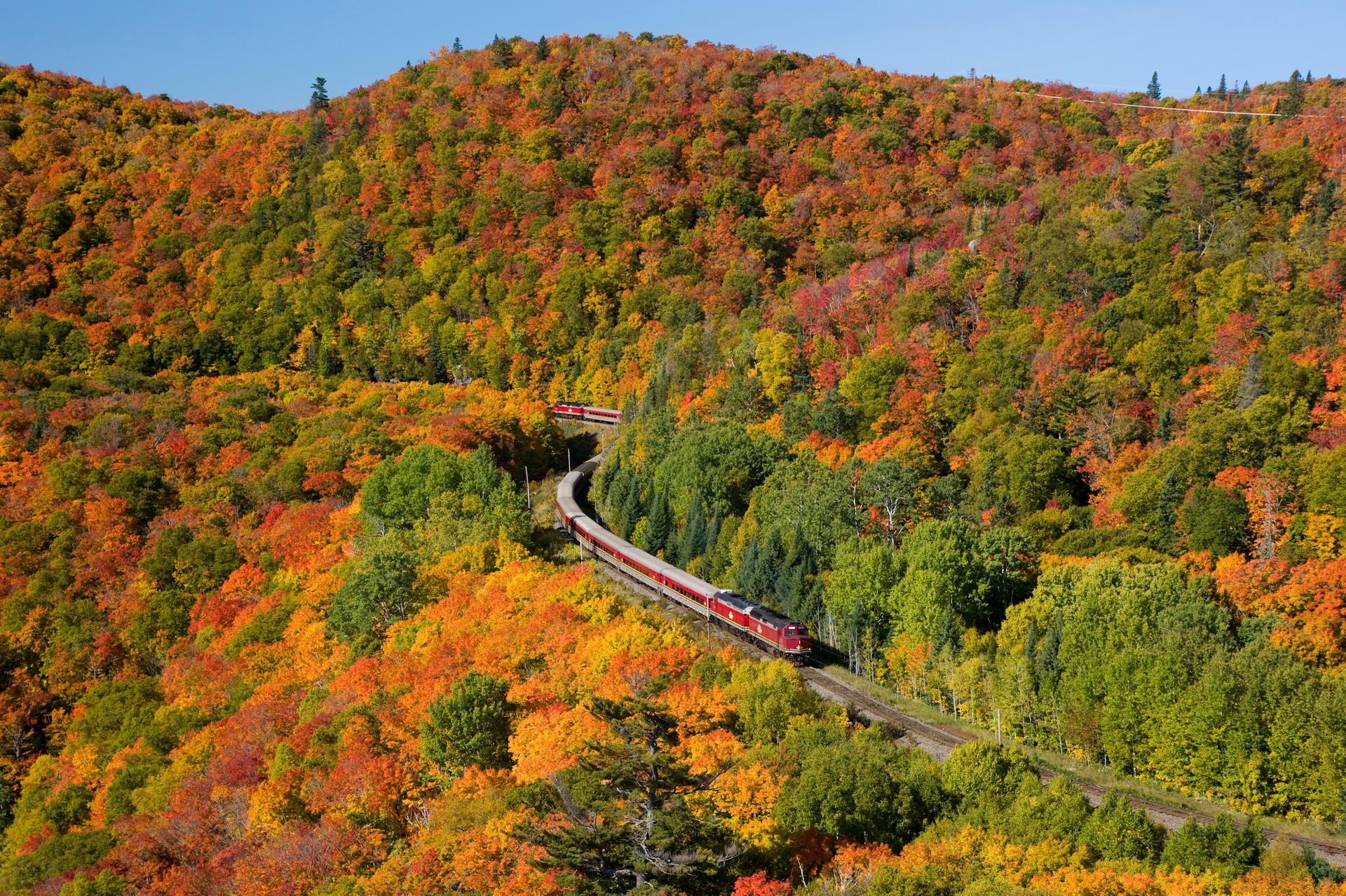
The Agawa Canyon Tour Train departs Sault Ste. Marie, where the fall colours transform the rugged northern Ontario wilderness into one of Canada's most spectacular seasonal rail journeys.
- Origin/destination: Sault Ste. Marie – Agawa Canyon
- Duration: Approx. 10 hours (round trip)
- Distance: 366 km (round trip)
- Province(s)/Territory: Ontario
- Operator: Agawa Canyon Tour Train
- Best season: Autumn, when peak fall foliage blazes in deep oranges and scarlets.
- Standout detail: One of Ontario’s most celebrated fall foliage train journeys, showcasing peak autumn colours across the Canadian Shield.
This regional slow travel experience travels north of Sault Ste. Marie into rugged northern Ontario landscapes. Disembark in Agawa Canyon Park to explore waterfalls and trails, then return along the same route. Peak colour runs typically from late September through early October, when the maples and birches of the Canadian Shield turn at once. The train runs just once a day through this window, so book early.
In Sault Ste. Marie before or after the journey, the Canadian Bushplane Heritage Centre on the waterfront is one of the more unexpected finds in northern Ontario. In Agawa Canyon itself, the 250-step climb to the lookout platform delivers the iconic panoramic view of the canyon floor that defines the journey.
- Origin/destination: Summerland
- Duration: Approx. 90 minutes (round trip)
- Distance: 16 km (round trip)
- Province(s)/Territory: British Columbia
- Operator: Kettle Valley Steam Railway
- Best season: Summer, when the Okanagan Valley vineyards are lush and the canyon views are unobstructed.
- Standout detail: Historic steam locomotive crossing the Trout Creek Bridge in British Columbia’s Okanagan Valley.
Located in one of Canada’s major wine regions, this slow travel experience follows a preserved section of the Kettle Valley Railway, combining vineyard views with canyon landscapes.
The Okanagan Valley surrounding Summerland produces some of British Columbia’s most recognized wines. Several estate wineries are within a short drive of the station, making it easy to pair the journey with an afternoon tasting. The valley’s orchards mean the local fruit stands in summer and autumn are worth visiting, too. For a short hike before or after, Giant’s Head Mountain offers views of Okanagan Lake and the surrounding vineyards from the top.
- Origin/destination: Tottenham – Beeton
- Duration: Approx. 1 hour (round trip)
- Distance: 7 km (round trip)
- Province(s)/Territory: Ontario
- Operator: South Simcoe Railway Heritage Corporation
- Best season: Spring, when the Ontario countryside is coming back to life and the heritage steam experience feels especially nostalgic, or autumn when fall foliage tours are most popular.
- Standout detail: A heritage steam train operating along a preserved 19th-century railway line.
This heritage slow travel experience offers a short journey aboard a vintage steam locomotive along a railway corridor dating back to the 1880s. At the Tottenham end, local farmers markets sit in the heart of Simcoe County’s agricultural belt. In Beeton, Main Street’s local honey shops honour the town’s beekeeping history, a quiet detail that fits the pace of the journey.
- Origin/destination: Stettler
- Duration: Approx. 4 to 6 hours
- Province(s)/Territory: Alberta
- Operator: Alberta Prairie Railway
- Best season: Summer, when the golden prairie grasses stretch endlessly under wide Alberta skies.
- Standout detail: Heritage steam train excursions across central Alberta.
Travel through farmland and open prairie while learning about regional railway history. Themed journeys and onboard dining reinforce the relaxed pace of this slow travel experience.
The dining onboard draws on prairie produce, beef, grains and locally sourced ingredients, making it one of the few heritage rail experiences in Canada where the meal is as much a part of the journey as the landscape. In Stettler, the Ukrainian Cultural Heritage Village offers a deeper look at Alberta’s settler history and is open through the summer season.
- Origin/destination: Skagway – Carcross
- Duration: Approx. 4.5 hours
- Distance: 108 km
- Province(s)/Territory: Yukon
- Operator: White Pass & Yukon Route Railway
- Best season: Summer, when the alpine wildflowers are in bloom and the glaciers are most accessible before winter closures.
- Standout detail: Built during the Klondike Gold Rush in 1898.
This historic slow travel railway climbs steep mountain terrain through Alaska and the Yukon, offering alpine scenery, glaciers and historic mining routes.
In Skagway, the original Klondike Gold Rush trail runs through town, now preserved as a US National Historic Park. In Carcross at the Yukon end, Carcross Commons is an Indigenous-owned cultural and artisan hub, a grounded way to end a journey steeped in the region’s history.
Experiencing Canada by rail
Train travel in Canada reflects the core principles of slow travel: longer journeys, deeper connections with landscapes and communities, and a lower-carbon alternative to short-haul flights. Scenic, regional and luxury routes each offer a different way to experience the country at a more considered pace.
The journeys highlighted in En train au Canada, published with Gallimard Voyages, demonstrate the diversity of rail travel across the country. Long-distance routes cross the continent, regional lines follow rivers and coastlines, and heritage railways preserve important chapters of Canada’s transportation history.
Together, these rail journeys show how slow travel continues to connect regions across Canada while offering a more immersive and sustainable way to experience the country’s landscapes.
Arriving by train? Explore curated hikes with Komoot starting from stations across Canada.
Frequently asked questions
Do I need a passport to take the White Pass & Yukon Route Railway?
Yes. Because the route crosses the international border between Alaska (USA) and British Columbia (Canada), you’ll need a valid passport. US and Canadian citizens should check current border crossing requirements before booking as documentation rules can vary by trip type and whether you are returning by train or bus.
How far in advance should I book Rocky Mountaineer?
Rocky Mountaineer is one of Canada's most popular tourist experiences and sells out well in advance, particularly for peak summer departures. Booking six to 12 months ahead is generally recommended for preferred cabin classes and travel dates. Early booking also tends to offer better pricing and cabin selection.
Are VIA Rail long-distance trains accessible for travellers with mobility limitations?
VIA Rail offers accessible accommodation on its long-distance trains, including The Canadian and The Ocean, with accessible sleeper rooms and washrooms available on request. Stations vary in their level of accessibility, so it is advisable to contact VIA Rail ahead of travel to arrange any assistance needed at boarding and arrival points.
How do I get to Churchill, Manitoba, if the train is not running?
Churchill is one of the few communities in Canada with no road connection, so when the train is not operating the only alternative is to fly. Several regional airlines serve Churchill from Winnipeg, though flights are significantly more expensive than the train. The VIA Rail service is considered essential infrastructure for the community for this reason.
What is the best way to extend a Rocky Mountaineer trip in Banff or Jasper?
Both Banff and Jasper are national parks with several days' worth of hiking, wildlife viewing and outdoor activities. The Icefields Parkway, one of the most scenic drives in North America, connects the two towns and can be done by car or guided tour. Booking at least two or three nights at either end of the Rocky Mountaineer journey allows time to explore beyond the train itself.
Is the Tshiuetin Railway bookable by tourists or is it primarily a community service?
The Tshiuetin Railway does accept outside passengers and is bookable by travellers, though it operates primarily as a community and freight service for the region's remote Indigenous communities. Schedules are limited and the experience is deliberately low-infrastructure, so it is best approached as an adventure journey rather than a polished tourist product. Contacting Tshiuetin Rail Transportation directly is the most reliable way to confirm current schedules and availability.
What currency and payment methods are accepted on Canadian trains?
Canadian dollars are the standard currency on VIA Rail services, and most trains and stations accept major credit cards. It is worth carrying some Canadian cash for smaller purchases, particularly in remote communities at either end of a journey like Churchill or Schefferville.
Are there any rail passes that cover multiple VIA Rail routes in Canada?
You can take advantage of the Canada Strong Pass, a seasonal initiative that includes discounted VIA Rail travel across Canada. Rather than offering unlimited travel days, the program provides free economy-class travel for children and youth aged 17 and under when accompanied by an adult, along with discounted fares for travellers aged 18–24 on eligible routes and fare classes. It can be a great option if you’re planning to combine journeys like The Canadian, The Ocean and the Jasper–Prince Rupert route into one trip. The Canada Strong Pass is available to both Canadian residents and international visitors.
What should I pack for the Winnipeg–Churchill train journey?
The Churchill route travels into sub-Arctic conditions, so layering is essential regardless of the season. In autumn and winter, thermal base layers, insulated outerwear, waterproof boots and wind protection are all necessary for time spent outdoors in Churchill. Even in summer, temperatures can drop sharply. Also, bug protection is advisable in the boreal sections of the journey.
Can children travel on Rocky Mountaineer and are there family-friendly options?
Rocky Mountaineer does accept children, as long as they are old enough to sit safely on their own, but does not offer reduced fares for younger passengers. The daylight-only schedule and large glass-dome windows make it well suited to families, as children can watch the landscape throughout the journey without long overnight stretches. That said, the experience is primarily designed as a premium adult product, so families with very young children may want to consider whether the pace and format suit their needs.
Sources
viarail.ca — VIA Rail Canada
rockymountaineer.com — Rocky Mountaineer
traindecharlevoix.com — Train de Charlevoix
agawatrain.com — Agawa Canyon Tour Train
kettlevalleyrail.org — Kettle Valley Steam Railway
absteamtrain.com — Alberta Prairie Railway
wpyr.com — White Pass & Yukon Route
tshiuetin.net — Tshiuetin Rail Transportation
croisieresaml.com — Croisieres AML whale watching
banffjaspercollection.com — Columbia Icefield Skywalk/Athabasca Glacier
banfflakelouise.com — Plain of Six Glaciers trail info
parks.canada.ca — The Forks NHS, Halifax Citadel NHS, Chilkoot Trail NHS
whc.unesco.org — Québec City walled city (UNESCO listing)
trailforks.com — Giant's Head Mountain trails