Four Ways to See the Northern Lights in Yellowknife: Aurora Experiences Compared
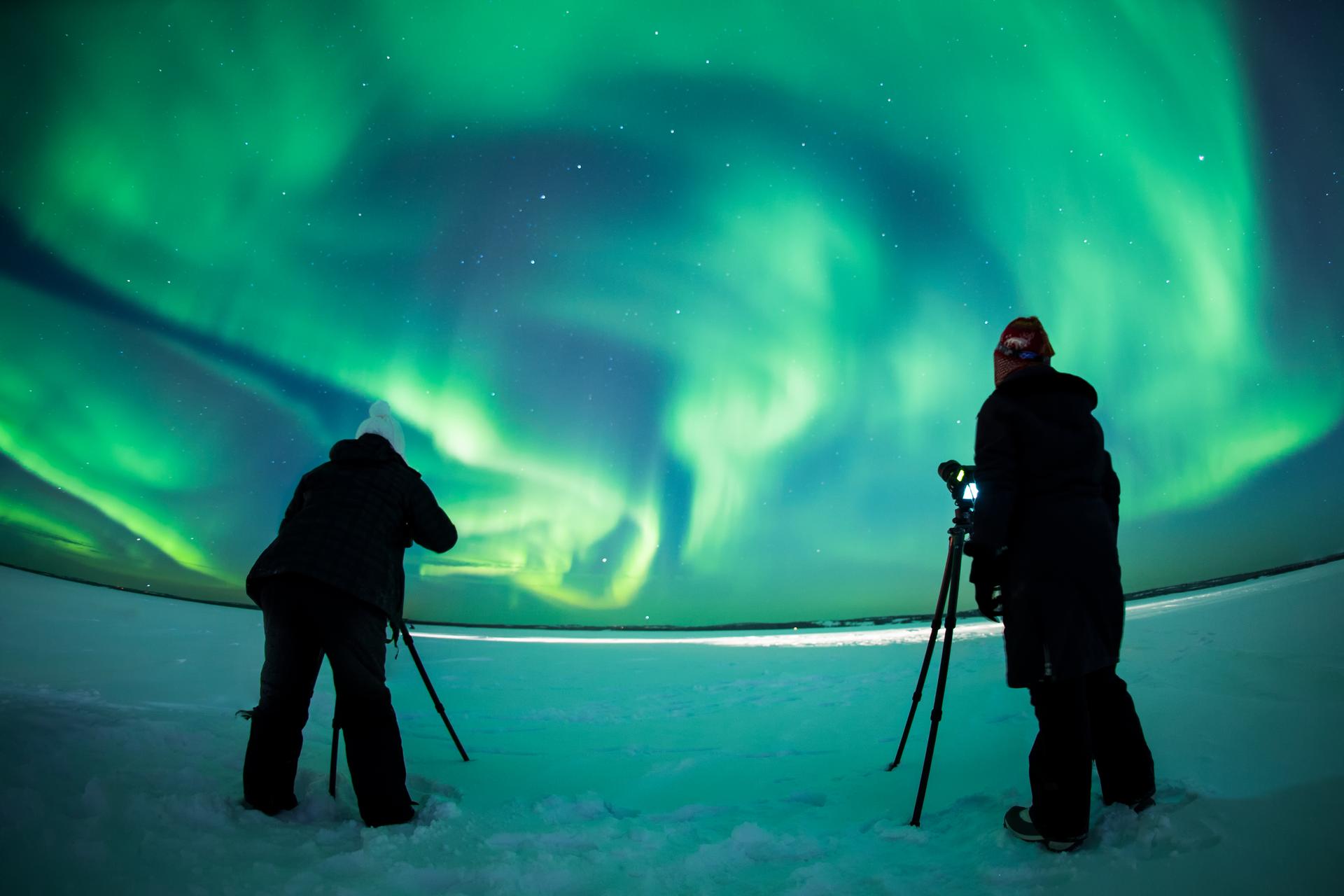
Yellowknife is home to the world’s best Aurora. With up to 240 nights of viewing potential each year, the city offers more opportunities to see the Northern Lights than almost anywhere else on Earth. But an Aurora trip to Yellowknife is not a single experience. It is a choice between four distinct formats, each with its own character, setting, and rhythm.
Whether you have three nights or five, want to stay close to the city or fly deep into the wilderness, or are looking for a guided cultural evening or a private small-group chase, there is an experience here that fits. This guide covers the four formats and the operators who lead them, so you can choose the one that suits your trip.
Fast Facts
Fall aurora season: Mid-August through late September.
Winter aurora season: Mid-November through early April.
Viewing nights per year: Up to 240 nights.
Viewing types: Teepee location viewing, fly-in wilderness lodge, aurora hunting and Indigenous cultural evenings.
Recommended trip length: Four to five nights.
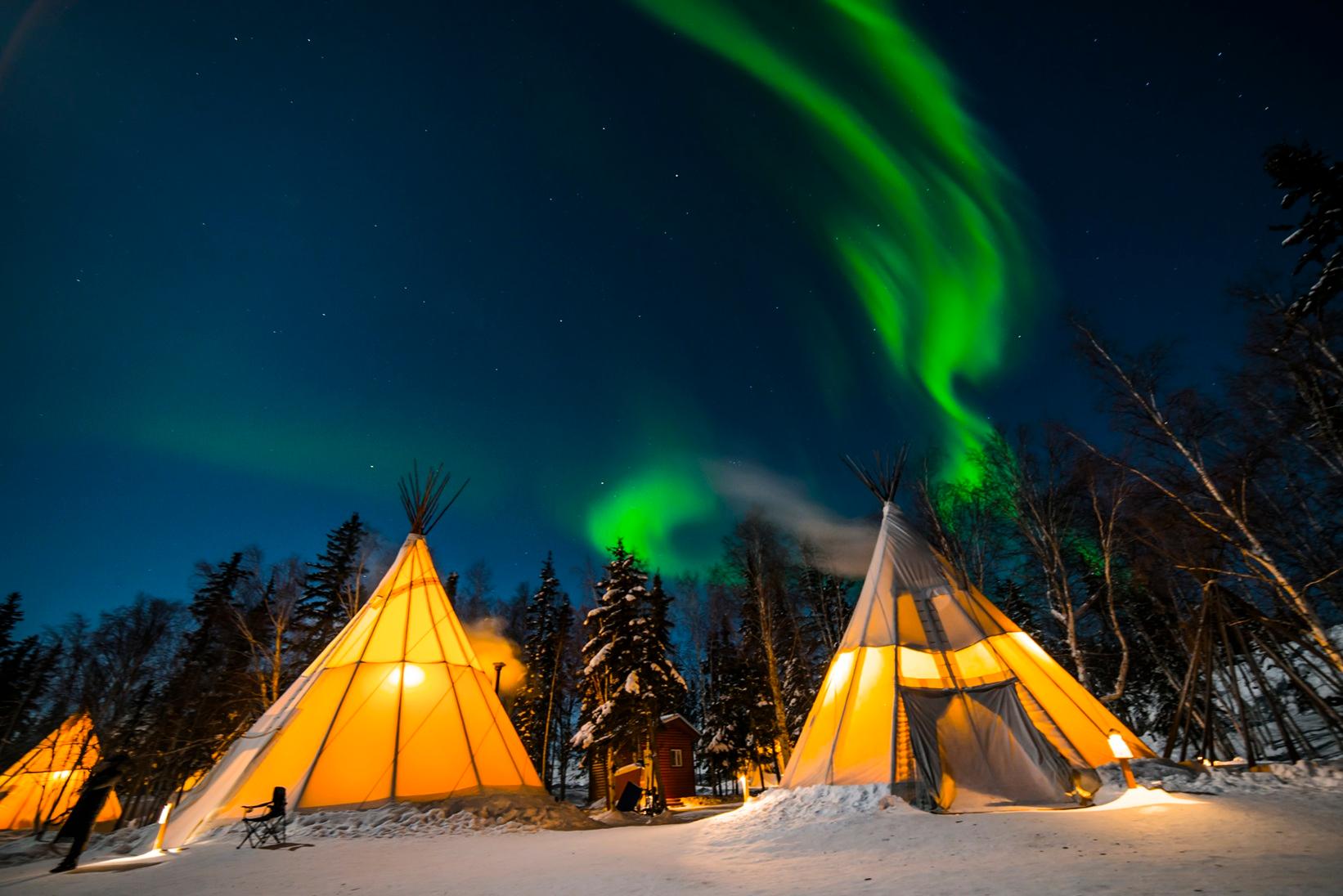
Photo Credit: Adam Pisani
Legendary Teepee Viewing
Aurora Village is an iconic Aurora viewing location, running nightly programs from its site on the Ingraham Trail, roughly 25 kilometres from downtown Yellowknife. The format is a heated teepee camp: guests arrive by shuttle in the evening, settle into one of the village's insulated Teepes and wait for the Northern Lights with hot drinks and a guide on hand throughout the night.
The teepee camp creates a specific kind of Aurora experience: social, warm and anchored in one place. When the lights appear, guests move outside to watch from the lakeshore, then return to the teepee to warm up. The fixed location means no decisions about where to go – the guide handles that, reading the sky and alerting the group when activity picks up.
Aurora Village suits first-time visitors well. The infrastructure removes the logistical complexity of cold-weather Aurora viewing and the group format gives guests the energy of sharing the experience with others. For travellers staying in Yellowknife for two to four nights, an Aurora Village evening is often the anchor of the itinerary.
Programs typically run from approximately 8:00 p.m. to 1:00 a.m., with shuttle transportation included from Yellowknife. Multi-night packages are available for those who want to build their stay around consecutive evenings at the camp.
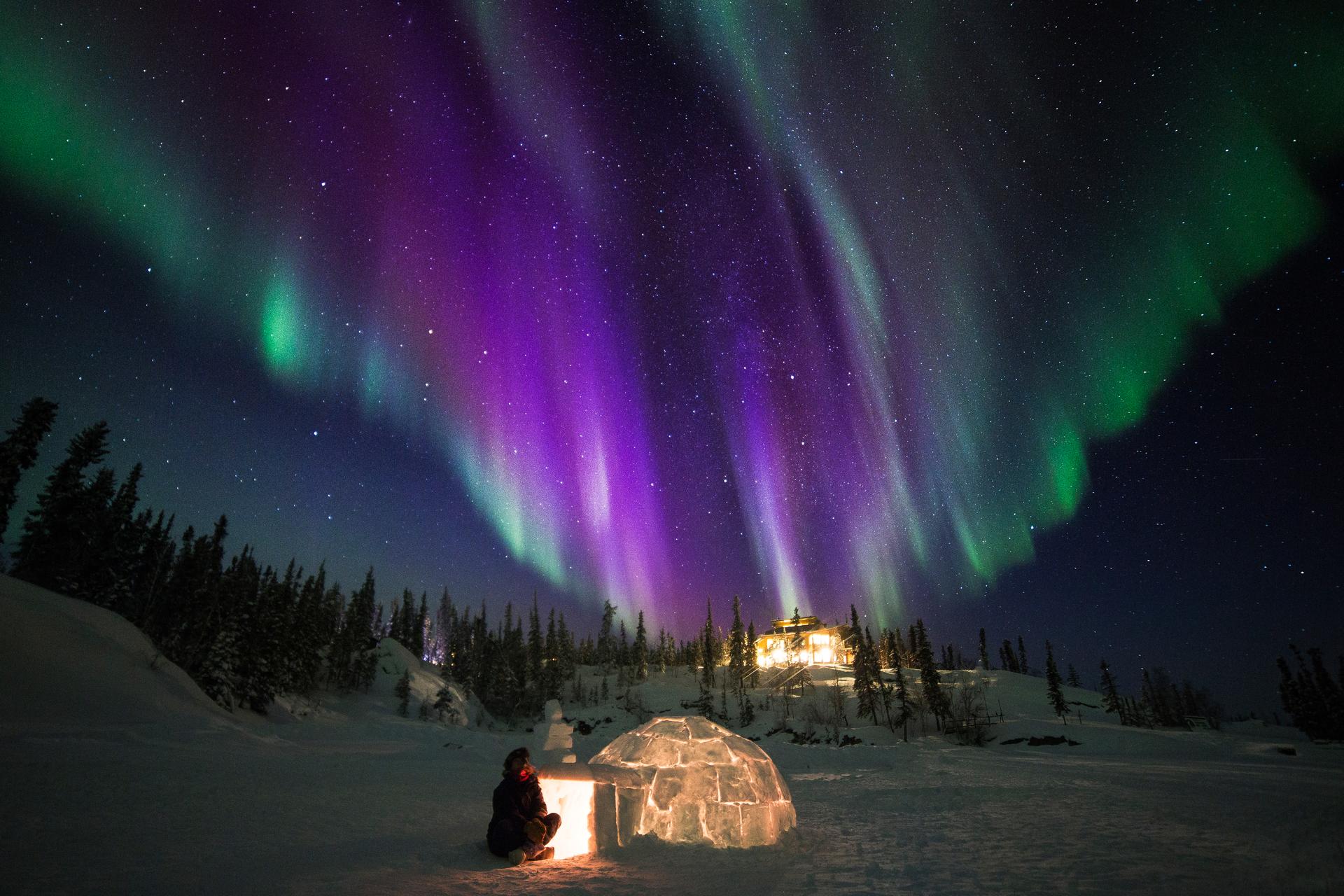
Photo credit: Martina Gebrovska/Blachford Lake Lodge/NWTT
Multi-Night Wilderness Lodge
A fly-in wilderness lodge takes Aurora viewing out of the city entirely. Guests stay at a remote location for three to five nights, with Aurora viewing available at any hour the sky is dark and the lights are active. Blachford Lodge offers this experience from the eastern shore of Blachford Lake, 100 kilometres east of Yellowknife. Accessible only by floatplane with no roads in or out, the lodge sits beyond the reach of any light pollution from the city. The sky above the lake is as dark as the Northwest Territories gets within reasonable reach of Yellowknife.
Blachford Lodge offers a multi-night, all-inclusive stay. Guests fly in and spend three to five nights at the lodge, with all meals, accommodation and activities included. Aurora viewing has no fixed time slot; it is available any time the sky is dark and the lights are active, which in the depth of winter can mean from mid-afternoon well into the following morning. The lodge stays up with the lights.
Blachford Lake suits travellers who want to immerse themselves in the Northern Lights without the rhythms of a city trip. Photographers in particular value the dark sky, the unobstructed lake horizon and the freedom to be outside whenever conditions are right. The lodge also runs winter activities during daylight hours: snowshoeing, ice fishing and dog sledding. Blachford is a full winter wilderness stay as much as it is an Aurora platform.
The floatplane flight in is part of the experience. The view of the boreal forest from the air and the first sight of the lake on approach are part of the journey.
Aurora Hunting
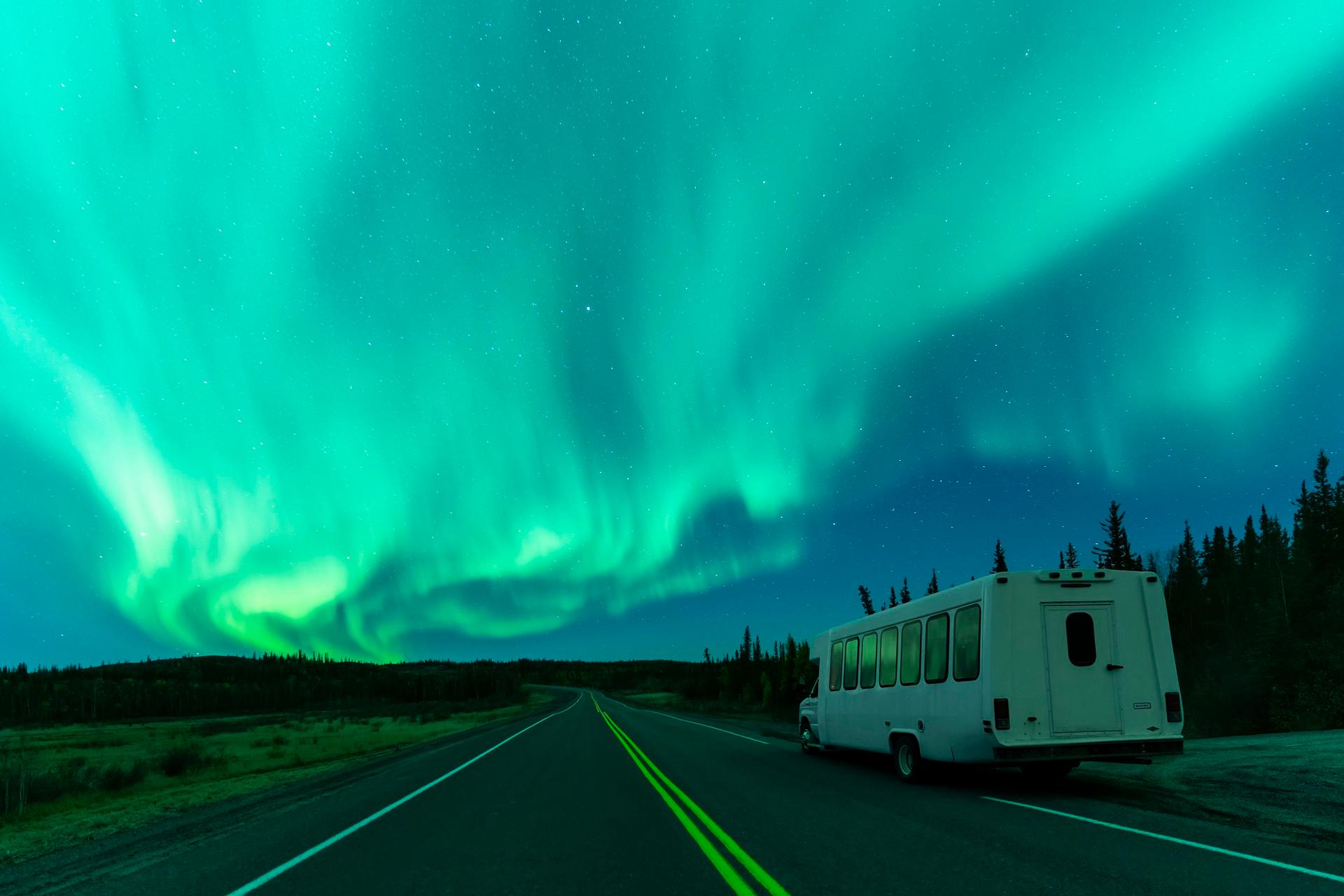
The small-group aurora chase can be an exhilarating change of pace from fixed location viewing. A guide tracks weather, darkness and geomagnetic activity in real time and takes their group to the best available sky conditions on any given night. North Star Adventures, owned and operated by Joe Bufflo Child, runs this format as a 100% Indigenous-owned, premium small-group operation.
The experience follows the guide's knowledge of the land and conditions around Yellowknife: where the clouds have cleared, where the horizon opens, where the Northern Lights are most likely to perform. Groups are kept deliberately small to allow for genuine time with the guide.
Throughout the evening, the guide shares Dene knowledge of the Northern Lights: the oral traditions around the Aurora Borealis, what the lights have meant to people on this land across generations and the relationship between the sky and the land below it.
North Star Adventures suits travellers who want a mobile experience led by someone with deep knowledge of both the land and its culture. The small-group format and the guide's flexibility make it well suited to first-time visitors and returning travellers alike.
Indigenous-Led Cultural Evening
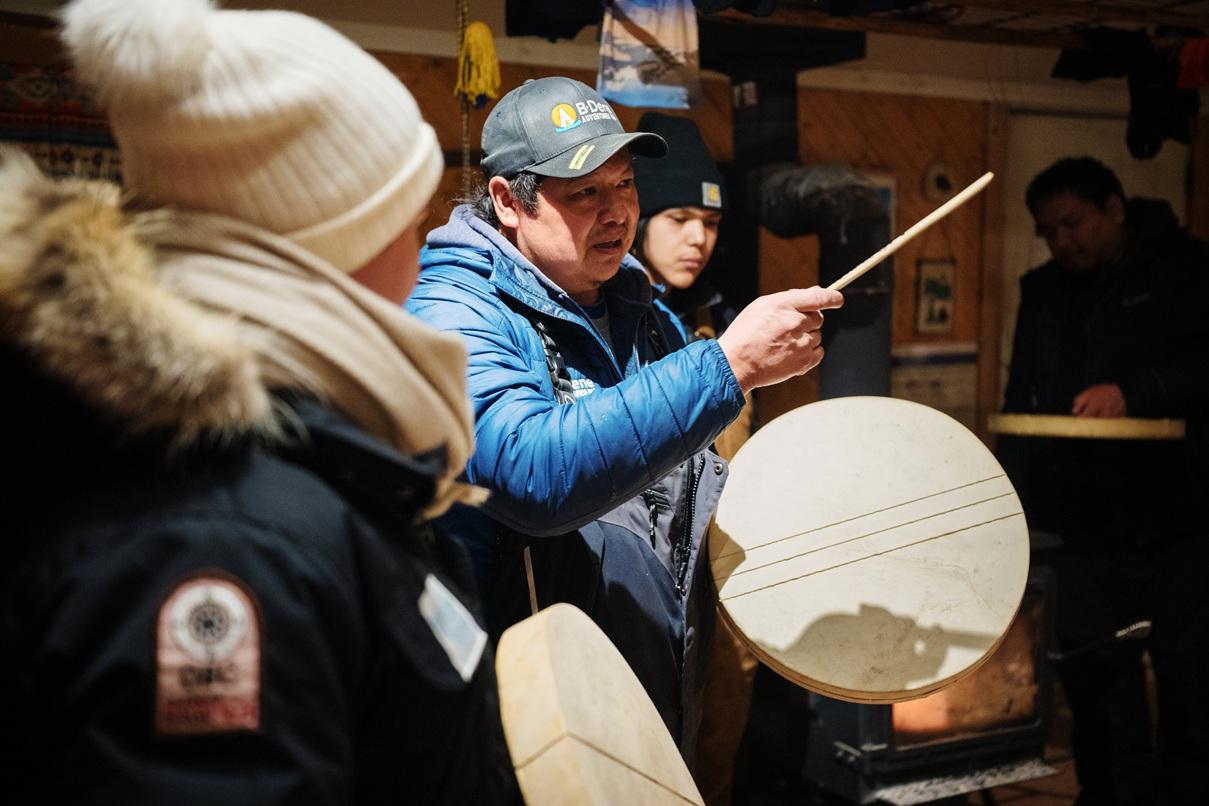
This type of Aurora viewing centres the Aurora experience on Indigenous cultural knowledge: the Northern Lights understood through the traditions and land knowledge of people who have observed them since time immemorial. Two operators in the Yellowknife area offer this in distinct ways: North Star Adventures, through its Indigenous-led small-group format described above, and B. Dene Adventures, through its Dene cultural camp in Dettah.
B. Dene Adventures is owned and operated by Bobby Drygeese, a member of the Yellowknives Dene First Nation. The company is 100% Indigenous-owned and runs its programs from Dettah, one of the two Yellowknives Dene communities adjacent to Yellowknife, on the eastern shore of Great Slave Lake.
Guests are shuttled to Dettah and spend the evening at a Dene cultural camp that brings together Aurora viewing and traditional programming. The evening includes drumming, stories shared by community members, and local food prepared on site: Great Slave Lake fish and bannock. Viewing takes place from both a cabin and a teepee, with the open sky above Great Slave Lake providing an unobstructed window for the Northern Lights.
The programming is led by community members, and the experience of being in Dettah, in a Yellowknives Dene community on its own terms, is central to what B. Dene Adventures offers.
What distinguishes both North Star Adventures and B. Dene Adventures from other Aurora formats is the role of cultural knowledge in the experience. The Northern Lights are not the backdrop to a cultural program, nor is the cultural program the backdrop to Aurora viewing. The two are one.
For travellers who want to understand the Northern Lights through the knowledge of people who have lived beneath them since time immemorial, both operators provide an experience that no other format in Yellowknife offers.
Planning Your Aurora Experience
The four types of Aurora viewing are not mutually exclusive. Many travellers on a four-to-five-night Yellowknife itinerary combine three or more formats: an Aurora Village evening, a North Star Adventures chase and a night at B. Dene Adventures in Dettah together cover the full range of aurora experiences the city offers. For the Blachford Lodge experience, three to five nights are required; plan your overall Yellowknife trip length accordingly.
The winter Aurora season, mid-November through early April, offers the longest dark nights and the classic Canadian winter experience. The fall Aurora season, mid-August through Late September, brings shorter nights but warmer temperatures.
Tour operators have limited availability during peak periods. Aurora Village multi-night packages and Blachford Lake Lodge fly-in stays fill well in advance for these periods.
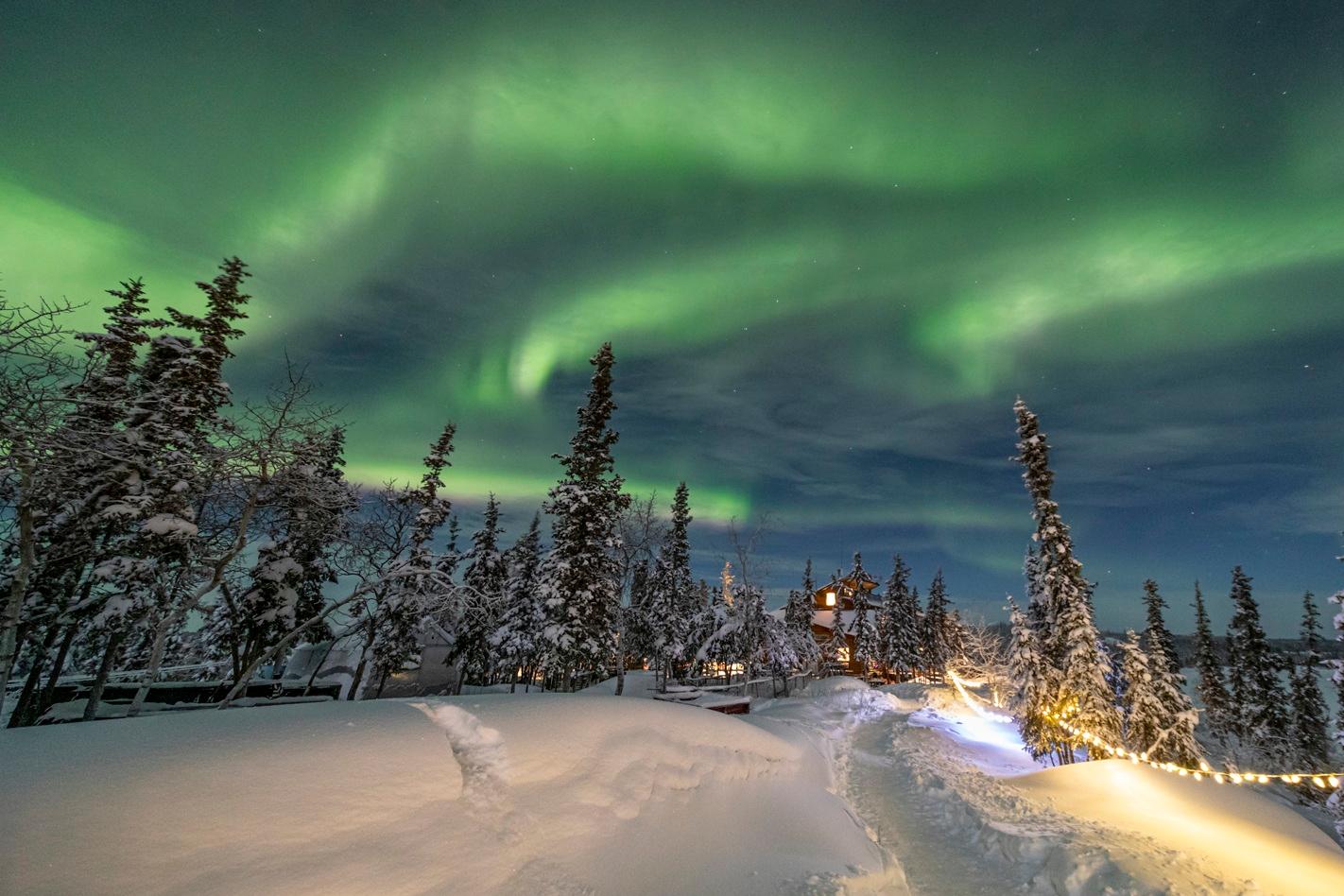
Photo credit: Julien Schroder
Frequently Asked Questions
What is the best Aurora experience for a first-time visitor to Yellowknife?
For first timers, a guided Aurora experience is best. This takes the guesswork out of the where, when, and how to view the Aurora. All you need to do is pick the type of experience you want to have.
Do I need a guide to see the Northern Lights in Yellowknife?
You do not need a guide as the Northern Lights are visible from many locations around Yellowknife on clear, active nights. However, the guided formats offer real advantages: access to better dark-sky locations, warm facilities during the cold hours of waiting, expert knowledge of when and where the lights are most active, and, in the case of Indigenous-led operators, cultural knowledge of the sky and the land that changes the experience entirely.
Can I combine multiple Aurora experience types in one trip?
Yes. Many travellers on a four-to-five-night Yellowknife itinerary combine three or more formats: an Aurora Village evening, a North Star Adventures chase and a night at B. Dene Adventures in Dettah together cover the full range of aurora experiences the city offers. For a wilderness lodge experience like Blachford Lodge, three to five nights are required, so plan your overall Yellowknife trip length accordingly.