Top 10 Attractions in Newfoundland & Labrador
History, Icebergs, Vikings & Outdoor Adventures at the Edge of Canada
Quick Summary
Newfoundland and Labrador is where centuries of history and quaint fishing villages live alongside modern design and outdoor adventure. From Signal Hill where Marconi received the first transatlantic wireless signal to Viking settlements at L'Anse aux Meadows, from the iceberg capital at Twillingate to the Jurassic landscapes of Gros Morne—these 10 attractions showcase why this easternmost province captivates visitors with its raw beauty, rich heritage, and unforgettable experiences.
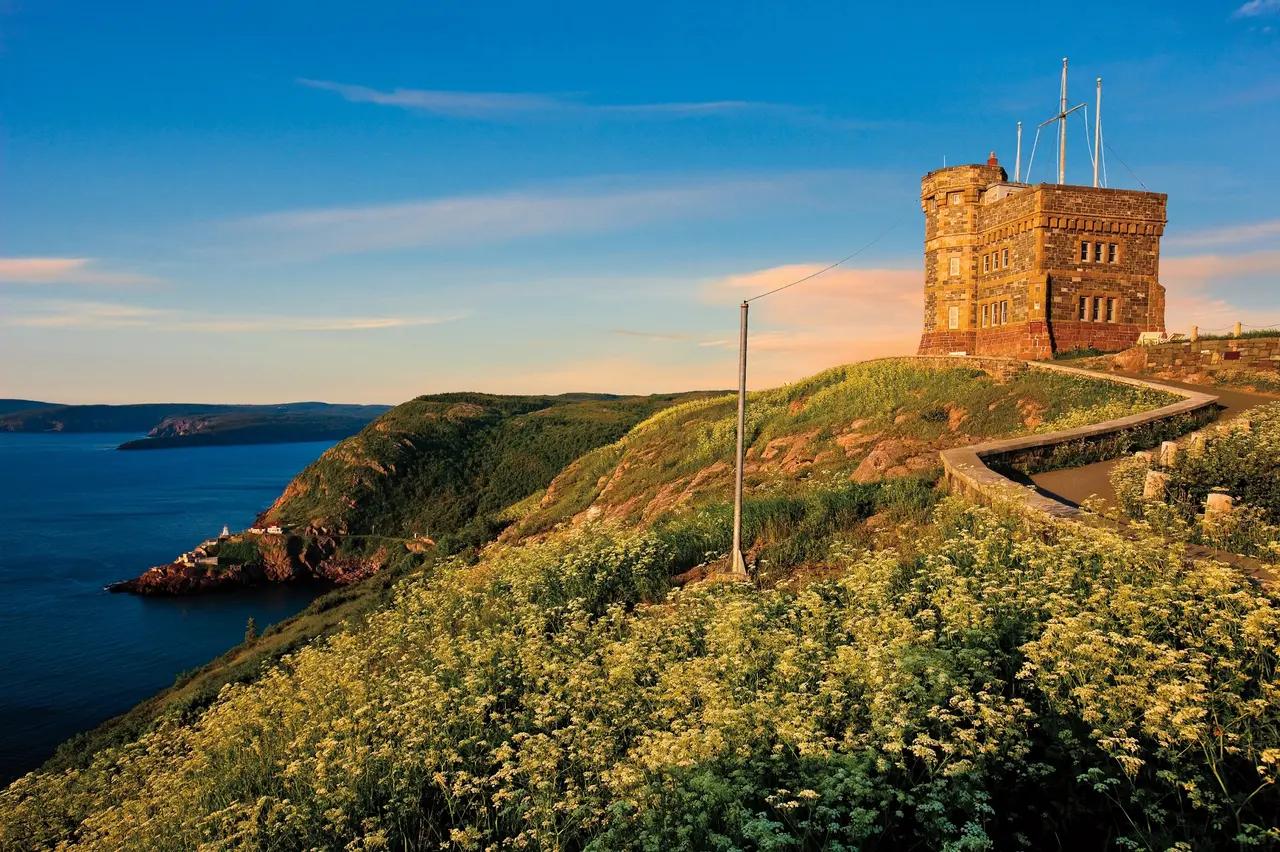
Signal Hill rises above St. John's harbour where Cabot Tower marks the spot Marconi received the first transatlantic wireless signal. History, military heritage, and one of Newfoundland's most dramatic coastal views in one stop. Photo credit: Newfoundland and Labrador Tourism
1. Signal Hill National Historic Site
Location: St. John's | Highlights: Military history, Marconi wireless signal, harbour views
What if much of your daily life was influenced by what unfolded on a hill in St. John's? Signal Hill was the site of the final battle of the Seven Years' War between British and French soldiers. In 1901, Guglielmo Marconi received the first-ever transatlantic wireless signal here—the innovation that ultimately led to the mobile phone you might be reading this on. Watch the Signal Hill Tattoo as the Royal Newfoundland Regiment re-enacts military drills with cannon and musket fire. Hike 5 km of surrounding trails for spectacular views of St. John's, the ocean—and possibly whales or icebergs.
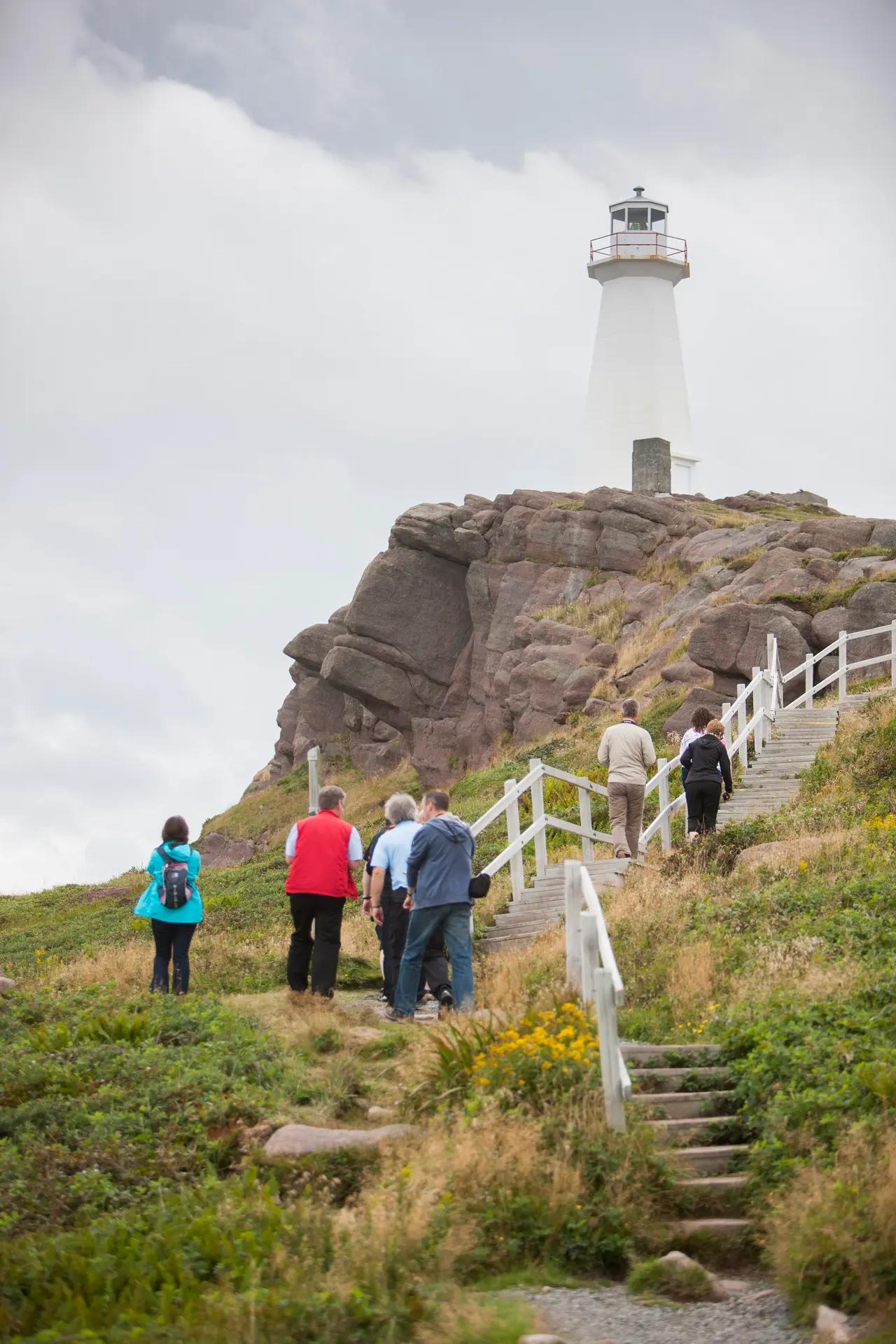
Cape Spear's wooden stairs lead to Canada's easternmost point; where the Atlantic stretches to the horizon and iceberg and whale season turns the cliffs into one of the country's great natural vantage points.
2. Cape Spear Lighthouse National Historic Site
Location: Most easterly point of Canada | Built: 1836 | Features: WWII bunker ruins
Have you ever felt an entire country at your back? Cape Spear is Canada's most easterly point—a rugged cliff overlooking the Atlantic with the oldest surviving lighthouse in Newfoundland (1836). Tour the restored lighthouse and see how the Cantwell family lived while operating it for 150 years. Explore WWII bunker remains built to watch for German U-boats—today you'll watch for breaching whales instead. Enjoy the edge of the world.
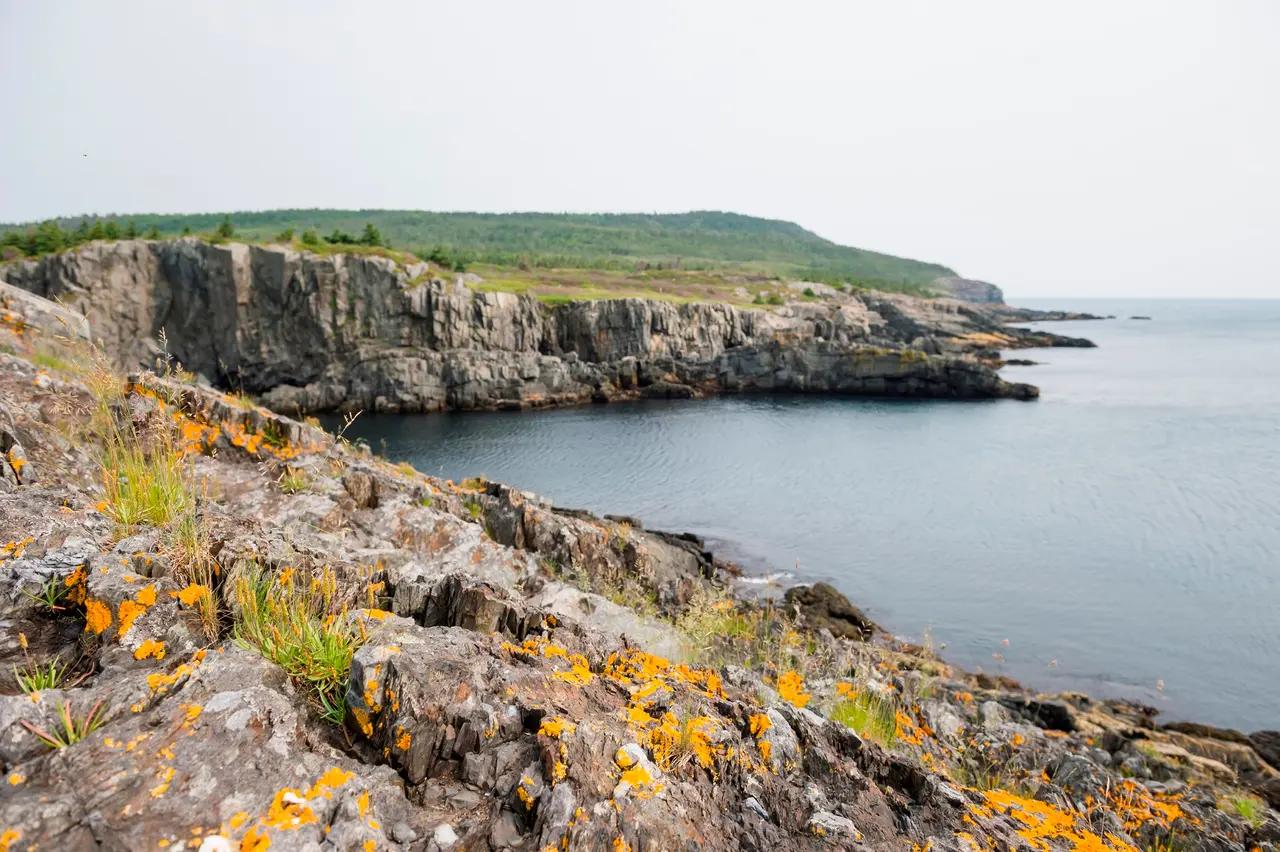
The East Coast Trail is a lichen-crusted, cliff-edged network of coastal routes, pick a section that matches your legs and your appetite for Atlantic exposure.
3. East Coast Trail
Length: 545 km (developed & undeveloped) | Features: 50m suspension bridge, geysers, archaeology
No matter your fitness level, skill level, or preferred terrain, the East Coast Trail has a path for you. Easy waterside walks? You've got it. Trek between lighthouses? You can. Rocky terrain workout? Loads of that. From a 50-metre suspension bridge to geysers and archaeological digs, 545 km of trail provide opportunities to find exactly the hike you're after.
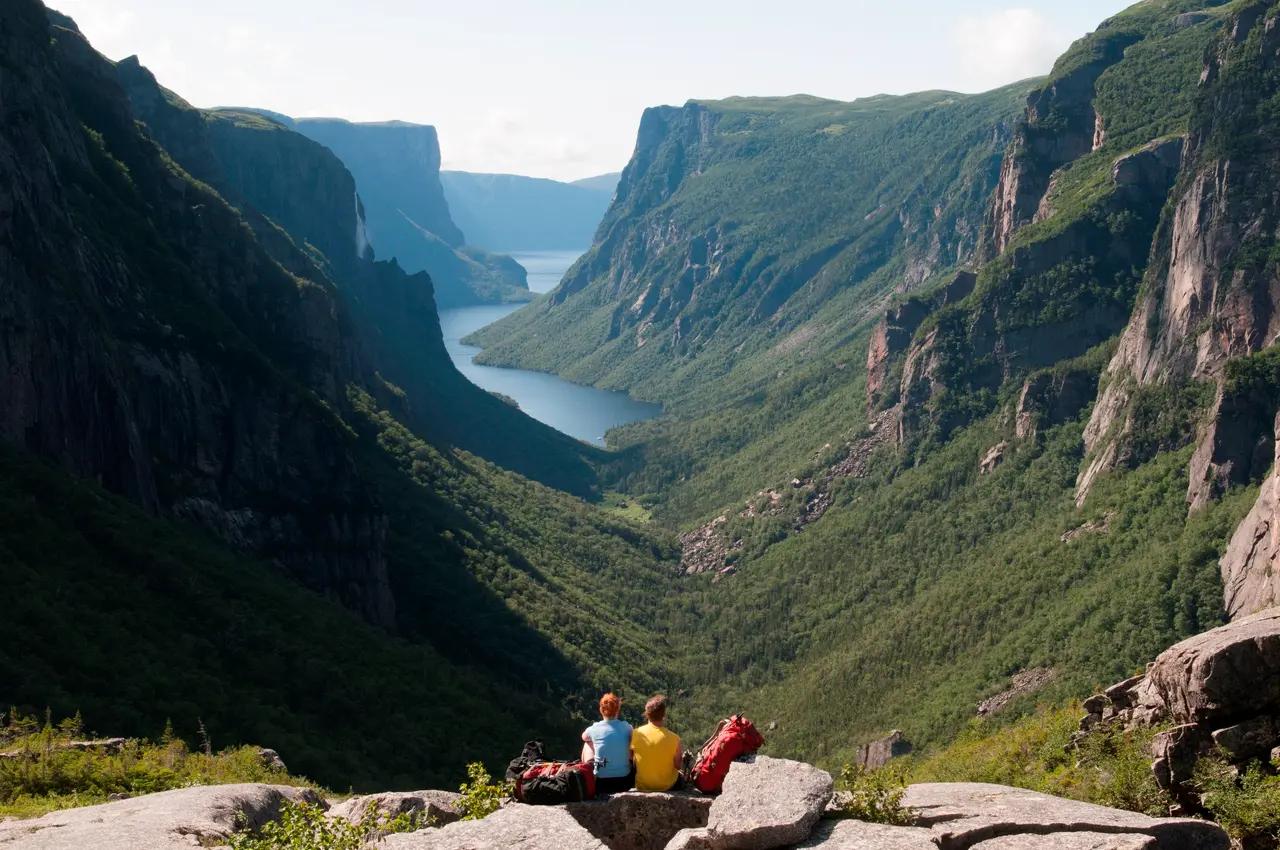
Gros Morne National Park's Western Brook Pond gorge. Sheer cliffs, a landlocked fjord, and 1.2-billion-year-old geology that earned this UNESCO World Heritage Site its reputation.
4. Gros Morne National Park
UNESCO World Heritage Site | Age: 485 million years of geological history | Activities: Hiking, camping
If Jurassic Park ever came to be, you'd be hard-pressed to find a more appropriate setting. It took 485 million years for nature to shape this awe-inspiring wonder—beautiful green river valleys sitting between vast cliff sides. The exposed earth crust allowed geologists to prove their theory on tectonic plates. A hiker's dream with marked and unmarked trails, forests, lowlands, and bogs housing rare plants and animals. Bring camping gear—you'll want to stay awhile.
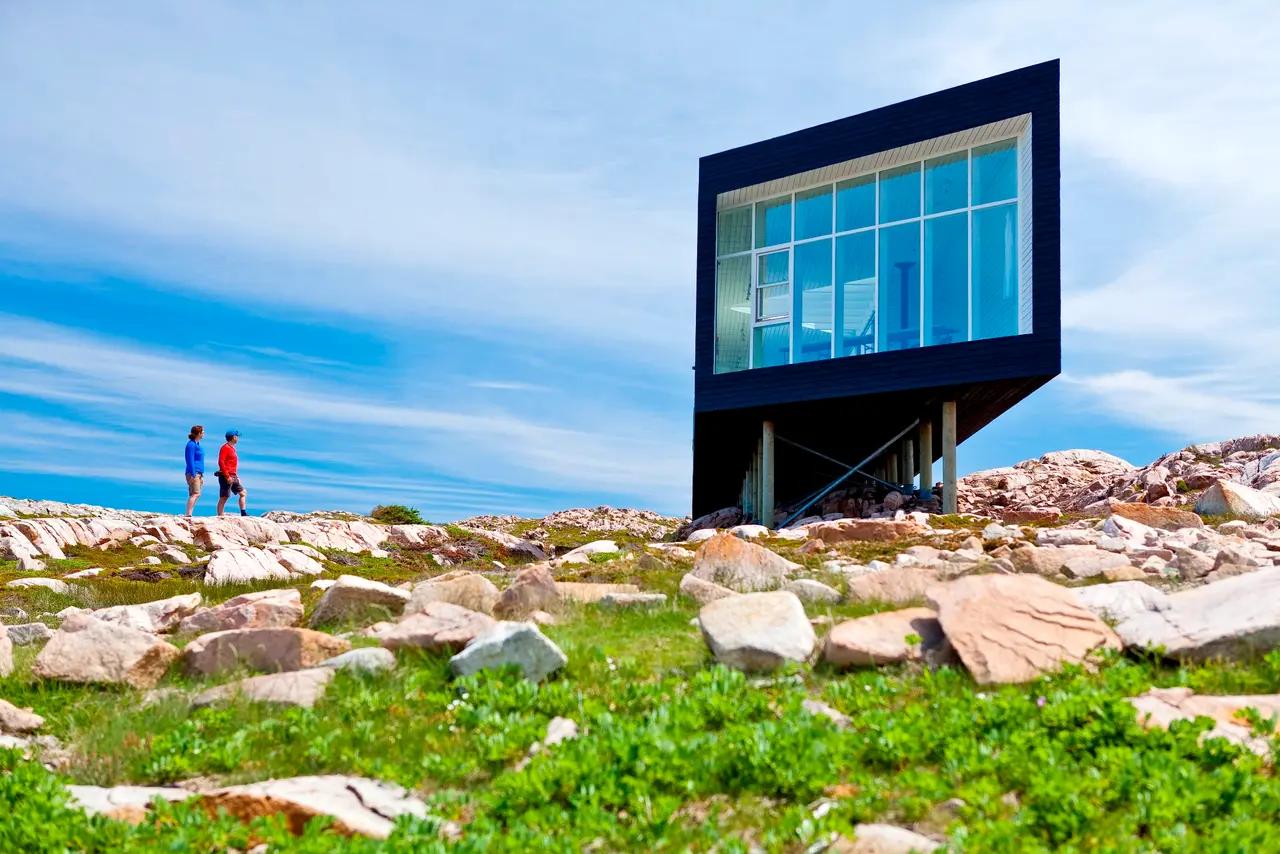
Fogo Island Inn perches over the raw boreal coastline like a piece of land art, where world-class design and genuine remoteness make it one of Canada's most distinctive places to stay. Photo credit: Newfoundland and Labrador Tourism
5. Fogo Island
Largest offshore island | Highlight: Fogo Island Inn—luxury hotel, rooftop hot tubs, local traditions
Newfoundland's largest offshore island has become a stand-out destination for lovers of art and architecture. The Fogo Island Inn is a truly beautiful luxury hotel set next to the sea along rocky coastline—featuring rooftop hot tubs, a library, and décor based on local traditions in an award-winning designed building. Take island tours with friendly Islanders, explore artist studios, feast on Newfoundland specialties and foraged treats, and enjoy traditional music and storytelling.
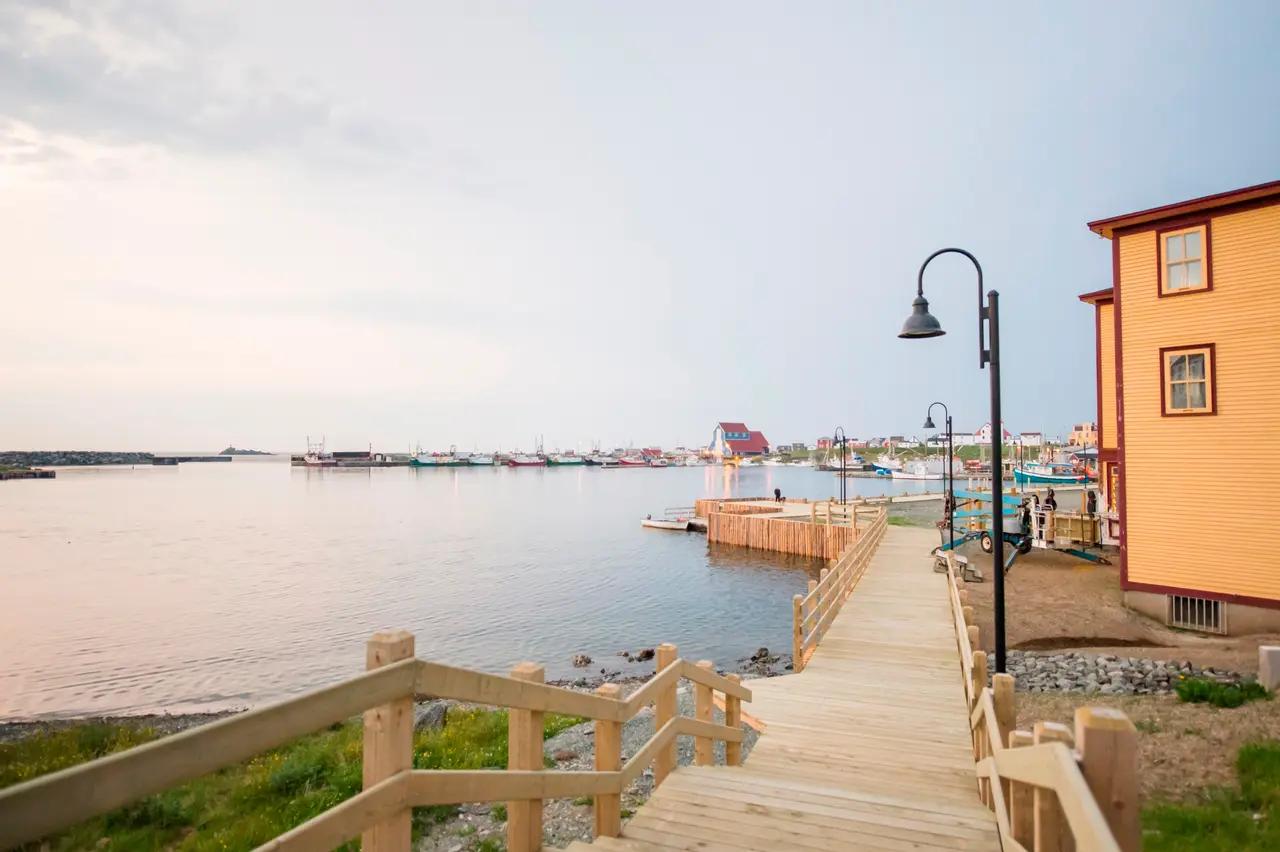
Bonavista's working harbour at dusk. Colourful fishing boats, a quiet boardwalk, and a small-town Atlantic vibe that makes it the perfect base for iceberg and whale-watching season.
6. Bonavista
Historic site of Cabot's landing (1497) | Features: Colourful homes, lighthouses, 20,000-year-old icebergs
When you picture small coastal fishing towns, Bonavista probably matches that image. This is the historic site where Italian explorer Giovanni Caboto first discovered North America in 1497. Today it's a quaint town of colourful homes along rocky shores and pebbled beaches, with heritage buildings, museums, and coastal lighthouses. The oldest things you'll see? The 20,000-year-old icebergs floating by. Keep an eye out for whales and visit the full-size replica of Cabot's ship.

A kid in a Viking helmet squares off with a bearded Norse interpreter at L'Anse aux Meadows; where the 1,000-year-old story of Europe's first North American settlement is very much hands-on. Photo credit: Newfoundland and Labrador Tourism
7. L'Anse aux Meadows National Historic Site
UNESCO World Heritage Site | Date: 11th century | First European presence in North America
Here you'll find the very first evidence of European presence in North America—long before Cabot. Vikings visited Newfoundland and their 11th-century settlement remains with excavated wood-framed and peat-turf buildings similar to those in Greenland and Iceland. Immerse yourself with costumed guides, see 1,000-year-old artefacts, and live like a Viking for a day surrounded by cliffs, coastline, and bogs.
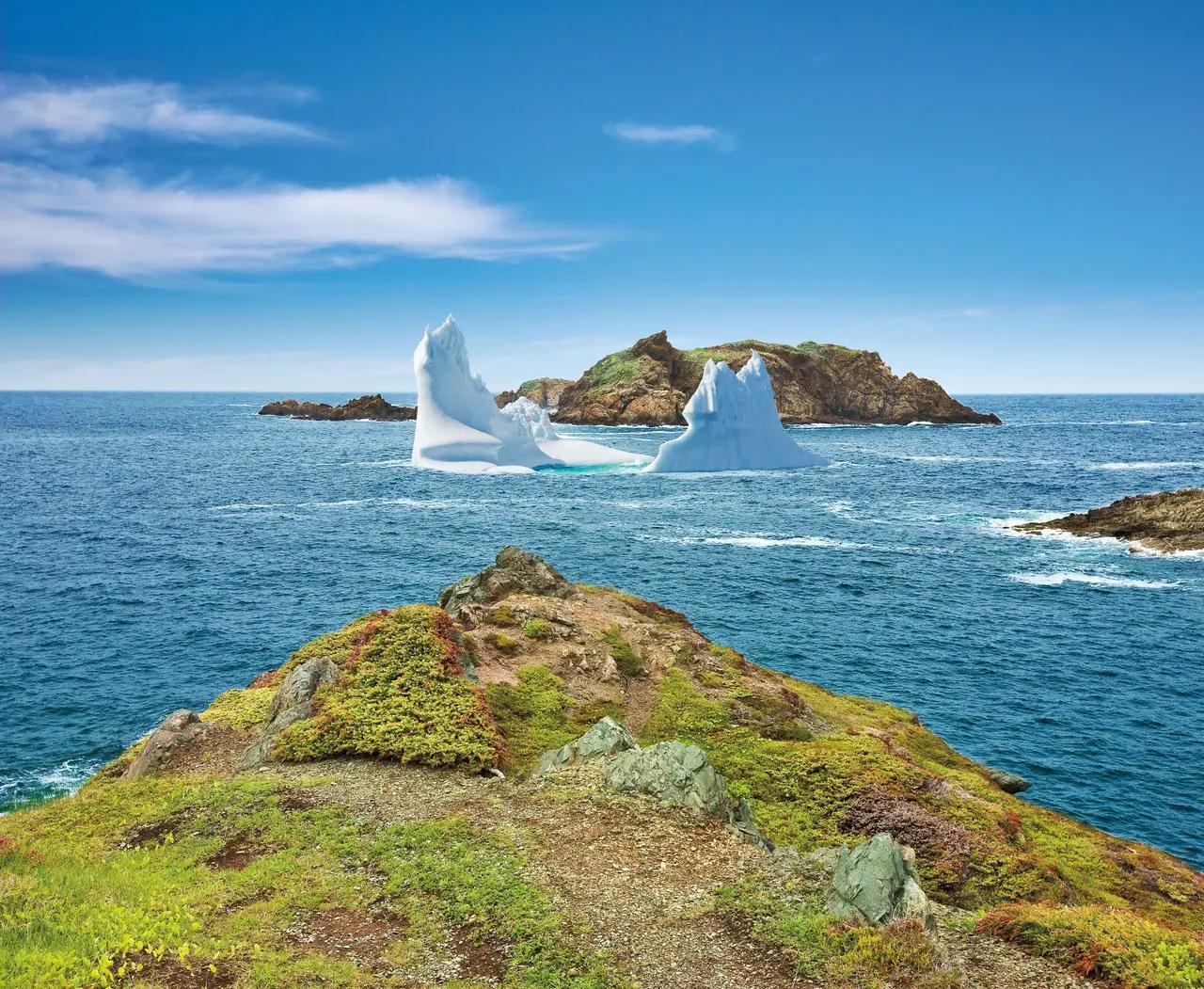
A drifting iceberg off Twillingate's coastline. This is why they call it the iceberg capital of the world, and why spring timing makes all the difference. Photo credit: Newfoundland and Labrador Tourism/Barrett and MacKay
8. Twillingate — Iceberg Capital of the World
Activities: Whale-watching, kayaking, hiking, beaches | Festival: Fish, Fun and Folk (late July)
Seafood and scenery define Twillingate—a small, colourful fishing town where fish comes fresh from water to plate. It's the iceberg capital of the world and a great outdoor adventure destination with whale-watching, beaches, and kayaking. Hiking draws many visitors along rocky coastline trails, picking wild berries en route to scenic lighthouses. Time your trip for the Fish, Fun and Folk Festival (late July) for music, bonfires, fireworks, and more.
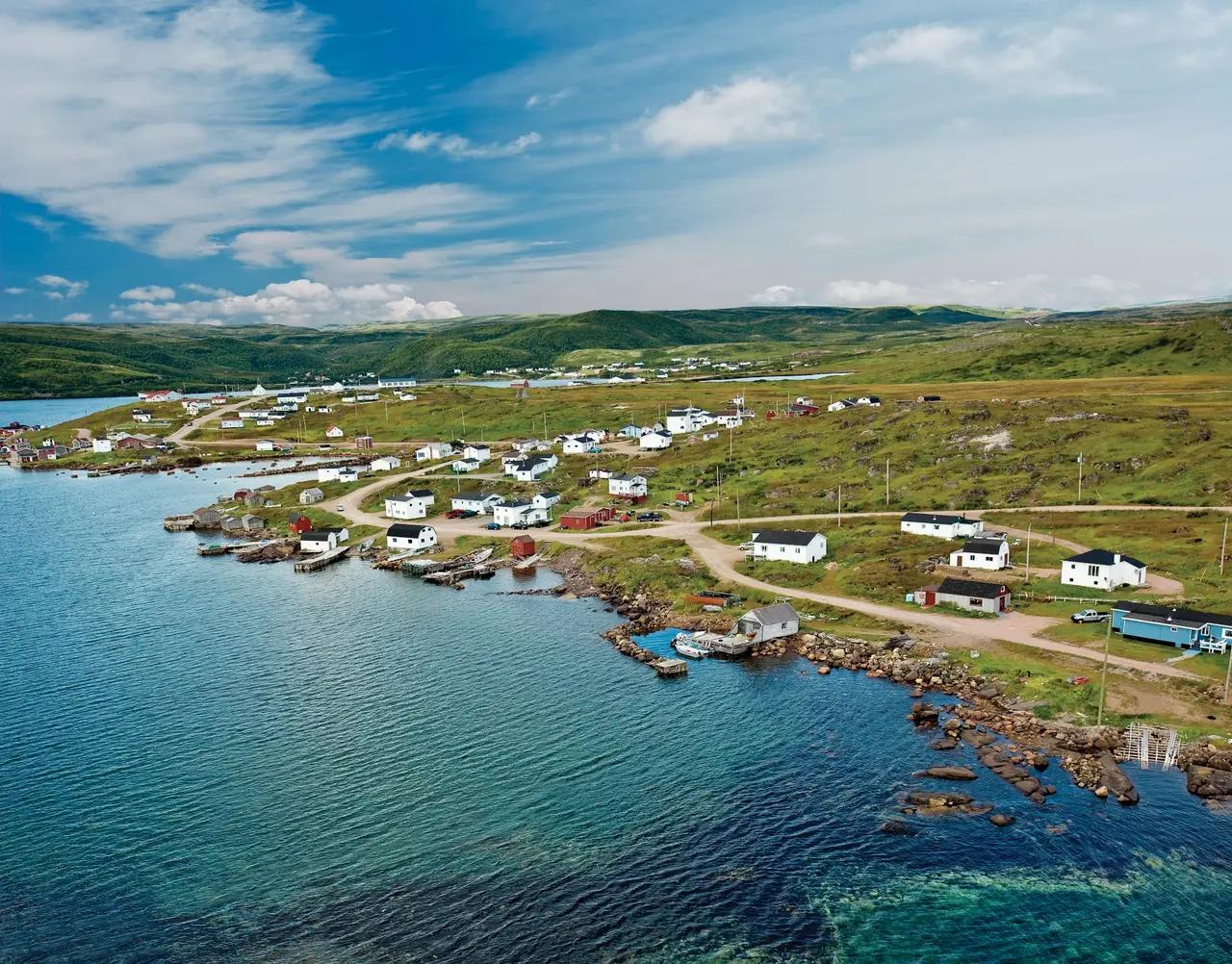
Red Bay's outport sits on the same Labrador Strait waters where 16th-century Basque whalers built one of the world's largest whaling operations; history you can kayak past today. Photo credit: Newfoundland and Labrador Tourism/Barrett and Mackay
9. Red Bay National Historic Site
UNESCO World Heritage Site | History: 16th-century Basque whaling station | Features: 26-foot chalupa boat
In the 1500s, thousands of Basque whalers hunted for blubber in Red Bay waters. The whaling town remains where they first set it up—explore remnants of ovens and equipment. Visit the education centre to see a 26-foot 'chalupa' (whale-hunting boat) and compare it to large whale skeletons on site. Then hike the beach or kayak the waters, watching for shadows moving beneath.
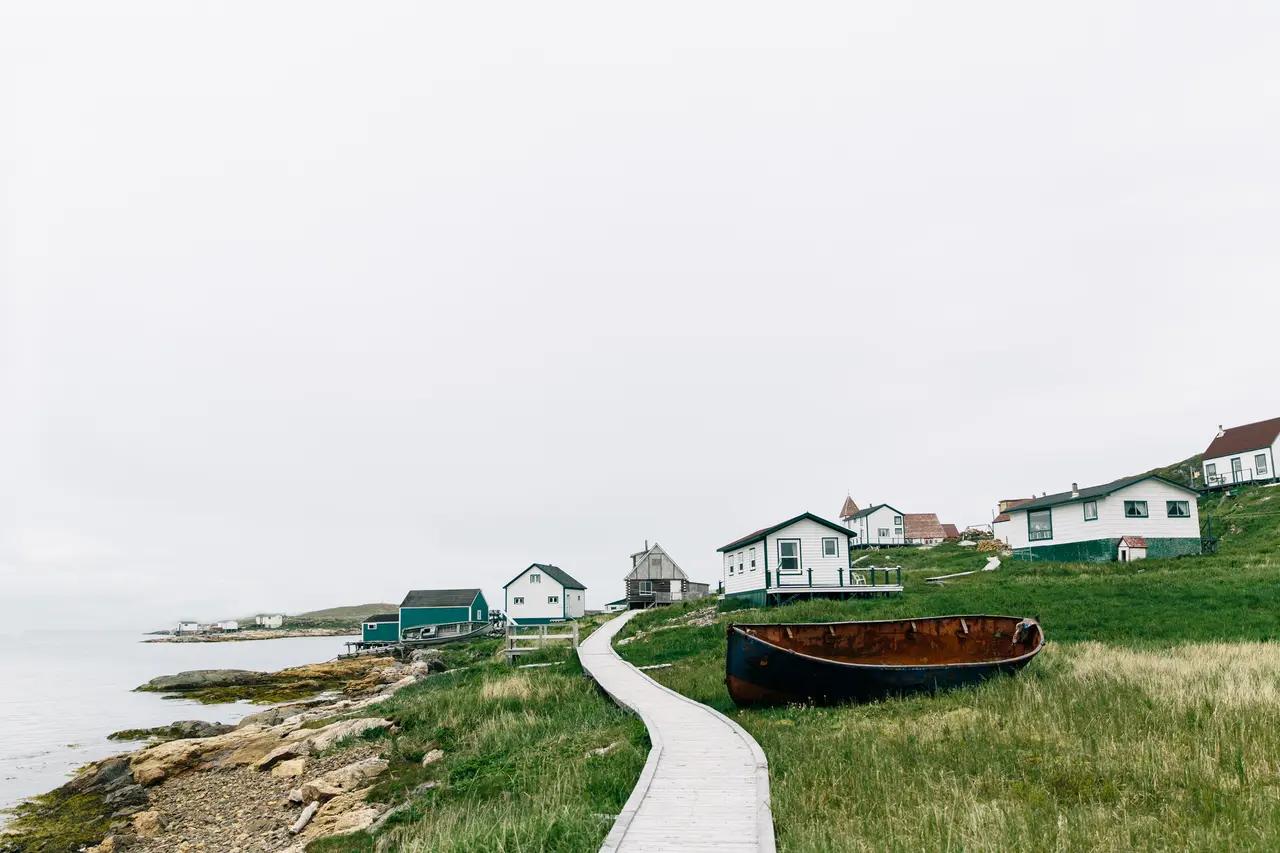
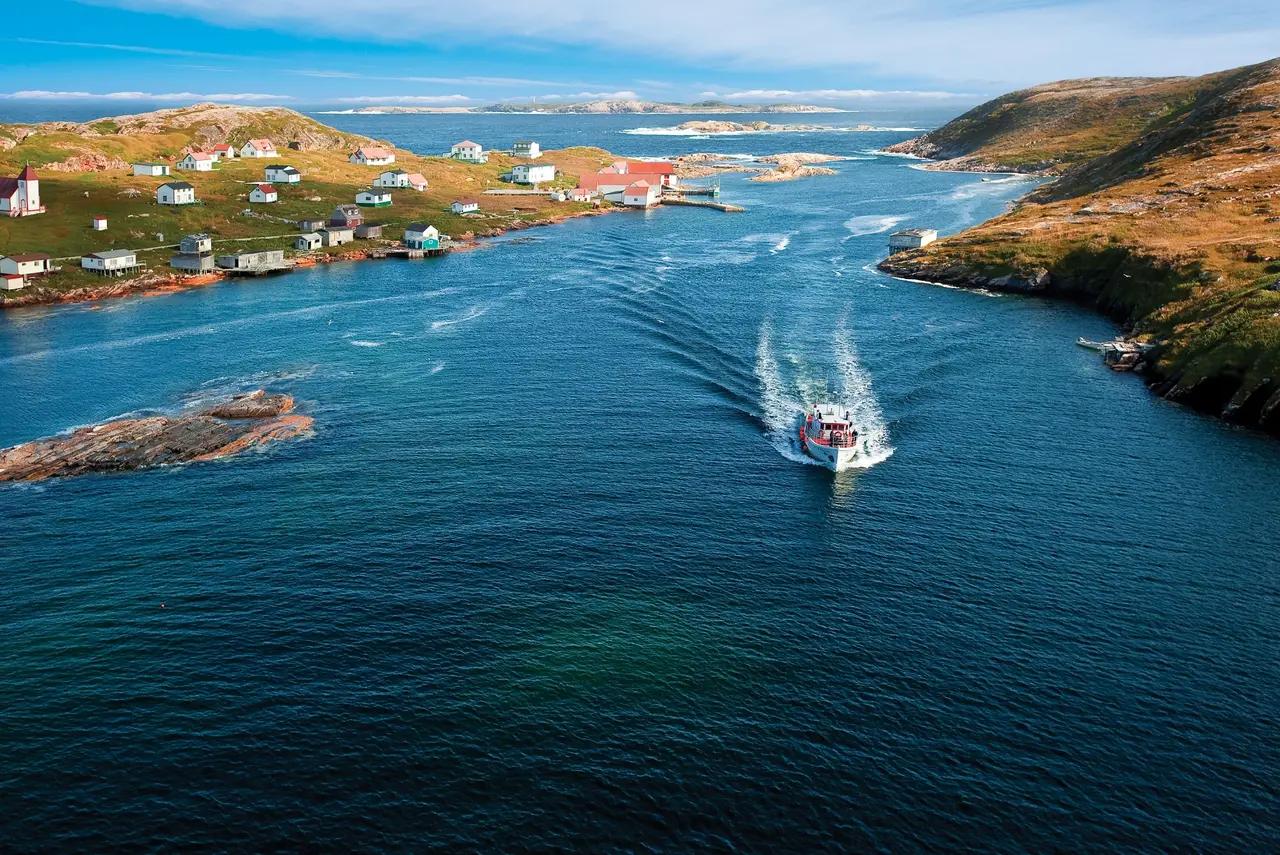
An old dory rests beside a winding boardwalk in Battle Harbour, a restored Labrador outport where the only way in is by ferry, and that's exactly the point. Photo credit: Benjamin Heath
10. Battle Harbour
Title: 'Salt fish capital of Labrador' | Accommodations: Historic merchant/policeman homes | Wildlife: Orcas, icebergs
'The salt fish capital of Labrador' was once the region's social and economic hub. Two centuries of history have been preserved or restored—fishery buildings, churches, and homes, many available to stay in. Sleep in a former merchant or policeman's home, explore workplaces and historic structures, then enjoy fresh meals and entertainment unchanged for 100 years. Come for orcas, icebergs, and hiking—stay for the atmosphere.