An Adventure in the Canadian Rockies — National Parks, Turquoise Lakes and Mountain Experiences from Banff to Jasper
An Adventure in the Canadian Rockies — National Parks, Turquoise Lakes and Mountain Experiences from Banff to Jasper
Quick Summary
The Canadian Rockies are, quite simply, spectacular. No photo can truly capture the awe-inspiring experience of looking up at soaring mountains, down into seemingly endless canyons, across ancient glittering glaciers and into turquoise blue lakes so pristine and perfect it's hard to believe they're real. From the world-famous Lake Louise and Moraine Lake to the massive Columbia Icefield, from the wildlife-rich corridors of Jasper to the dramatic peaks of Waterton Lakes, the Canadian Rockies offer year-round adventures — hiking and cycling in summer, world-class skiing in winter, and unforgettable train journeys through mountain passes.
Quick Facts
- Four park areas: Banff National Park, Jasper National Park, Waterton Lakes National Park, Kananaskis Country
- UNESCO status: Canadian Rocky Mountain Parks World Heritage Site (Banff, Jasper); Waterton-Glacier International Peace Park
- Summer activities: Hiking, cycling, mountain biking, whitewater rafting, canoeing, glacier tours, scenic train rides
- Winter activities: Skiing, snowboarding, ice climbing, ice walks, heli-skiing, dog sledding, snowshoeing
- Gateway cities: Calgary, (Banff 1.5 hrs, Kananaskis 1hr); Edmonton (Jasper 4 hrs)
- Mountain towns: Banff, Jasper, Canmore, Lake Louise, Waterton
Curated by Destination Canada. Pack your hiking boots and ski gear — the Canadian Rockies deliver adventure in every season.
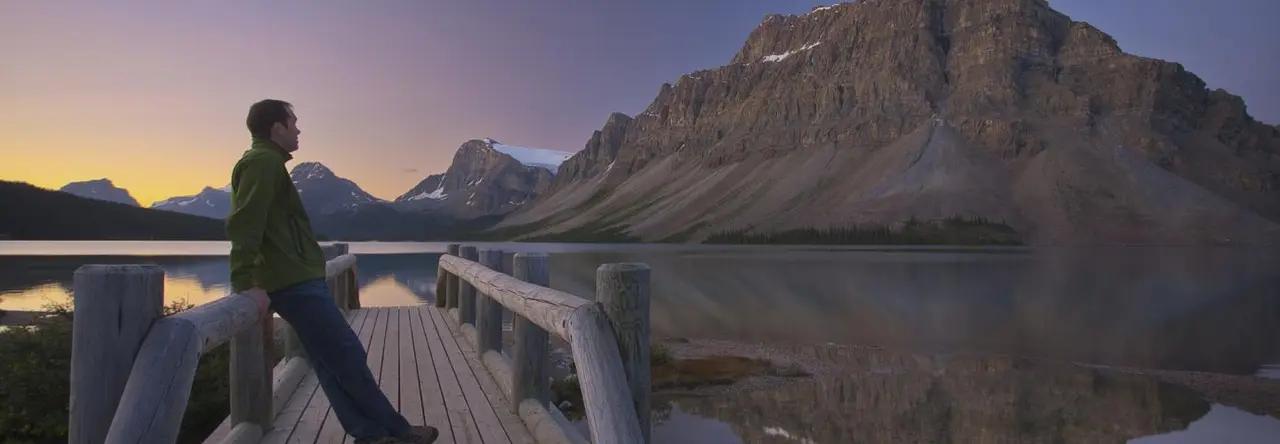
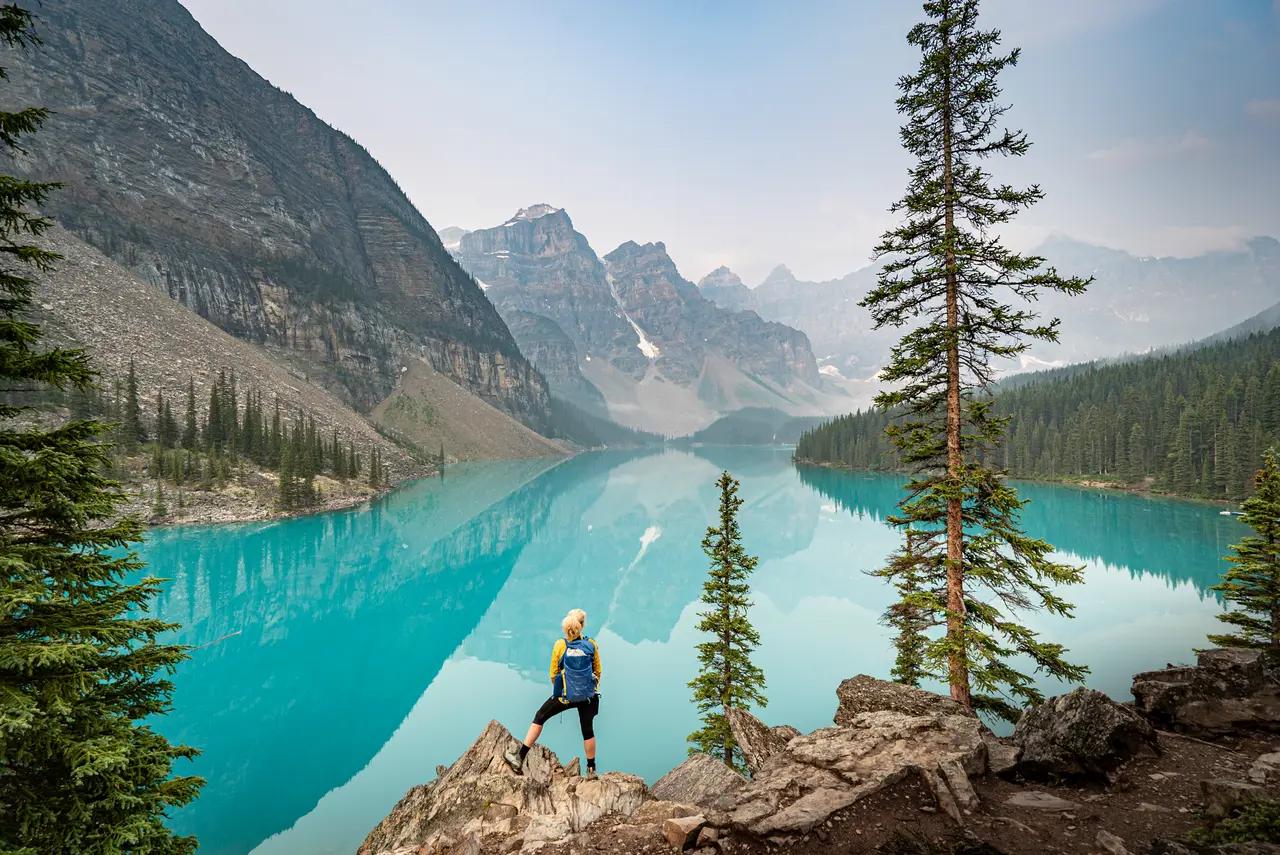
Banff is the Rockies’ front door—this image anchors the trip in iconic mountain-and-lake scenery that first-time visitors instantly recognize. Credit: Banff Lake Louise Tourism/Paul Zizka
PLACES TO GO
Banff National Park
Status: UNESCO World Heritage Site · Established: 1885 (Canada's first national park) · Trails: 1,600+ km maintained
Lake Louise and Moraine Lake
The Canadian Rockies are home to some of the most beautiful lakes in the world. What sets these alpine gems apart is their stunning aquamarine colour, a result of "rock flour" — fine-grained silt suspended in glacier-fed waters. Lake Louise, anchored by the Victoria Glacier and the stately Fairmont Chateau Lake Louise, is the most photogenic. Moraine Lake, nestled in the Valley of the Ten Peaks, is another turquoise beauty. Lake Louise is less than two hours west of Calgary; Moraine Lake is about 20 minutes further.
Lake Minnewanka
Minutes from the town of Banff, Lake Minnewanka is the longest lake in the Canadian Rockies at 28 kilometres. Hike or bike the trails along its northern shores, or take an hour-long guided boat cruise. The submerged village of Minnewanka Landing (built 1912) can only be visited by scuba divers. First Nations lived along these shores for 10,000 years, naming it minn-waki — Lake of the Spirits.
Cave and Basin National Historic Site
Commemorating the 1883 discovery by railway workers of a natural hot spring that led to the creation of Canada's first national park. The site traces the history of thermal springs used by First Nations for thousands of years. Take an evening lantern tour through the rock tunnel to the original pool.
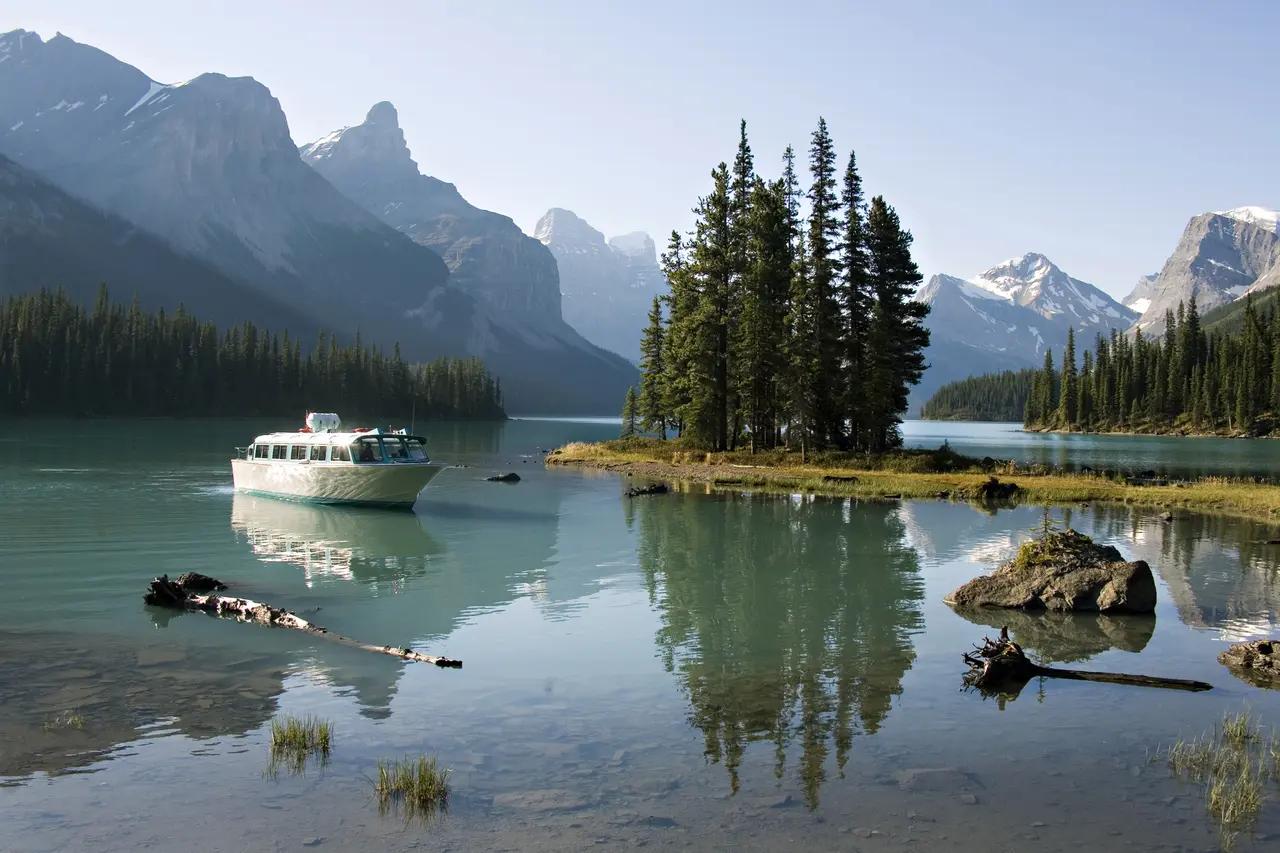
Spirit Island is Jasper’s postcard moment—proof that the Rockies’ most memorable views often happen from the water. Credit: Jasper Tourism
Jasper National Park
Status: UNESCO World Heritage Site · Size: 10,878 sq km (largest in Rockies) · Dark Sky Preserve: Yes
Columbia Icefield and Glacier Skywalk
The Columbia Icefield is the largest remaining icefield in the Rockies, covering almost 230 square kilometres. Board an Ice Explorer — an oversized all-terrain vehicle — to drive onto the Athabasca Glacier, the most accessible glacier in North America. Walk on ice up to 365 metres thick and drink fresh glacial water. The Glacier Skywalk is a cliff-edge glass-floored observation platform cantilevered 280 metres over the Sunwapta Valley.
Athabasca Falls
At 23 metres, Athabasca Falls isn't the tallest waterfall in the Canadian Rockies but it is extremely powerful — glacial water forced through a narrow gorge. Located 32 kilometres south of Jasper town, accessed from the Icefields Parkway via Highway 93A. Free parking and easy stroll to viewing platforms.
Maligne Canyon
More than 50 metres deep, Maligne Canyon features fossils, waterfalls, and lush plant life. Walk the self-guided interpretive trail crossing the gorge on four bridges. In winter, the waterfalls turn to towering walls of iridescent blue ice — guided ice walks take you along the canyon floor with ice cleats.
Maligne Lake and Spirit Island
Take a boat cruise on this gorgeous aquamarine lake to Spirit Island, one of the most photographed scenes in the world. The scenic 48-kilometre drive from Jasper town offers excellent wildlife spotting opportunities.
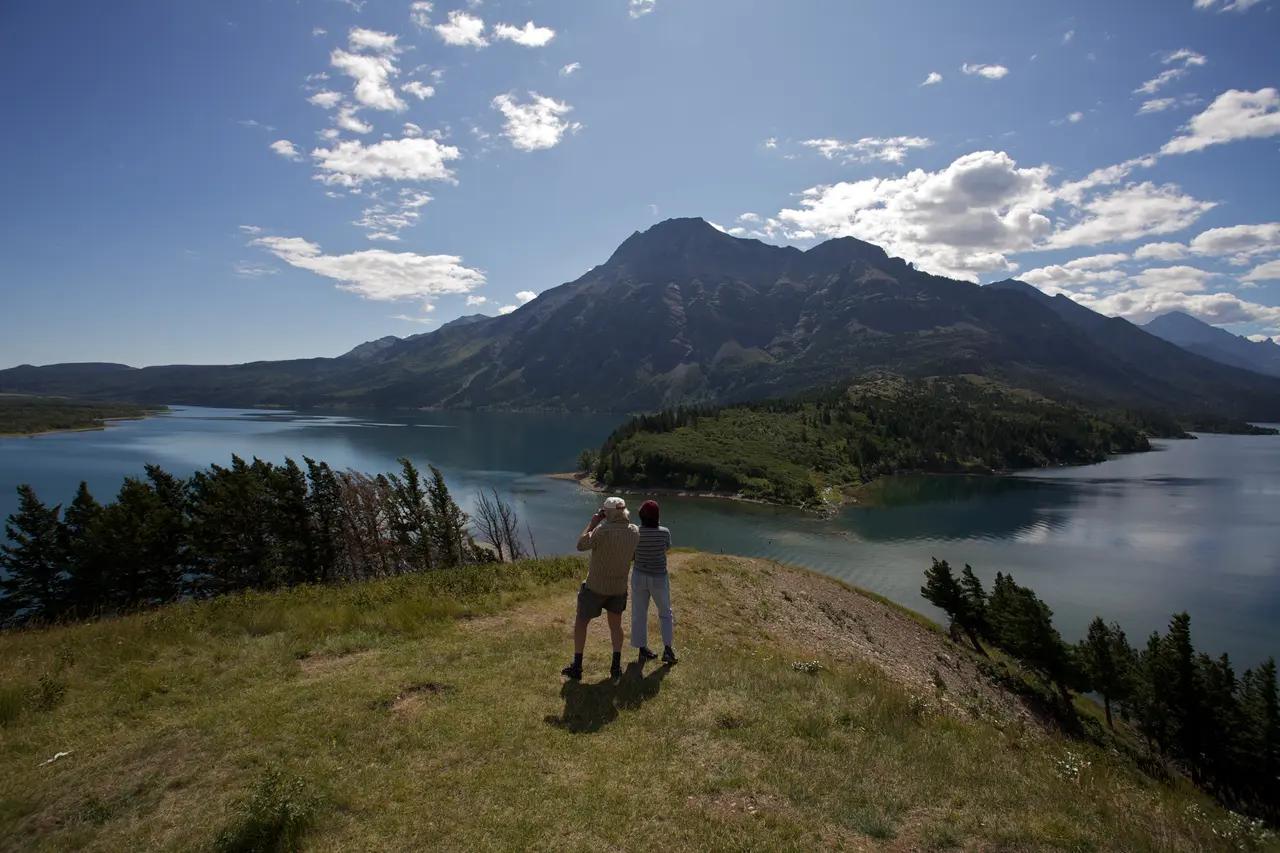
Waterton delivers a different Rockies rhythm—smaller scale, dramatic lake-and-peak scenes, and a perfect add-on for travellers heading south. Credit: Asymetric/Dustin Parr
Waterton Lakes National Park
Status: International Peace Park + UNESCO World Heritage Site + Biosphere Reserve · Location: Alberta-Montana border
Nowhere else will you find this unique combination of designations. Mountains rise straight from the prairies, home to unusual varieties of plants and animals. Excellent chances of spotting black bears, bighorn sheep, elk, deer, and golden eagles.
Upper Waterton Lake
The deepest lake in the Canadian Rockies. The Waterton Shoreline Cruise crosses into the USA at Goat Haunt, Montana.
A short drive from Waterton village through Blakiston Valley. Follow the trail around the canyon edges for views of the unusually coloured rock formations. Climb down into the stream bed for a picnic.
Cameron Falls and Cameron Lake
Cameron Falls is right in Waterton village — one of the most accessible attractions in the park. Drive the Akamina Parkway to Cameron Lake for picnics and paddling.
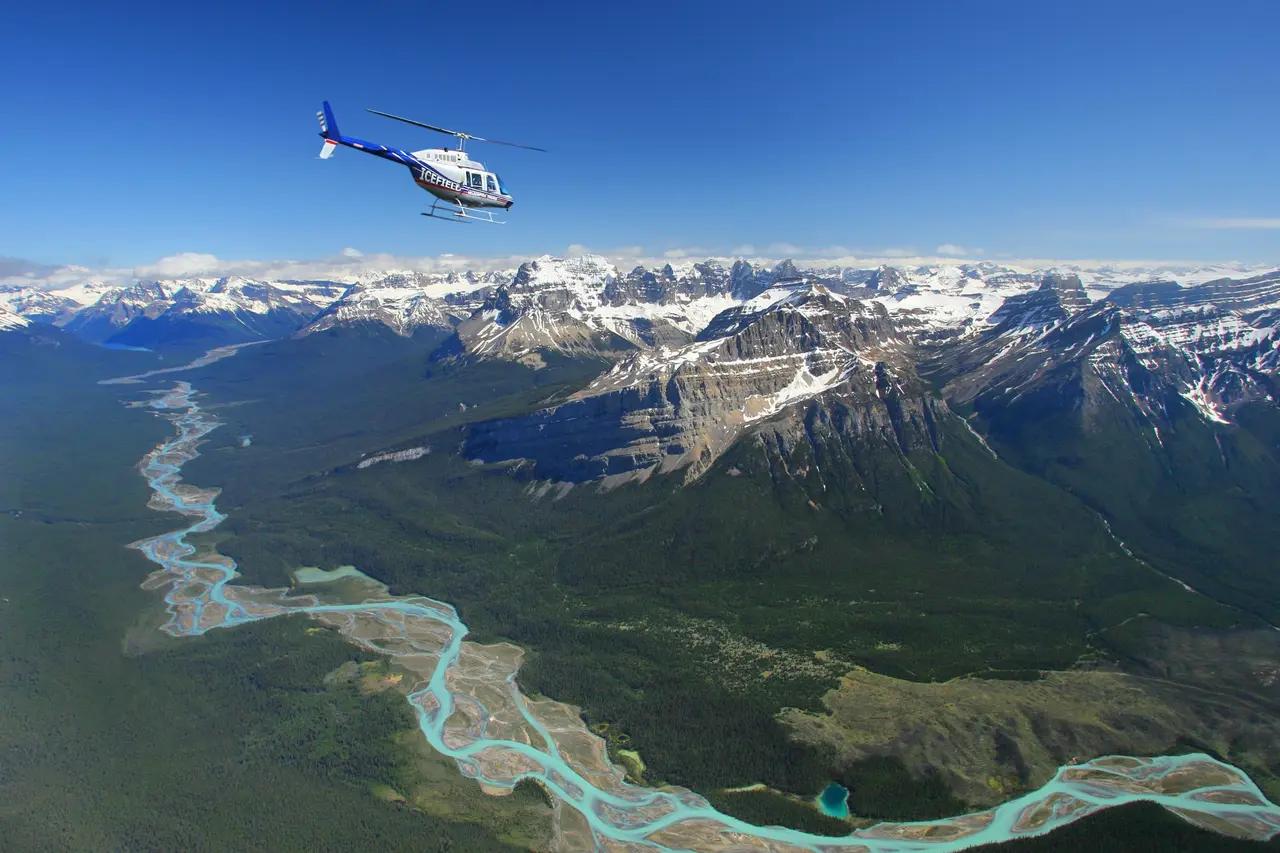
Kananaskis is the crowd-escape Rockies—big scenery, beautiful lakes, and more breathing room than the headline parks. Credit: Heli Canada
Kananaskis Country
Size: 4,211 sq km · Location: Less than 1 hour west of Calgary · Hub town: Canmore
Provincial parks, recreation areas, and wildlands in the front ranges of the Rockies. Canmore offers restaurants, shopping, accommodation and festivals. Try stand up paddle boarding or whitewater rafting on the Kananaskis River. Winter brings alpine and cross-country skiing, snowshoeing, and dog sledding.
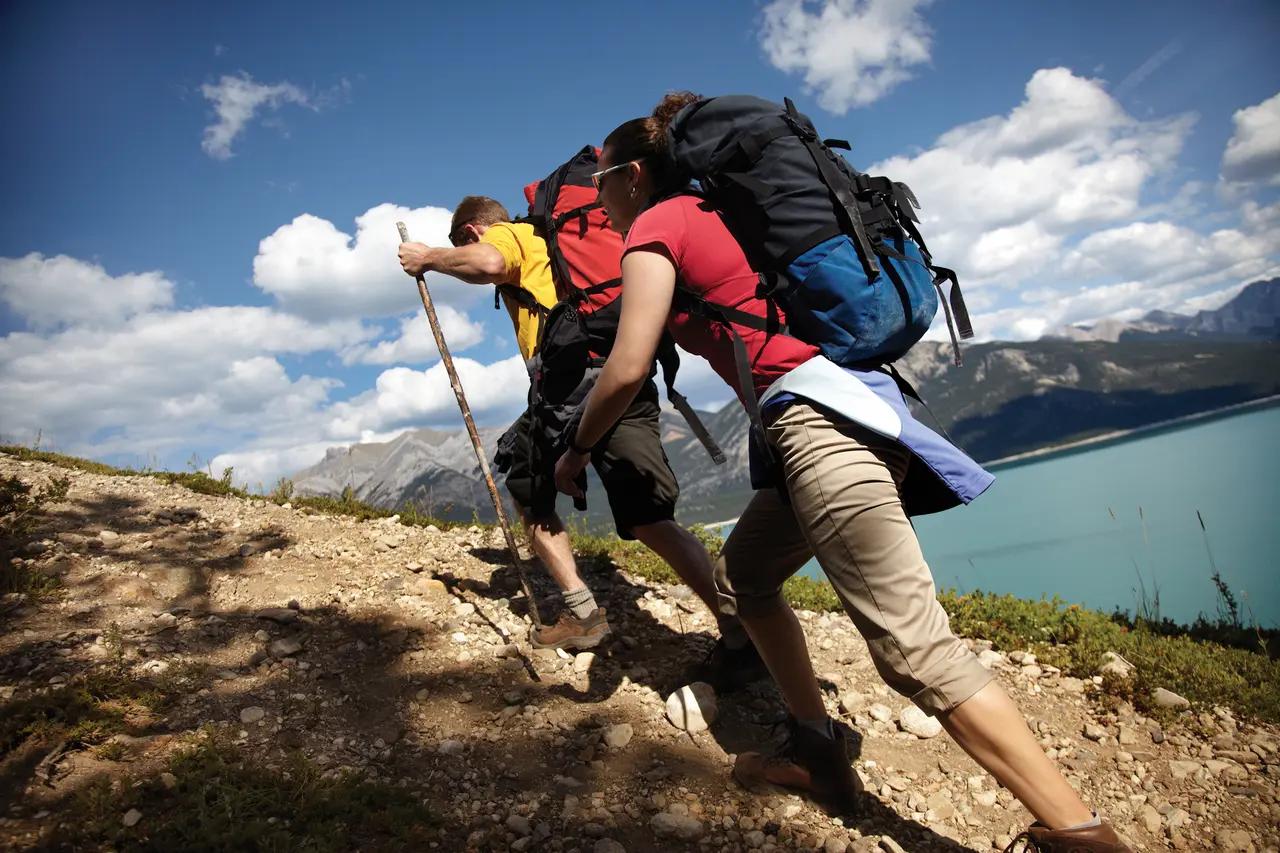
In the Rockies, the best hikes often end at water—lakes, waterfalls, or valley rivers that make the effort feel worth it. Credit: Travel Alberta/George Simhoni
THINGS TO DO
Hiking
Trails: Thousands of kilometres, all abilities · Highlights: Lake Agnes Tea House, Plain of Six Glaciers, Skyline Trail
Sunshine Meadows in Banff offers some of Canada's best hiking — spot tiny pikas and wildflowers en route to Grizzly Lake. The Valley of Ten Peaks and Stanley Glacier are popular moderate trails. For a challenge, hike to Lake Agnes Tea House then continue on the Plain of Six Glaciers Trail from Lake Louise — ending at a second historic tea house. In Jasper, the Skyline Trail covers 44 kilometres of mountain ranges over multiple days. For bucket-list experiences, take a helicopter to pristine valleys for wildflower hikes.
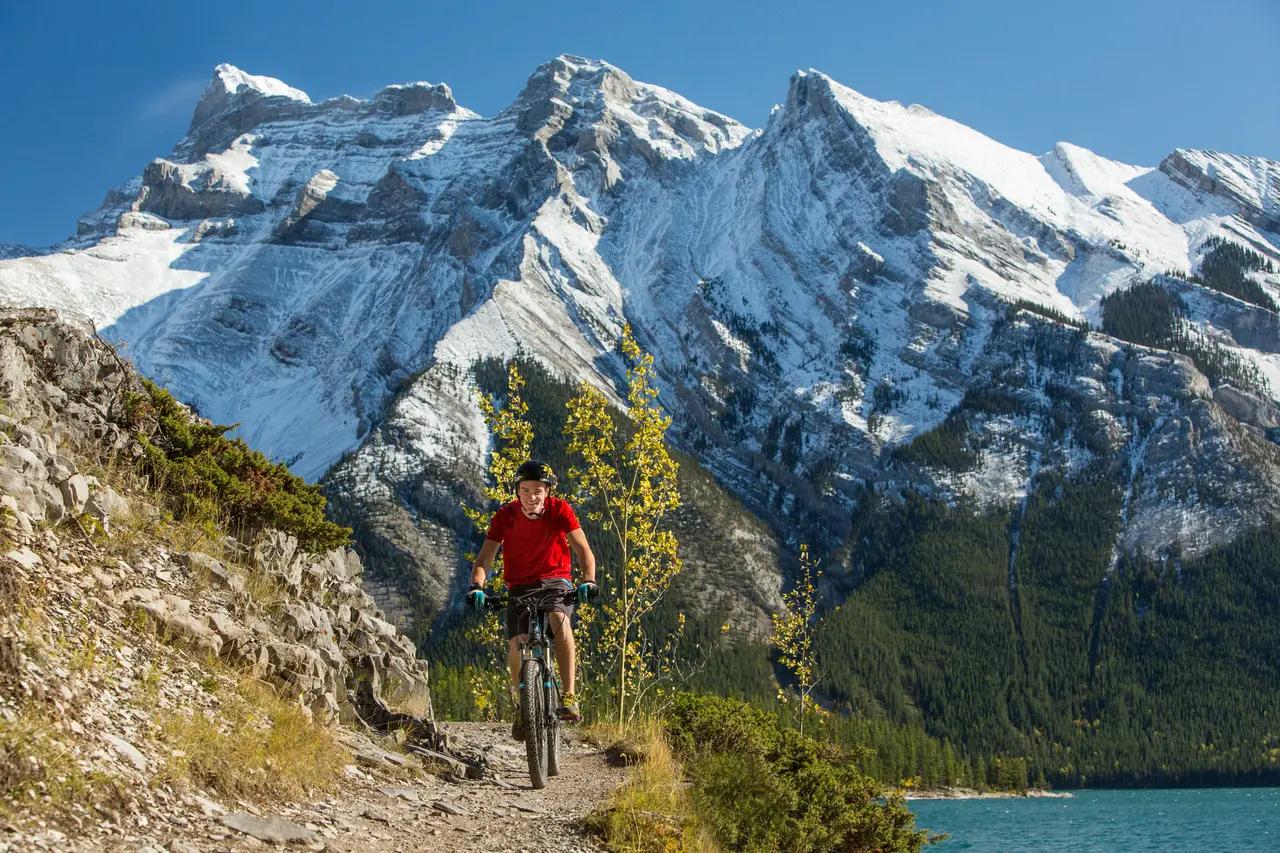
Mountain biking turns Rockies valleys into playgrounds—fast trails, fresh air, and water-fed landscapes that change around every corner. Credit: Banff Lake Louise Tourism/Paul Zizka
Cycling and Mountain Biking
Key venue: Canmore Nordic Centre (65+ km trails) · Epic route: 4-day Icefields Parkway bike tour
Many alpine trails are tailor-made for cycling and mountain biking. Canmore Nordic Centre Provincial Park has over 65 kilometres of groomed trails. For a multi-day challenge, bike the legendary Icefields Parkway — one of the world's most scenic routes.
Whitewater Rafting
Rivers: Kananaskis, Athabasca, Kicking Horse · Levels: Easy float to Class V rapids
Rushing mountain rivers create excellent whitewater rafting adventures. Professional outfitters in Jasper, Banff, and Canmore tailor experiences from gentle floats to heart-pumping Class Five rapids on the Kicking Horse River.
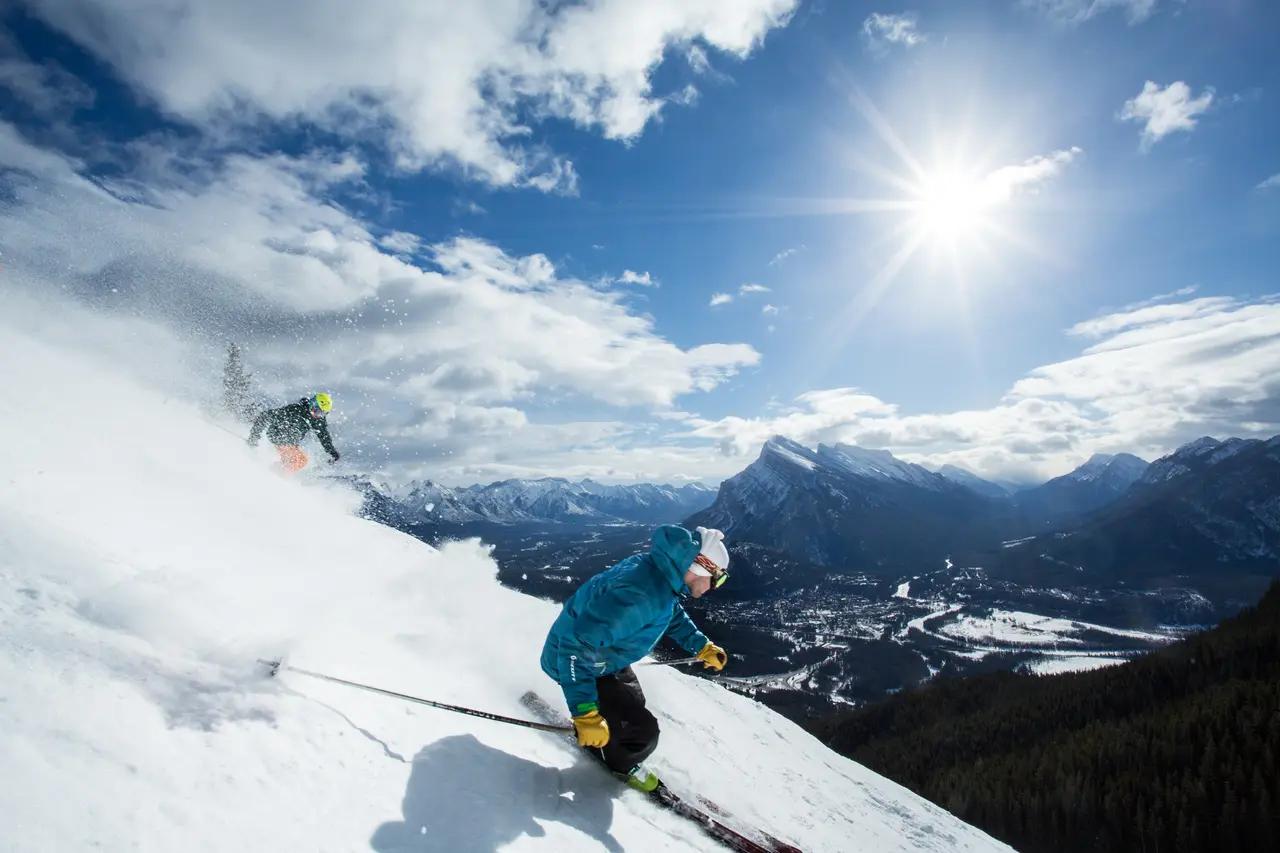
Adventure doesn’t end when lakes freeze—ski season is the Rockies’ winter counterpart to summer paddles and hikes. Credit: Banff Lake Louise Tourism/Paul Zizka
Skiing and Snowboarding
Banff Big Three: Mt. Norquay, Sunshine Village, Lake Louise Ski Resort · Jasper: Marmot Basin (highest base elevation in Canada)
The Canadian Rockies are famous for feather-light powder snow. Ski the Banff Big Three: Mt. Norquay (28 runs), Sunshine Village (145+ runs, 1,072m vertical), and Lake Louise (145+ runs, 990m vertical). Marmot Basin in Jasper has Canada's highest base elevation at 1,698 metres. Kananaskis offers Nakiska (1988 Winter Olympics venue) and cat skiing at Fortress Mountain. Castle Mountain Resort is a hidden gem further south. Backcountry and heli-skiing deliver pristine powder.
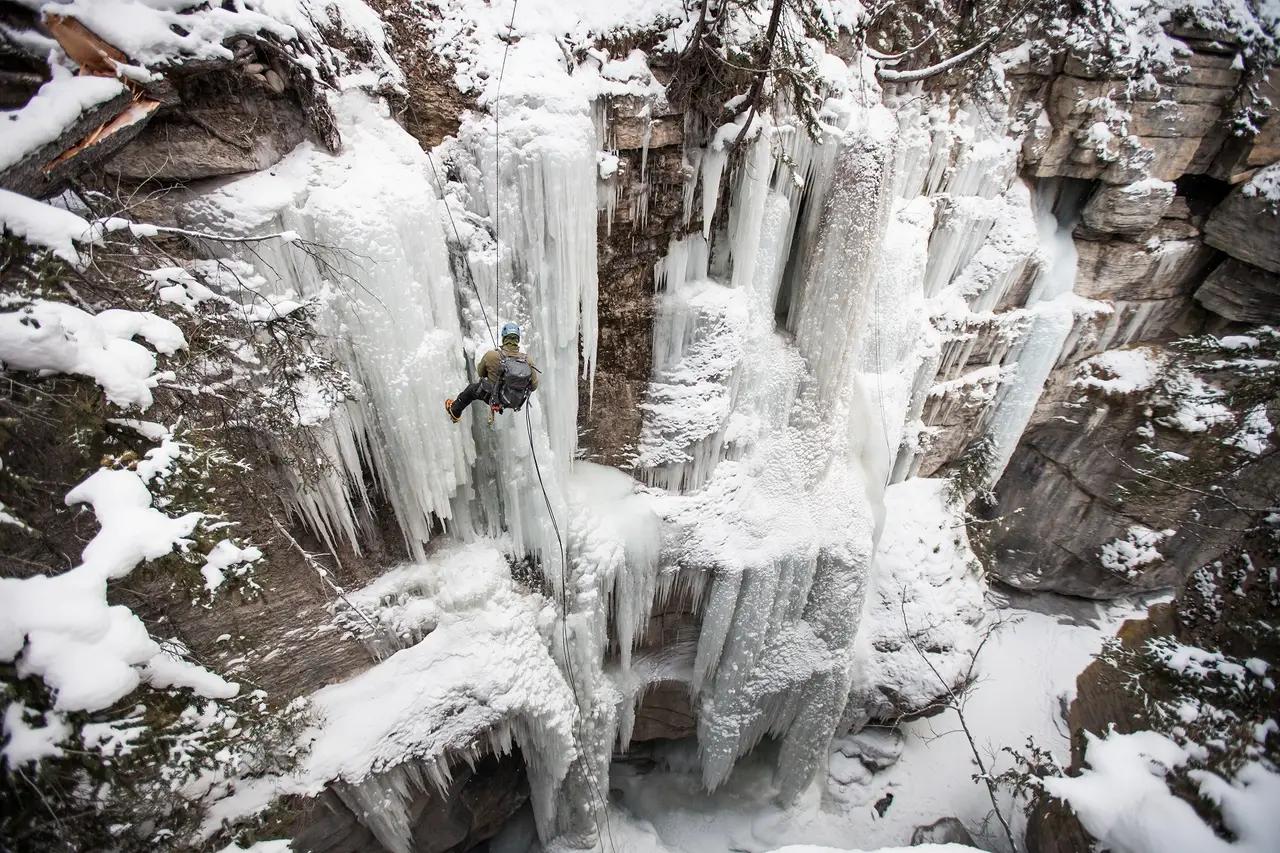
Frozen waterfalls become the route—ice climbing is the boldest way to experience Rockies water when winter locks it in place.
Ice Climbing and Ice Walks
Top spots: Maligne Canyon (Jasper), Johnston Canyon (Banff), Grotto Canyon (Kananaskis)
In winter, canyon gorges transform into ethereal ice palaces as waterfalls freeze in hues of turquoise and blue. Guided ice walks with ice cleats explore frozen canyon floors. Professional guides offer ice climbing instruction on frozen waterfalls.
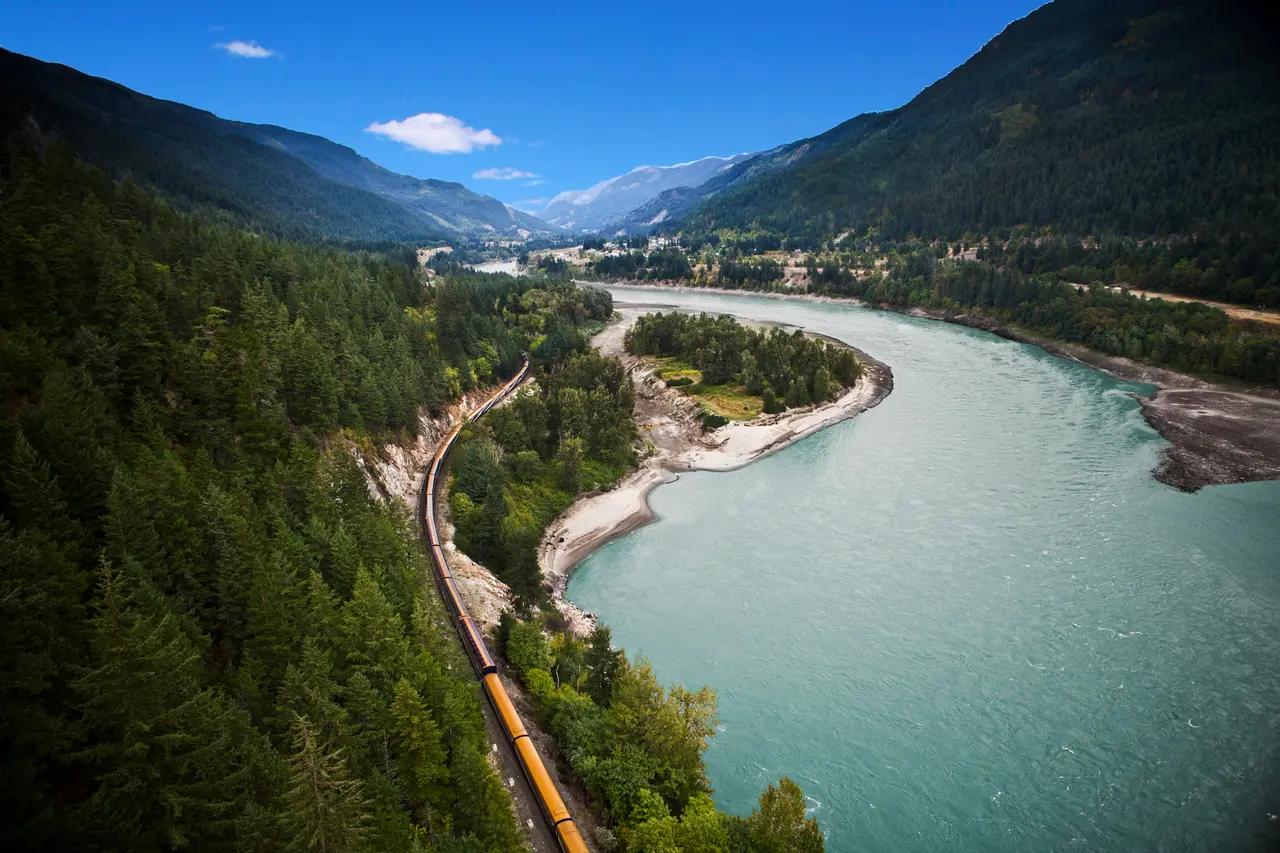
Not every Rockies adventure is on foot—the Rocky Mountaineer pairs comfort with river-valley scenery for a view-first way to travel. Credit: Rocky Mountaineer
Train Adventures
Operator: Rocky Mountaineer · Highlights: Spiral Tunnels, Kicking Horse Pass, Hell's Gate, Fraser River
The Rocky Mountaineer offers the ultimate way to see the Canadian Rockies. Travel to places inaccessible by car — the legendary Spiral Tunnels blasted through two mountains at Kicking Horse Pass, the mighty Fraser River thundering through Hell's Gate. Cross high bridges, pass brilliant blue lakes, and spy wildlife from the comfort of glass-domed coaches.